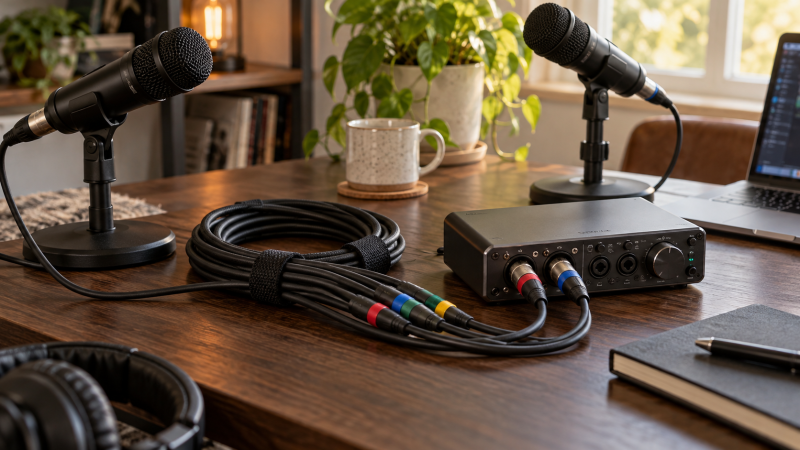
An XLR cable snake bundles several balanced microphone lines into one outer jacket. On a podcast desk, one snake can replace a loose group of cables running from host positions to an interface, mixer, or patch area. The benefit is organization rather than signal mixing. Every channel still has its own male and female XLR connector and needs its own input at the destination.
The eight options here cover two, four, or eight channels and lengths from 3 to 10 feet. A short snake works well between a tabletop patch point and a rack, while a 10-foot run can reach equipment placed off the desk. Count active microphones, measure the routed path rather than a straight line, and leave enough fan-out room for connectors without buying a coil that will live permanently under the table.
The Cable Matters 4-Channel 10-Foot Snake is the best general fit for a four-person desk or a two-microphone setup with spare lines. The Monoprice 3-Foot Snake is better for short patching behind nearby gear, while the Kinweistex 8-Channel 10-Foot Snake covers larger panels and additional balanced sources.- Best overall: Cable Matters 4-Channel 10-Foot Snake combines a practical desk-to-rack length with shielding and color-coded channels.
- Best short patch run: Monoprice 4-Channel 3-Foot Snake keeps nearby interface and mixer connections compact.
- Best for large podcast panels: Kinweistex 8-Channel 10-Foot Snake carries eight independent balanced lines in one assembly.
XLR Cable Snake Comparison
| Image | Product | Details | Check Price |
|---|---|---|---|
 | Cable Matters 4-Channel 10-Foot XLR Snake | Channels: 4 Length: 10 ft Connectors: XLR male to female Identification: Color-coded channels Shielding: Shielded; construction not stated | Check Price on Amazon |
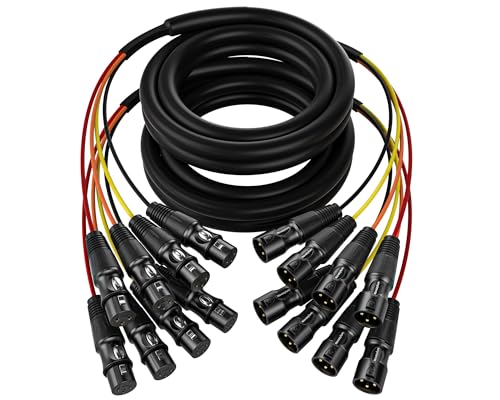 | Novazylum 4-Channel 6-Foot XLR Snake Two-Pack | Channels: 4 per snake Length: 6 ft Quantity: 2-pack stated in title Identification: Red, yellow, green, blue Shielding: Aluminum foil and braided shield | Check Price on Amazon |
 | Monoprice 4-Channel 3-Foot XLR Snake | Channels: 4 Length: 3 ft Connectors: XLR male to female; silver metal housings Identification: Red, blue, white, yellow Coverage: Monoprice lifetime cable coverage | Check Price on Amazon |
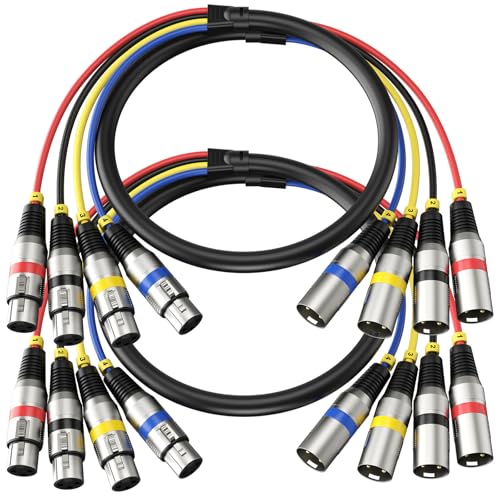 | Heams 4-Channel 3-Foot XLR Snake Two-Pack | Channels: 4 per snake Length: 3 ft Quantity: 2-pack stated in title Identification: Color and number marked Shielding: Braided and multilayer shielding | Check Price on Amazon |
 | Phenyx Pro PCBL-4IN1-3-V2 XLR Snake | Channels: 4 Length: 3 ft Conductors: 24 AWG oxygen-free copper Identification: Color-coded and numbered 1-4 Shielding: Aluminum foil and copper braid | Check Price on Amazon |
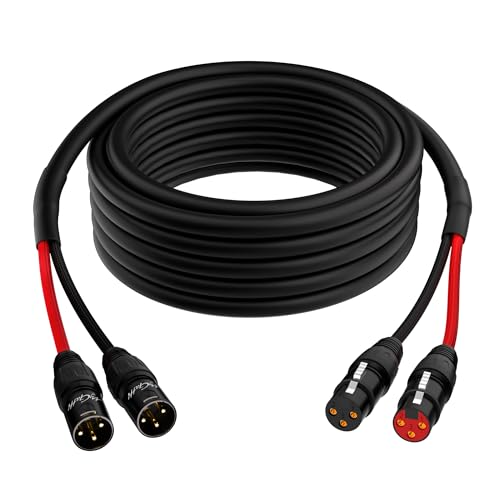 | Mygatti 2-Channel 10-Foot XLR Snake | Channels: 2; listing color wording conflicts Length: 10 ft Connectors: Locking XLR male to female Conductors: Oxygen-free copper Shielding: Copper braided | Check Price on Amazon |
 | EBXYA 4-Channel 6-Foot XLR Snake | Channels: 4 Length: 6 ft Connectors: Locking zinc-alloy XLR Identification: Red, yellow, green, blue Shielding: Aluminum foil and braided shield | Check Price on Amazon |
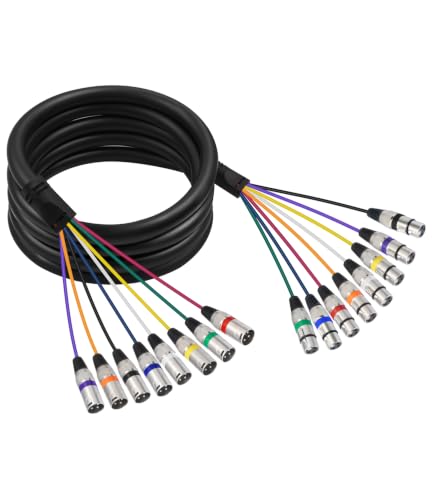 | Kinweistex 8-Channel 10-Foot XLR Snake | Channels: 8 Length: 10 ft / 3 m Connectors: Nickel-plated zinc-alloy XLR Identification: 8 corresponding colors Shielding: High-density shield over oxygen-free copper | Check Price on Amazon |
1. Cable Matters 4-Channel 10-Foot Snake — Best Overall Podcast Desk Snake
The Cable Matters snake carries four balanced analog channels through a 10-foot trunk, a useful length for routing from a podcast table to an interface or mixer on a side shelf. Four channels fit a common host-and-guests layout, or let a two-person show reserve lines for a producer microphone, stereo source, or future seat without rerunning the desk.
Each channel terminates in male and female XLR connectors and uses color coding for faster matching at both ends. The jacket is described as flexible and the connectors as durable. Shielding is included to reduce interference and signal loss, but the supplied record does not state conductor gauge, conductor material, shield construction, trunk diameter, fan-out length, bend radius, or connector-contact plating.
The Cable Matters snake is the best general choice because its channel count and length suit more desk arrangements than the 3-foot patch snakes or the eight-channel bundle. Measure the actual route around monitor arms, table edges, and cable trays before relying on the nominal 10 feet. A bundled trunk makes the main run neater, while the four fan-outs still need strain relief and labels near the equipment.
[accentbox color=”blue”]Best for a two- to four-microphone podcast desk with the interface or mixer positioned several feet away.[/accentbox]- Four independent balanced XLR channels
- Useful 10-foot trunk length
- Shielded and color coded
- Conductor gauge and material are not stated
- Fan-out length is not specified
2. Novazylum 4-Channel 6-Foot Two-Pack — Best Two-Snake Kit
The Novazylum title describes a two-pack of 6-foot, four-channel snakes. That package can serve two separate podcast desks, create distinct microphone and return paths, or provide a complete backup assembly. The product bullets mostly discuss one snake rather than spelling out the two-piece contents, so buyers should confirm current quantity before planning around eight total channels.
Inside each stated four-channel assembly, oxygen-free copper conductors pair with aluminum-foil and braided shielding. The XLR connectors use zinc-alloy shells, nickel-plated pins, locking mechanisms, and red, yellow, green, and blue identifiers. A flexible PVC jacket is intended to make coiling and transport easier. Conductor gauge, trunk diameter, fan-out length, and shield coverage percentage are not provided.
Six feet sits between patch-only and longer room-routing lengths. It can reach an interface under or beside a desk without leaving as much surplus as a 10-foot snake. The active-new offer was marked scarce, and the product’s value depends partly on receiving the stated pair. Choose it when two medium-length four-channel assemblies have a defined use, not merely because more cable seems safer.
[accentbox color=”blue”]Best for two recording positions or a primary-and-spare plan requiring medium-length four-channel snakes.[/accentbox]- Title states two 6-foot four-channel snakes
- Foil and braided shielding
- Locking color-coded metal connectors
- Bullets do not clearly restate two-piece quantity
- Active-new availability was listed as scarce
3. Monoprice 4-Channel 3-Foot Snake — Best Short Patch Run
The Monoprice snake is a 3-foot four-channel assembly designed for nearby connections. It is a good fit between a desktop stage box and an interface under the same table, between adjacent rack devices, or behind a mixer where long individual cables would create loops. It is not intended to cross a room or reach several host positions by itself.
Four male-to-female XLR paths sit inside a soft, durable main jacket. Silver metal connector housings and plastic-and-rubber cable boots protect the ends, while red, blue, white, and yellow fan-outs make the corresponding lines easy to identify. Monoprice lists lifetime coverage for its cables, but the supplied record does not provide conductor gauge, conductor material, shielding design, fan-out length, or electrical specifications.
Short cable is usually easier to manage when the equipment is truly close, but three feet can disappear quickly after routing around a desk edge and leaving connector slack. Measure the path with a flexible cord before choosing it. The Monoprice is the best patch-run option, not the best host-to-mixer snake for a wide table.
[accentbox color=”blue”]Best for four balanced XLR patches between equipment pieces mounted beside, beneath, or directly behind the podcast desk.[/accentbox]- Compact 3-foot length
- Four color-coded balanced channels
- Metal connector housings and lifetime cable coverage
- Too short for many desk-to-rack routes
- Shield and conductor details are not stated
4. Heams 4-Channel 3-Foot Two-Pack — Best Dual Patch Bundle
The Heams title specifies two 3-foot four-channel snakes, making this bundle useful for short patching at two equipment locations or for keeping a matching spare. Each snake carries four independent balanced mono signals, and unused channels can remain disconnected when a smaller two- or three-microphone arrangement is recorded.
The maker lists 64 oxygen-free-copper cores, braided and multilayer shielding, nickel-plated three-pin contacts, heavy-duty zinc-alloy shells, locking connectors, and high-quality soldering. Four colors and number markings provide two identification systems, so mistakes are less likely when both ends are crowded. The record does not explain how the 64-core wording is distributed across channels or give wire gauge and fan-out dimensions.
As with the Novazylum product, the detailed bullets mostly describe one snake while the title carries the two-pack claim. Confirm package count at purchase time. For a podcast desk, the Heams bundle is best when the interface and patch points are close and a second assembly has an immediate purpose. It is a poor substitute for one longer snake if the route itself exceeds three feet.
[accentbox color=”blue”]Best for two short four-channel patch runs or a desk that needs one active snake and an identical spare.[/accentbox]- Title states two four-channel snakes
- Colors plus channel numbers
- Braided and multilayer shielding
- Three feet limits placement options
- Core description does not replace a clear wire gauge
5. Phenyx Pro PCBL-4IN1-3-V2 — Best Specified Shielding
The Phenyx Pro is another 3-foot four-channel snake, but it provides the most detailed conductor and shielding description in this group. Each balanced path uses 24 AWG oxygen-free copper and silver-plated XLR contacts. Aluminum foil plus copper braid creates a double shield intended to reduce radio-frequency and electromagnetic interference around computers, wireless gear, displays, and power adapters.
Each channel is color coded and numbered from one to four. Locking XLR connections resist accidental release, and a thicker PVC outer layer is described as water- and wear-resistant while remaining flexible enough for routing. No connector-shell metal, fan-out length, trunk diameter, capacitance, resistance, or shield-coverage percentage is stated, so it is not a complete engineering data sheet.
For a podcast desk with equipment close together, the clear 24 AWG conductor specification makes the Phenyx Pro the most informative short snake to compare. The length remains the deciding limitation. Three feet can work within a rack shelf or under-desk interface area, but it may not reach microphones placed across even a modest table unless individual mic cables feed a nearby patch box first.
[accentbox color=”blue”]Best for a short four-channel patch where specified 24 AWG conductors and foil-plus-braid shielding matter.[/accentbox]- 24 AWG oxygen-free-copper conductors
- Aluminum-foil and copper-braid shielding
- Color-coded and numbered locking connectors
- Only 3 feet long
- Fan-out and electrical measurements are not stated
6. Mygatti 2-Channel 10-Foot Snake — Best for Two-Mic Desks
The Mygatti is the only two-channel snake in this comparison and, according to the manufacturer, extends 10 feet. The Mygatti fits a two-host podcast that needs one organized run to a side-mounted interface without paying for or packing four unused lines. Mygatti describes each channel as balanced male-to-female XLR using oxygen-free copper, polyethylene insulation, and copper-braided shielding.
The connector design includes locking mechanisms, zinc-alloy shells, and nickel-plated pins. However, the supplied record contains two internal inconsistencies. It says a two-channel snake replaces four individual cables, and it lists red, yellow, blue, and black channel colors even though there should be only two paths. The title and model identify a two-channel product, so buyers should verify the actual fan-out colors and count in the current package.
For a fixed two-microphone show, fewer bundled channels can reduce trunk thickness and make end identification simpler. It leaves no spare line for a guest, producer, or talkback microphone, though. Choose it when the two-channel limit is intentional and the 10-foot route is useful, not when the podcast is likely to expand soon.
[accentbox color=”blue”]Best for a stable two-microphone podcast desk that needs a 10-foot balanced run and does not require spare channels.[/accentbox]- Two-channel format avoids unnecessary lines
- Useful 10-foot length
- Copper-braided shielding and locking metal connectors
- Channel-count and color descriptions conflict
- No spare capacity for a third microphone
7. EBXYA 4-Channel 6-Foot Snake — Best Mid-Length Option
The EBXYA provides one 6-foot four-channel snake, filling the length gap between compact three-foot patch cables and ten-foot desk-to-rack runs. It can serve an interface mounted under a desk, a mixer on a nearby stand, or a tabletop patch point without requiring a large coil of unused cable.
Red, yellow, green, and blue XLR ends identify the four balanced paths. The cable uses oxygen-free-copper conductors with aluminum foil and braided shielding. Self-locking connectors combine zinc-alloy shells and nickel-plated pins, while the main assembly is described as flexible for easier storage and transport. Wire gauge, fan-out length, trunk diameter, and electrical characteristics are not listed.
EBXYA says the four-channel snake can be used with only one, two, or three channels connected, which is a benefit of independent lines. Six feet is the main reason to select it over otherwise similar products. That length leaves room for a cable tray and gentle turns while staying shorter than a full ten-foot run.
[accentbox color=”blue”]Best for a four-channel desk where three feet is too short but a ten-foot cable would create excess slack.[/accentbox]- Practical 6-foot middle length
- Four colored independent channels
- Foil and braided shielding
- Wire gauge is not stated
- Fan-out length is not specified
8. Kinweistex 8-Channel 10-Foot Snake — Best for Large Podcast Panels
Kinweistex specifies eight balanced XLR channels in a 10-foot trunk, doubling the line count of most products here. It can support a large roundtable, several microphones plus balanced returns, or a studio desk that wants spare paths installed once. Every line remains independent, and the snake does not combine or split audio.
Eight colors identify corresponding connectors at each end: red, yellow, blue, orange, green, white, black, and purple. According to the manufacturer, the three-pin XLR connectors use zinc-alloy shells and nickel plating, while a high-density shield surrounds oxygen-free-copper conductors. Conductor gauge, individual shield arrangement, fan-out length, trunk diameter, and connector serviceability are not supplied.
The Kinweistex can be excessive for a two-person podcast. Eight fan-outs require more labeling space at the interface, and the trunk may be thicker than a four-channel alternative. For a six- or eight-seat panel, however, one 10-foot assembly can keep the main route much cleaner than eight separate full-length cables. Confirm the interface or mixer has enough XLR inputs before paying for the extra channels.
[accentbox color=”blue”]Best for a large podcast panel or studio desk that needs up to eight balanced analog paths over a 10-foot run.[/accentbox]- Eight independent balanced channels
- 10-foot length
- Eight-color identification system
- More cable bulk than most podcast desks need
- Wire gauge and fan-out length are not stated
Buying Guide: Choosing an XLR Snake for a Podcast Desk
Count microphones and spare balanced paths
Start with the maximum number of microphones recorded at the same time. A two-channel Mygatti fits a stable two-host show, while four-channel snakes cover common guest arrangements. The Kinweistex carries eight lines for larger panels. Buy no more channels than the desk needs, since unused tails still occupy connector and storage space.
One or two spare lines can be useful for a producer mic, talkback, future guest, or quick replacement after a channel fault. More than that may create needless bulk. Remember that every snake channel still needs its own interface or mixer input. A cable bundle does not increase recorder channel capacity.
Measure the routed path, not the straight distance
Follow the intended cable tray, table edge, stand, or floor route with a flexible cord. Include drops from the tabletop, turns around furniture, and relaxed connector bends. A three-foot cable is a patch length, not automatically enough for a three-foot-wide desk once routing is included.
Leave modest service slack at both ends so equipment can move for maintenance without pulling the connector. Avoid buying so much extra length that a tight coil sits beside power adapters. The six-foot EBXYA and Novazylum options fill the middle ground, while 10 feet suits equipment located off the desk.
Check male and female orientation
All eight products are described as XLR male-to-female snakes. Map which end faces the microphones or desk patch points and which reaches the interface or mixer. Connector gender must agree with the complete signal path, including any wall plate, stage box, or panel between the microphone and recorder.
Do not assume a snake can be reversed merely because audio cables are passive. Phantom power and balanced audio normally travel through standard XLR wiring, but physical connector direction still affects whether the existing cables mate without adapters. Minimize unnecessary couplers and gender changers to reduce clutter and failure points.
Prefer clear channel identification
Color coding helps when matching several hosts at the mixer, and numbering is even easier to document in a recurring studio. Heams and Phenyx Pro list both colors and numbers. The same identifier must be visible at both ends for fast troubleshooting during a recording.
Add durable labels when colors are hard to distinguish in low light or when the setup must remain accessible to different operators. Label by seat or function as well as channel number. Do not rely on memory after moving equipment. A simple channel map saves more time than decorative cable organization.
Compare conductor and shielding details carefully
Balanced XLR wiring rejects common interference, while shielding helps protect against nearby radio-frequency and electromagnetic sources. Phenyx Pro states 24 AWG oxygen-free-copper conductors with aluminum foil and copper braid. Several other products list oxygen-free copper and multilayer shielding without a gauge. Specific construction data is easier to compare than noise-free marketing language.
Shielding cannot correct a ground problem, damaged connector, poorly routed power supply, or noisy preamp. Keep audio away from power bricks where possible and cross power cables at an angle rather than running closely alongside them. Test every channel before the guest arrives, including phantom power if a compatible condenser requires it.
Plan strain relief and desk mounting
The bundled trunk should carry the long route, while the fan-outs make only gentle bends into equipment. Do not suspend the weight of the snake from an interface jack. Secure the trunk to the desk or rack before the breakout point with a removable cable-management method that does not crush the jacket.
Leave connector latches accessible and keep fan-outs away from chair wheels and adjustable desk mechanisms. A snake makes the route neater, but the ends still need space. Good strain relief protects both the cable and the equipment jacks, especially when the desk is reconfigured often.
Decide whether a two-pack has a real job
Novazylum and Heams are titled as two-packs. Two snakes can serve separate sides of a room, provide distinct input and output bundles, or keep an identical spare ready. Package quantity is useful only when both assemblies have a defined role.
The product bullets describe the cable mainly in singular terms, so confirm that the current listing still supplies two. A single longer snake may be better than two short ones if the only need is distance. Do not join snakes merely to compensate for an incorrect length choice unless the connectors and routing are properly supported.
Related Podcast and Recording Guides
- Top standalone microphone preamps for laptop recording
- Best XLR phantom power supplies for condenser microphones
- Best HDMI capture dongles for laptop streaming
- HDMI loop-out capture cards for camera monitoring
- Best LED video light panels for small creator studios
- Light stands for portable creator video kits
- Overhead camera mounts for desk tutorials
- Reflector holder arms for one-person product shoots
Frequently Asked Questions
Does an XLR snake combine several microphones into one input?
No. Each channel remains an independent balanced line with its own male and female connector. A four-channel snake requires up to four destination inputs. The bundle organizes cabling but performs no mixing.
To record several microphones on a laptop, the interface or mixer must provide enough input channels and a supported computer connection. Gain and phantom power are set at the destination device. Choose the recorder capacity before the cable count.
Can a snake carry 48V phantom power?
A correctly wired balanced XLR path is the normal connection used for compatible condenser microphones receiving phantom power. These products are described as standard three-pin male-to-female balanced snakes. Check every channel and connector before applying phantom power.
Switch power off before changing connections, then follow the microphone and interface instructions. A damaged, miswired, or unsupported path should not be used. Cable organization does not change phantom-power safety practices.
Is a 3-foot snake long enough for a podcast desk?
It can be long enough between nearby equipment, such as a tabletop patch point and an interface mounted directly underneath. It is rarely enough for a full route from several microphone positions across a wide desk. Measure around the actual furniture and cable tray.
The Monoprice, Heams, and Phenyx Pro products are best treated as short patch assemblies. Six- or ten-foot models give more placement freedom. Allow service slack without leaving a large coil beside the recording electronics.
Are more channels always better?
No. More channels create a thicker trunk, more fan-outs, and more labels to manage. A two-host show may be better served by the Mygatti two-channel snake, while four channels leave sensible room for guests. Buy enough lines for the recording format you actually use.
Eight channels make sense for a larger panel or mixed microphone and balanced-return arrangement. They do not create extra interface inputs. Unused capacity has a physical cost even when every channel works independently.
How should a snake be stored?
Disconnect it by the connector bodies, release the latches, and coil the trunk without tight twists or sharp bends. Keep fan-outs relaxed and protected from being crushed. Respect the cable’s natural lay instead of forcing it into a small loop.
Use hook-and-loop ties rather than a tight knot, and store the assembly dry and away from heavy equipment. Inspect latches, boots, jackets, and channel labels before reuse. Test continuity and audio performance after any visible damage.
Bottom Line
The Cable Matters 4-Channel 10-Foot Snake is the safest general fit for a podcast table and nearby equipment rack. Choose the Monoprice 4-Channel 3-Foot Snake or Phenyx Pro PCBL-4IN1-3-V2 for short patching, the Mygatti 2-Channel 10-Foot Snake for a fixed two-host format, and the Kinweistex 8-Channel 10-Foot Snake when a larger panel truly needs eight independent lines.