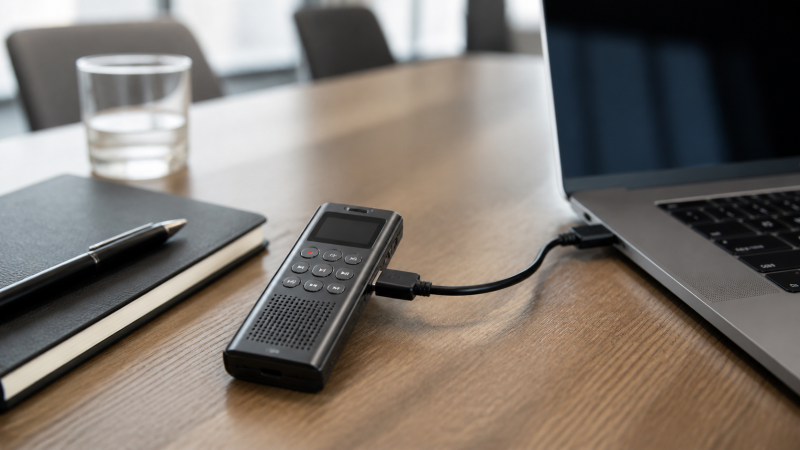
The right voice recorder should let you capture a meeting, lecture, interview, or personal memo without turning file transfer into a second project. These five retained options are all standalone digital voice recorders with packet-supported USB-C or Type-C charging, port, cable, or data evidence. Start with EVISTR L357 for its stated Type-C file-transfer cable, or consider Yegolito Type-C Recorder if you want a built-in Type-C jack.
The retained listing fields support the identity, connector wording, and features below, but they do not establish how a device will perform in your room, whether recording is lawful in your situation, or whether every phone and computer workflow will suit you. Compare Tonfarb 136GB, Qunifyed Magnetic Recorder, and soundcore Work against the way you plan to capture and retrieve recordings.
| Image | Product | Details | Check Price |
|---|---|---|---|
 | EVISTR L357 Voice Recorder | Storage: 64GB / up to 4660 hours listed Transfer: Included Type-C cable to computer listed Buyer check: 32-hour recording claim listed | Check Price on Amazon |
| Yegolito Type-C Voice Recorder | Storage: 128GB / over 9800 hours listed Transfer: Built-in Type-C bidirectional transfer listed Buyer check: 35-hour recording claim listed | Check Price on Amazon | |
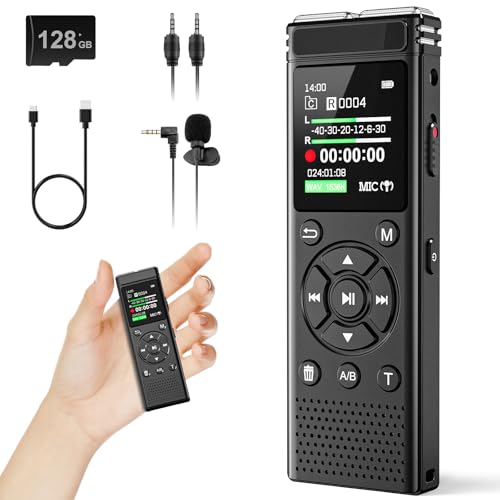 | Tonfarb 136GB Voice Recorder | Storage: 8GB internal plus 128GB TF card listed Transfer: USB-C computer transfer listed Buyer check: Up to 68-hour recording claim listed | Check Price on Amazon |
| Qunifyed Magnetic Voice Recorder | Storage: 136GB / up to 18800 hours listed Transfer: USB-C and OTG transfer listed Buyer check: Up to 100-hour recording claim listed | Check Price on Amazon | |
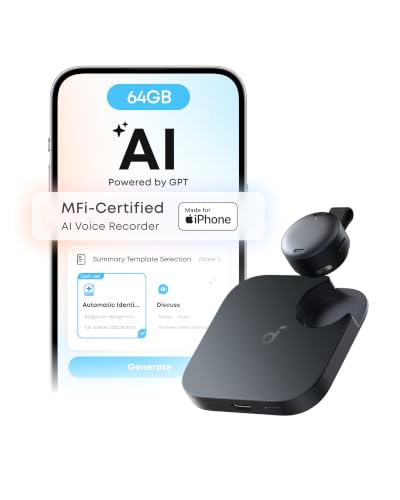 | soundcore Work Voice Recorder | Storage: 64GB listed Transfer: USB audio export excluded by listing Buyer check: USB-C charging and app workflow listed | Check Price on Amazon |
Key Takeaway: Pick a recorder for the moment you need to capture and the way you need to retrieve the file. An explicit USB-C or Type-C path helps, but the recorder’s own controls, file workflow, and stated limits should decide the final choice.
1. EVISTR L357 — Best for Direct File Transfer
EVISTR’s L357 listing describes a 64GB digital voice recorder with a Type-C USB cable for charging and transferring recordings to a computer. For a student or interviewer who wants a familiar recorder with playback, that direct cable wording is the practical reason to put it first.
The listing also describes voice activation, adjustable recording gain, WAV or MP3 recording, and time-stamped filenames. Our Take: We would treat those as a useful capture-and-sort toolset, not as a promise about the sound in a particular classroom or meeting room.
- Included Type-C cable for file transfer gives you a stated way to move recordings to a computer after a lecture or interview.
- Voice activation and adjustable gain can help you create fewer silent sections when a recording has long pauses.
- Time-stamped filenames can make it easier to separate sessions before you begin listening back.
- Computer transfer is the stated file path, so you should confirm that this matches the device you use to organize notes.
- Voice activation depends on your chosen sensitivity, which means it needs a deliberate setup before an important session.
2. Yegolito Type-C Recorder — Best Built-In Connector
The Yegolito voice recorder lists a built-in Type-C port and says it can connect to Windows, Mac computers, and phones for bidirectional transfer. That is a distinct fit for someone who wants the connector on the recorder itself rather than relying on a separate data lead.
Its retained listing also names one-touch recording, voice-operated recording, segmented saving, and a pen-like form. Our Take: Choose it when quick capture and a stated Type-C connection are more useful to you than a larger screen or a separate stand.
- Built-in Type-C jack can reduce the number of parts you need to find before charging or transferring a file.
- One-touch recording control supports a fast start when a class or conversation begins unexpectedly.
- Segment-saving options can help split a long session into smaller files for later review.
- Phone and computer connection wording should be checked against the exact device you expect to use for transfer.
- Pen-style controls may favor quick capture over a buyer who wants a larger display for navigation.
3. Tonfarb 136GB — Best for Large File Storage
Tonfarb’s 136GB voice recorder is aimed at buyers who want ample listed storage and a direct USB-C connection for moving recordings to a computer. The retained listing describes built-in storage plus a TF card, one-click recording, playback, and a screen, giving you a clearer route from capture to file management.
It also names voice-activated recording and WAV or MP3 file formats. Our Take: We would choose it for a schedule with many sessions only after deciding whether its stated storage arrangement and computer-transfer workflow fit your own filing habit.
- USB-C computer transfer wording gives you a packet-supported path for taking recordings off the device.
- Built-in storage plus a TF card can suit a buyer who wants to keep more recordings on hand before sorting them.
- One-click recording and saving can reduce the steps between hearing something important and preserving it.
- A larger storage setup still requires a naming and backup routine if you need to find a specific interview later.
- Voice-activated capture should be configured with care when quiet speakers or pauses are part of the session.
4. Qunifyed Magnetic Recorder — Best for Hands-Free Placement
The Qunifyed listing combines a compact digital voice recorder with double-sided magnetic attachment and USB-C plus OTG file transfer. That makes it a practical candidate when you need to place a recorder on a metal surface and later move the recording across supported device types.
Its listed features include one-touch recording, voice activation, file storage, and music playback. Our Take: The magnet is a placement feature, not a substitute for thinking about consent, legal recording rules, or whether the surface and recording location are appropriate.
- USB-C and OTG transfer wording gives you a stated way to access recordings across several device categories.
- Double-sided magnetic attachment can help keep the recorder in one chosen position on a suitable metal surface.
- One-touch recording can help you begin capture without navigating a long menu.
- Magnetic placement only helps where a suitable metal surface is available and appropriate for the recording.
- OTG terminology means you should verify your intended phone or computer workflow before relying on it.
5. soundcore Work — Best for App-Based Summaries
soundcore Work is a compact AI voice recorder whose retained listing includes a USB-C cable and states that the device can be charged with a USB-C cable. It is the different choice here for a buyer who wants a physical recorder alongside app-based recording management and optional transcription plans.
The listing says the device records meetings and interviews, offers a clip, necklace, or magnetic-ring carrying approach, and includes free monthly transcription minutes with optional paid plans. Our Take: We would separate the recorder itself from any plan decision and confirm the app workflow before making summaries part of your regular note process.
- USB-C charging evidence gives this physical recorder a connector path consistent with a USB-C daily kit.
- Multiple stated carry options can help you choose a way to keep the recorder close during meetings or classes.
- Optional transcription plans let you assess whether summaries belong in your workflow instead of assuming they do.
- App-based setup and plan options add a workflow decision beyond simply recording and copying a file.
- USB export restriction in the listing means you should decide whether its stated file-handling approach fits your needs.
Buying Guide: Choose the Recorder Around Your File Workflow
Decide how you will move recordings after capture
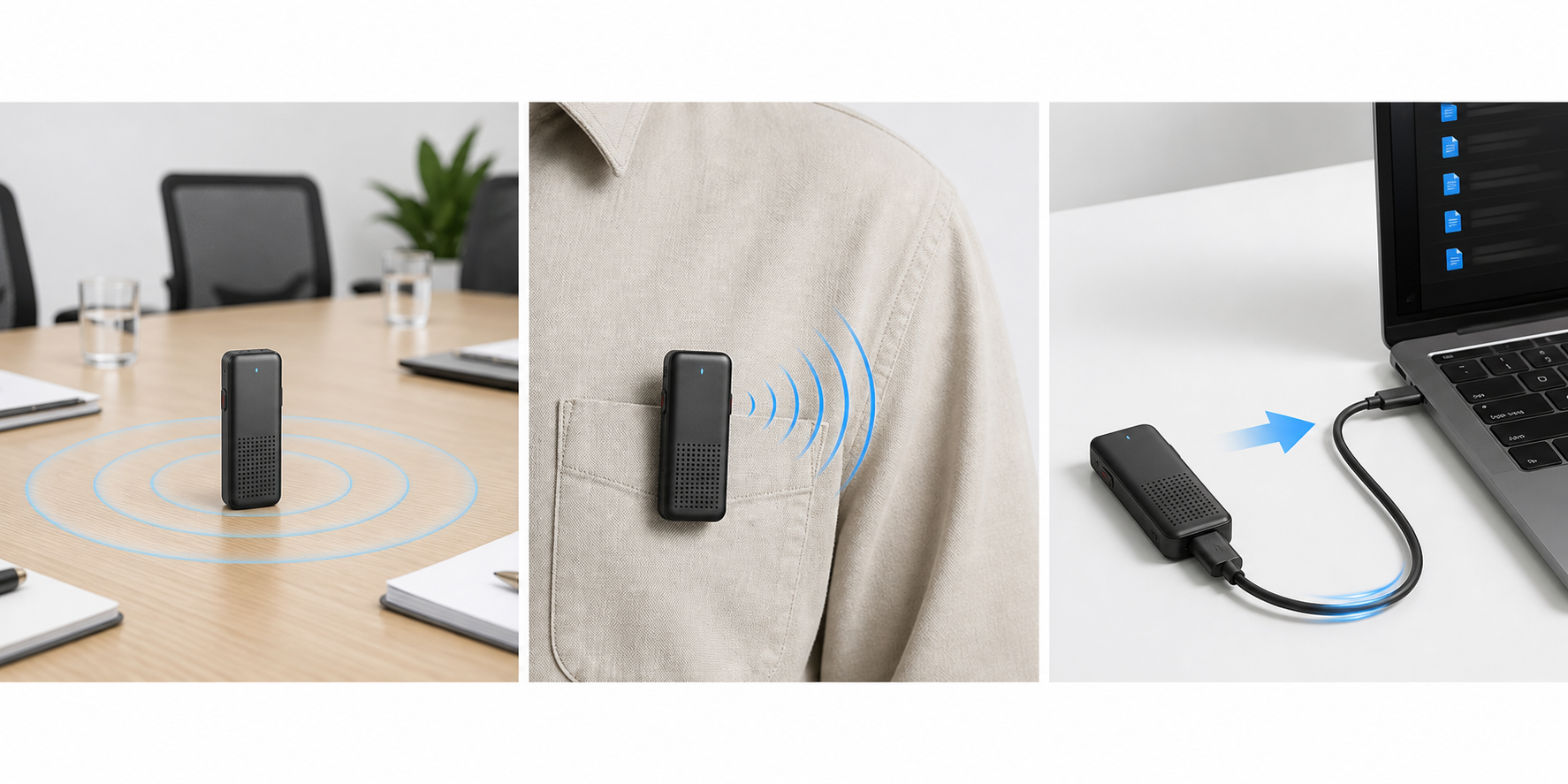
The connector should match the work you do after the conversation, not just the cable in your bag. EVISTR L357 and Tonfarb 136GB each state a computer-oriented Type-C or USB-C transfer path, while Yegolito Type-C Recorder describes a built-in Type-C port for connection and transfer. If the laptop’s ports are already occupied, compare the available connections with our USB-C hub guide.
If you want a recorder that stays close to a phone or computer workflow, look at the exact wording rather than assuming every USB-C recorder handles files the same way. USB-C charging is not the same claim as open file export, and soundcore Work‘s retained listing specifically says its audio files cannot be exported via USB. A known-good connection also starts with the right USB-C cable.
Match the controls to the moment you need to record
For lectures and interviews, a physical record control can be more useful than a feature list you cannot reach quickly. The EVISTR L357, Yegolito Type-C Recorder, Tonfarb 136GB, and Qunifyed Magnetic Recorder listings all describe one-touch or direct recording controls, while several also include voice-activated capture for sessions with pauses.
Voice activation needs a decision before the event starts. Sensitivity and room sound affect what gets recorded, so use it when reducing quiet stretches is useful and choose direct recording when you want to control the start and stop yourself.
Keep storage and follow-up work in proportion
A high-capacity recorder can hold more material, but it does not organize it for you. Tonfarb 136GB lists built-in storage plus a TF card, and EVISTR L357 lists time-stamped files, two examples of fields that can influence how you sort sessions after the fact.
For a summary-led process, soundcore Work adds a different choice because its listing includes app-based transcription plans. Optional plans and device recording are separate decisions, so choose it only when that stated setup fits the way you want to review notes.
[su_note note_color=”#fff5d6″]Recording alert: Check local consent and recording rules before you capture another person’s voice. A product listing cannot determine what is lawful or appropriate for your situation.[/su_note]Frequently Asked Questions
Is USB-C file transfer the same as USB-C charging?
No, treat them as separate listing claims. EVISTR L357, Yegolito Type-C Recorder, Tonfarb 136GB, and Qunifyed Magnetic Recorder include explicit wording about Type-C or USB-C connection and transfer, while soundcore Work‘s packet evidence supports USB-C charging. Your selection should follow the type of access you need after recording.
Read the retained wording before you rely on a workflow. A USB-C cable can charge a device without proving that you can browse or export recordings over that connection. The PAAPI-only packet does not establish behavior beyond the listed fields.
Which recorder is best for a meeting or lecture?
Start with the control and transfer path you will actually use. EVISTR L357 and Yegolito Type-C Recorder list direct recording controls and voice-activated options, while Tonfarb 136GB emphasizes a USB-C computer-transfer path.
Do not assume a listing guarantees a result in every room. Speaker distance, room sound, and legal consent are outside the packet evidence. Plan a quick review of the first recording when the event allows it.
Can a voice recorder replace an app subscription?
A recorder and a subscription solve different parts of the process. soundcore Work is a physical recorder, and its listing also describes optional transcription plans. You can decide whether you want those plans after deciding that its recording and file-handling model fits you.
A simple recorder may be the cleaner route for direct file control. The other retained models focus on recording, playback, and stated transfer connections. Choose the least complicated workflow that still gives you the review process you need.
How much recording time can each device store?
Capacity ranges from about 4660 hours to about 18800 hours across the retained listings. EVISTR L357 states up to 4660 hours on 64GB, Yegolito Type-C Recorder states over 9800 hours on 128GB, Tonfarb 136GB states up to 9775 hours, and Qunifyed Magnetic Recorder states up to 18800 hours on the same 136GB capacity as Tonfarb.
soundcore Work‘s listing does not state a comparable total recording-hours figure. Its retained listing centers on 64GB storage and monthly transcription minutes rather than a raw hour count, so weigh it on app features instead of matching it against the other four on capacity alone.
How long can each recorder run on a single charge?
Continuous recording time varies widely, from about 32 hours to about 100 hours. EVISTR L357 states 32 hours of continuous recording after a 3-hour charge, Yegolito Type-C Recorder states continuous recording of 35 hours, Tonfarb 136GB states up to 68 hours on a single charge, and Qunifyed Magnetic Recorder states up to 100 hours of continuous recording.
soundcore Work‘s retained listing does not state a continuous-recording-hours figure the way the other four do. Check your own expected session length against the stated numbers above rather than assuming a similar runtime for the app-based recorder.
Final Word
We would choose EVISTR L357 for a straightforward Type-C cable workflow, Yegolito Type-C Recorder for its built-in port, Tonfarb 136GB for its listed storage arrangement, Qunifyed Magnetic Recorder for a stated magnetic placement option, and soundcore Work when an app-led summary process is the goal. Your best choice is the recorder whose explicit USB-C or Type-C evidence and follow-up workflow fit the notes you need to keep.