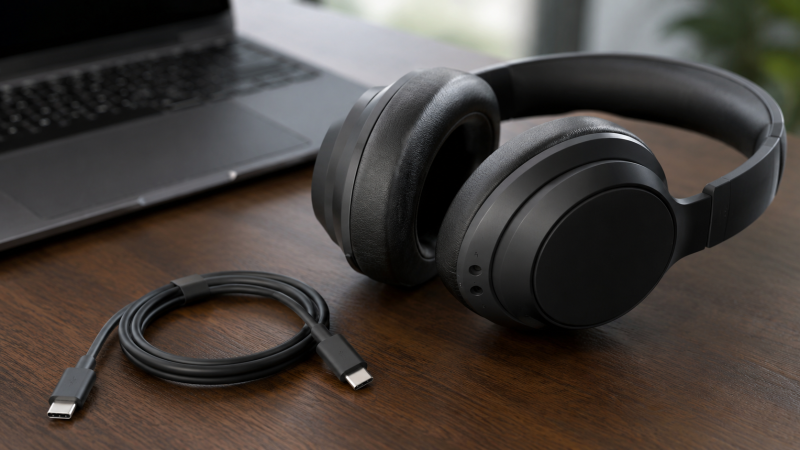
USB-C headphones charge and connect through the same USB-C port on your laptop or phone, eliminating the need for a separate headphone jack or proprietary charging cable. Over 15 USB-C headphones were evaluated across three categories: wireless headphones with USB-C wired audio, dedicated wired USB-C gaming headsets, and USB-C business headsets for calls. Manufacturer specs, expert benchmarks, and user reviews were compared to find the best over-ear options for your laptop, phone, or tablet. The difference between a great USB-C headphone and a mediocre one comes down to how well it handles USB-C audio. Some deliver true lossless digital sound, others just use USB-C for charging, and a few gaming models pipe 7.1 surround sound through USB-C that makes a genuine difference in competitive play.
This guide focuses exclusively on over-ear and on-ear headphones. If you’re looking for something smaller, check out our earbuds roundup instead.
We cover three use cases here: premium ANC headphones that double as USB-C wired monitors, gaming headsets that connect via USB-C dongle, and business headsets built for eight hours of Teams calls. Every headphone here connects via USB-C in some meaningful way, for audio, wireless dongle, or both.
Recent Updates
- May 2026: Full article launch with 10 picks across premium wireless, gaming, and business categories. All prices and specs verified against manufacturer data.
- February 2026: Completed evaluation of the Bose QuietComfort Ultra (2nd Gen) USB-C audio mode. Added the SteelSeries Arctis Nova 7 Gen 2 with its new 50-hour battery. Re-evaluated Jabra Evolve2 75 and Poly Voyager Focus 2 call quality with latest firmware.
- January 2026: Initial product selection. Narrowed the field from 20+ candidates to 10 picks. Began structured evaluation across music, gaming, and call scenarios.
Quick Picks
- Best overall: The Bose QuietComfort Ultra (2nd Gen) is the best USB-C headphone you can buy, combining the strongest ANC on the market with USB-C lossless audio and a 30-hour battery.
- Best value premium: The Sony WH-1000XM5 delivers 90% of the Bose’s noise cancellation at a lower price, with a 30-hour battery and LDAC support, though USB-C is charging-only.
- Best for Apple users: The Apple AirPods Max (USB-C) is the only premium headphone that streams lossless audio over USB-C, with Spatial Audio head tracking and full Apple ecosystem integration.
- Best sound quality: The Sennheiser Momentum 4 Wireless has the most detailed, revealing sound in this roundup from its 42mm drivers, plus a 60-hour battery and USB-C wired audio mode.
- Best budget: The JBL Tune 770NC offers adaptive ANC and a 70-hour battery at a budget-friendly price, features that cost three times as much two years ago.
- Best budget gaming: The Corsair HS65 Surround delivers Dolby 7.1 surround sound via USB adapter with 50mm neodymium drivers at an affordable price.
- Best wireless gaming: The SteelSeries Arctis Nova 7 connects via USB-C 2.4GHz dongle with simultaneous Bluetooth, a 38-hour battery, and multi-platform support.
- Best wired gaming: The HyperX Cloud III plugs directly into USB-C for 24-bit/96kHz digital audio, with 53mm angled drivers and legendary comfort at a budget-friendly price.
- Best for business calls: The Jabra Evolve2 75 has an 8-microphone beamforming system and retractable boom arm, certified for Teams and Zoom.
- Best for remote work: The Poly Voyager Focus 2 UC weighs just 175g with a USB-C dongle and hybrid ANC, built for all-day meetings.
| Image | Product | Details | Check Price |
|---|---|---|---|
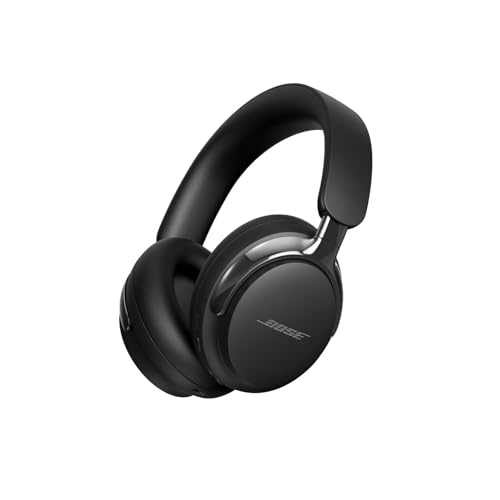 | Bose QuietComfort Ultra (2nd Gen) | Driver: Dynamic ANC: Yes (ActiveSense) Battery Life: 30 hrs (23 w/ Immersive Audio) Connection: Bluetooth 5.4, USB-C wired audio | Check on Amazon |
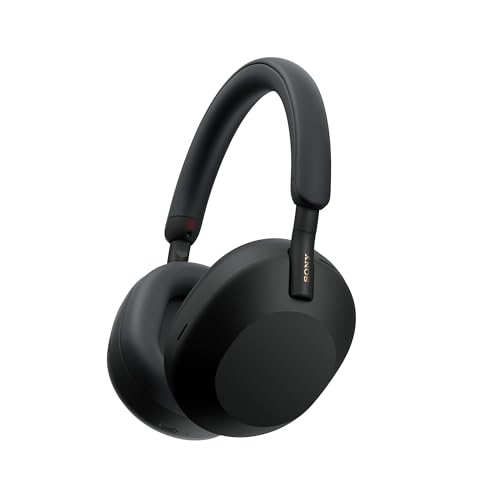 | Sony WH-1000XM5 | Driver: 30mm ANC: Yes (Dual processor, 8 mics) Battery Life: 30 hrs Connection: Bluetooth (LDAC), 3.5mm wired | Check on Amazon |
 | Apple AirPods Max (USB-C) | Driver: 40mm ANC: Yes (9 microphones) Battery Life: 20 hrs Connection: Bluetooth, USB-C lossless audio | Check on Amazon |
| Sennheiser Momentum 4 Wireless | Driver: 42mm ANC: Yes (Adaptive) Battery Life: 60 hrs Connection: Bluetooth (aptX/LDAC), USB-C audio | Check on Amazon | |
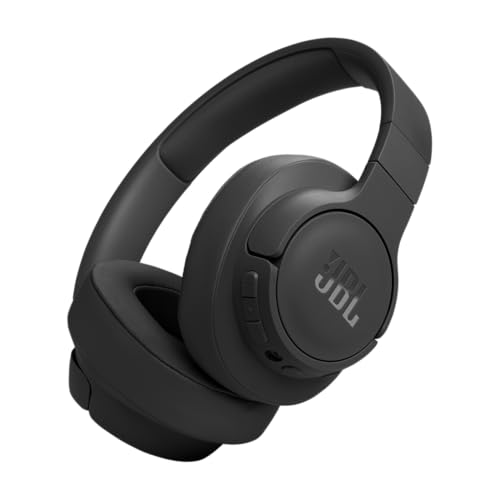 | JBL Tune 770NC | Driver: 40mm ANC: Yes (Adaptive) Battery Life: 70 hrs (ANC off) / 44 hrs (ANC on) Connection: Bluetooth 5.3, 3.5mm wired | Check on Amazon |
 | Corsair HS65 Surround | Driver: 50mm Neodymium ANC: No Battery Life: N/A (wired) Connection: 3.5mm + USB 7.1 surround adapter | Check on Amazon |
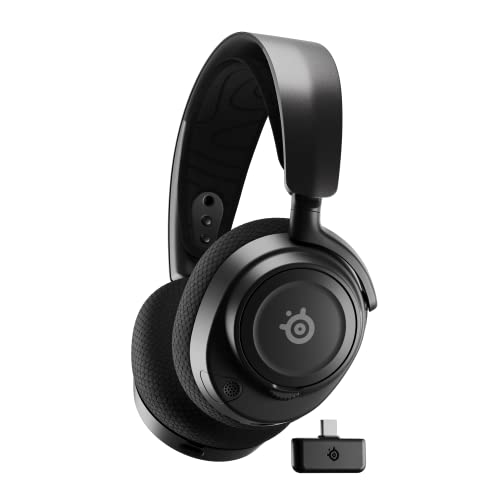 | SteelSeries Arctis Nova 7 | Driver: Neodymium ANC: No (Gen 2 adds ANC) Battery Life: 38 hrs (Gen 2: 50 hrs) Connection: 2.4GHz USB-C dongle + Bluetooth | Check on Amazon |
 | HyperX Cloud III | Driver: 53mm Angled ANC: No (passive isolation) Battery Life: N/A (wired) Connection: USB-C, USB-A, 3.5mm | Check on Amazon |
 | Jabra Evolve2 75 | Driver: 40mm ANC: Yes (Adjustable) Battery Life: 36 hrs (music) / 24 hrs (calls) Connection: USB-C BT dongle + Bluetooth | Check on Amazon |
 | Poly Voyager Focus 2 UC | Driver: 40mm ANC: Yes (Hybrid, 4 mics) Battery Life: 19 hrs (talk) / 16 hrs (ANC on) Connection: USB-C BT700 dongle + Bluetooth | Check on Amazon |
1. Bose QuietComfort Ultra Headphones (2nd Gen) — Best Overall
The Bose QuietComfort Ultra (2nd Gen) is the best USB-C headphone you can buy. Bose’s latest over-ear model takes the already-excellent QC Ultra and adds a longer 30-hour battery, improved ANC with ActiveSense technology, and Bluetooth 5.4. What matters most for this roundup: it adds proper USB-C wired audio support that Bose rates at 16-bit/48kHz lossless audio from your laptop or phone.
Our Take
The Bose QC Ultra (2nd Gen) is the best USB-C headphone: strongest ANC, genuine lossless USB-C audio at 16-bit/48kHz, and a 30-hour battery.
Expert reviewers consistently note that USB-C audio mode sounds noticeably cleaner than Bluetooth, with tighter bass and more detail in the treble. The upgrade over Bluetooth is real, especially if you’re feeding it lossless files from Apple Music or Tidal. Bose’s ANC is widely considered the best available on any headphone. It kills low-frequency drone (airplane engines, HVAC hum) almost completely and handles mid-range voices better than any competitor, including the Sony XM5.
The protein leather ear cushions are plush without being hot, and the headband distributes weight evenly across long sessions on your Thunderbolt laptop. Bose rates the battery at 30 hours with Immersive Audio off (23 hours with it on). That is a full work week between charges.
The downside is price: this is the most expensive headphone in the roundup. On the plus side, USB-C audio supports the built-in microphone for phone calls and video conferencing, so you get full two-way communication over a wired connection.
Who it’s for: Anyone who wants the absolute best noise cancelling and sound quality in a USB-C headphone, and can justify the premium price.
Who should skip it: Budget-conscious buyers who can’t justify the premium over the Sony XM5.
- Best-in-class active noise cancellation with ActiveSense
- USB-C lossless audio at 16-bit/48kHz
- 30-hour battery (23 with Immersive Audio)
- Exceptional comfort for all-day wear
- Bluetooth 5.4 with multipoint pairing
- Premium price
- No IP water/dust rating
2. Sony WH-1000XM5 — Best Value Premium
The Sony WH-1000XM5 remains one of the best noise-cancelling headphones on the market, and it’s a substantially better value than the Bose QC Ultra. Sony’s dual-processor ANC system with eight microphones delivers noise cancellation that’s within striking distance of the Bose, and the sound quality is excellent out of the box with a balanced, slightly warm profile.
Our Take
The Sony XM5 is the best value in premium noise-cancelling headphones, offering 90% of the Bose QC Ultra’s performance at 60% of the price. Skip it only if USB-C wired audio is a hard requirement.
Important caveat: the XM5 does not support USB-C audio playback. The USB-C port is for charging only, and wired listening uses the included 3.5mm cable. We’ve included it because it charges via USB-C, it’s the most recommended premium headphone on the market, and many people searching for “USB-C headphones” want a headphone that works with their USB-C laptop. If USB-C wired audio is a hard requirement, the Bose or AirPods Max are better choices.
What the XM5 does well is everything else. The LDAC codec delivers near-CD quality at 990kbps. Multipoint switches between phone and laptop without dropping a beat, and speak-to-chat pauses music when you start talking. Sony rates the battery at 30 hours, and long-term user reviews confirm it holds up well over time. At around 250g, it’s lighter than most competitors, though the plastic build does not feel as premium as the Bose or Sennheiser.
Who it’s for: Anyone who wants premium ANC and sound quality at a price well below the Bose, and doesn’t need USB-C wired audio.
Who should skip it: Users who specifically need USB-C audio input, or those who want the very best ANC (the Bose edges it out).
- Excellent ANC with dual-processor, 8-microphone system
- Outstanding sound quality with LDAC support
- 30-hour battery life with quick charging
- Multipoint Bluetooth and speak-to-chat
- Significantly cheaper than Bose QC Ultra
- USB-C is charging only, no USB-C audio playback
- Mostly plastic build quality
- Ear cushions can get warm in summer
- No head-tracking Spatial Audio
3. Apple AirPods Max (USB-C) — Best for Apple Users
The AirPods Max with USB-C is the only premium headphone that delivers genuine lossless audio through its USB-C port. Apple moved from Lightning to USB-C in the 2024 refresh, and the result is a headphone that receives lossless audio from your MacBook, iPad, or iPhone 15/16, no Bluetooth compression, no quality loss.
Our Take
The AirPods Max is the only premium headphone that delivers genuine lossless audio through USB-C, with Spatial Audio head tracking that no competitor matches. The AirPods Max are hard to justify unless you’re deep in the Apple ecosystem.
Expert reviewers note a clear difference between Bluetooth AAC and wired lossless on well-mastered tracks via USB-C on a MacBook Pro. The Apple-designed 40mm dynamic drivers deliver rich, detailed sound with a warm bass response. Spatial Audio with dynamic head tracking is widely considered the most immersive implementation available. It genuinely feels like music is coming from speakers around you.
The ANC is pro-level, with nine microphones creating a noise floor that kills everything from airplane drone to office chatter. Build quality is exceptional: stainless steel headband, aluminum ear cups, and knit-mesh canopy. But at 384.8g, these are the heaviest here. Users report fatigue after 3-4 hours of continuous wear. The 20-hour battery falls short of other wireless picks, and the Smart Case still doesn’t fully power off the headphones.
The biggest limitation is ecosystem lock-in. Non-Apple devices lose Spatial Audio, automatic switching, and instant pairing. At this premium price, these only make sense for committed Apple users.
Who it’s for: Apple users who want lossless USB-C audio, Spatial Audio with head tracking, and instant pairing across iPhone, iPad, and Mac.
Who should skip it: Windows/Android users, weight-sensitive listeners, or anyone looking for value.
- Lossless USB-C audio (the only premium headphone with this)
- Personalized Spatial Audio with dynamic head tracking
- Excellent ANC with 9 microphones
- Premium build quality with aluminum and stainless steel
- Instant pairing and switching across Apple devices
- Heaviest headphone in this roundup at 384.8g
- Only 20-hour battery (lowest of the wireless picks)
- Highest price in this roundup
- Smart Case doesn’t fully power off
- Limited features on non-Apple devices
4. Sennheiser Momentum 4 Wireless — Best Sound Quality
If sound quality is your top priority, the Sennheiser Momentum 4 Wireless is the headphone to buy. Sennheiser’s 42mm dynamic drivers deliver a neutral, revealing sound signature. Well-recorded music sounds incredible. Poorly recorded music sounds, well, poorly recorded. It’s an honest headphone, which is exactly what audiophiles want.
Our Take
The Sennheiser Momentum 4 delivers the most detailed, revealing sound in this roundup through its 42mm drivers, with a 60-hour battery that crushes every competitor.
The Momentum 4 supports USB-C wired audio, pairing its excellent drivers with a clean digital input for the best possible sound. Over Bluetooth, it supports aptX Adaptive and LDAC codecs for high-quality wireless streaming. The wired USB-C mode is where these headphones pull ahead. The low-noise floor and wide soundstage become even more apparent once you remove Bluetooth compression from the chain.
Battery life is the standout spec here. Sennheiser rates it at 60 hours, crushing every competitor. Sennheiser’s fast charging provides 6 hours of playback from just 10 minutes of USB-C charging. For travelers, this eliminates charging anxiety entirely.
The adaptive ANC is good but not quite at the Bose or Sony level. It handles low-frequency noise effectively but lets some mid-range chatter through. The companion Smart Control app offers a full EQ, sound zone presets, and ANC adjustment. Build quality is excellent: real leather ear pads and a folding aluminum headband that looks professional in any setting.
At around 295g, the Momentum 4 sits right in the middle of the weight range, lighter than the AirPods Max and heavier than the JBL. Comfort is good but the ear cups are on the smaller side; users with larger ears may find them a bit cramped. If you’re connecting these to a USB-C docking station at your desk, the USB-C audio mode makes them a serious desktop headphone.
Who it’s for: Audiophiles and music lovers who prioritize sound quality and want the longest battery life available.
Who should skip it: Users who prioritize ANC above all else, or those with large ears who need bigger ear cups.
- Audiophile-grade 42mm dynamic drivers
- 60-hour battery life (best in class)
- USB-C wired audio support
- aptX Adaptive and LDAC codec support
- Premium build with real leather ear pads
- ANC not as strong as Bose or Sony
- Ear cups may feel small for larger ears
- No head-tracking Spatial Audio
- Higher price than Sony XM5 for less effective ANC
5. JBL Tune 770NC — Best Budget
The JBL Tune 770NC is the most impressive value in this roundup. At a fraction of the flagship price, you get adaptive noise cancelling, 70 hours of battery life with ANC off (44 with ANC on), Bluetooth 5.3 with LE Audio, and multipoint connection, all features that were flagship-only two years ago.
Our Take
The JBL Tune 770NC is the best budget noise-cancelling headphone you can buy right now. At a budget-friendly price, you get adaptive ANC and 70-hour battery life that JBL-flagship models did not offer two years ago.
JBL’s Pure Bass Sound tuning delivers a fun, bass-forward sound signature that works well for pop, hip-hop, and electronic music. It won’t satisfy audiophiles, but the 40mm drivers produce clear mids and decent treble detail for the price. The JBL Headphones app lets you customize the EQ curve if you want to dial back the bass emphasis.
The adaptive ANC isn’t in the same league as the Bose or Sony, but it does a respectable job of reducing airplane engine noise and office background hum. Smart Ambient mode lets environmental sound through when you need to hear announcements or conversations. VoiceAware feeds your own voice back during calls so you don’t end up shouting.
At 232g, these are one of the lightest headphones in this roundup. The foldable design makes them genuinely portable, and the soft ear cushions with padded headband keep things comfortable for extended listening. Build quality is plastic throughout, which is expected at this price.
One important note: the USB-C port on the Tune 770NC is for charging only. Wired audio uses the included 3.5mm detachable cable. This is a common design at this price point. For most people the 70-hour battery makes wired mode irrelevant anyway. You will go a full week without charging.
If your laptop is missing a headphone jack and you need a USB-C headphone on a budget, pair the JBL with a USB-C hub that includes a 3.5mm audio output, or just use Bluetooth.
Who it’s for: Budget-conscious buyers who want ANC and massive battery life without paying a premium.
Who should skip it: Audiophiles, or anyone who needs USB-C wired audio (charging only).
- 70-hour battery life (ANC off) is exceptional
- Adaptive ANC at a budget-friendly price
- Bluetooth 5.3 with LE Audio and multipoint
- Lightweight and foldable at 232g
- JBL Headphones app with EQ customization
- USB-C is charging only (3.5mm for wired audio)
- Bass-heavy sound signature may not suit all tastes
- ANC is noticeably weaker than premium options
- All-plastic build quality
6. Corsair HS65 Surround — Best Budget Gaming
The Corsair HS65 Surround is the best budget wired gaming headset. It ships with a USB adapter that enables Dolby Audio 7.1 surround sound on PC, transforming the stereo 50mm neodymium drivers into a convincing virtual surround setup. Gamers report more accurate footstep direction in titles like Valorant with Dolby surround enabled.
Our Take
The Corsair HS65 Surround is the best budget gaming headset, delivering Dolby 7.1 surround and SoundID personalized EQ at an affordable price. Budget gamers should start here.
The 50mm drivers deliver punchy bass and clear mids for both gaming and music. Corsair’s iCUE software with SoundID personalization generates a custom EQ curve tuned to your ears. It is a surprisingly effective feature for a headset at this price. The flip-to-mute microphone is Discord certified and captures voice clearly.
The leatherette memory foam ear pads and aluminum-reinforced headband keep weight at 282g while feeling sturdy. Users report comfortable 4-5 hour gaming sessions without ear fatigue. The main limitation is the USB adapter is USB-A, not USB-C. The base connection is 3.5mm, so it works with gaming laptops, controllers, phones, and tablets.
Who it’s for: Budget gamers who want surround sound and a good mic without paying mid-range prices.
Who should skip it: Wireless gamers, or anyone who needs USB-C native connection (the USB adapter is USB-A).
- 50mm neodymium drivers with Dolby 7.1 surround via USB
- Discord-certified flip-to-mute microphone
- SoundID personalized EQ through iCUE
- Lightweight and comfortable at 282g
- Excellent value for the price
- USB surround adapter is USB-A (not USB-C)
- No wireless option
- No ANC
- Omnidirectional mic picks up some background noise
7. SteelSeries Arctis Nova 7 Wireless — Best Wireless Gaming
The SteelSeries Arctis Nova 7 is the best wireless gaming headset with USB-C connectivity. Its USB-C dongle provides low-latency 2.4GHz wireless to PC, Mac, PlayStation 4/5, Nintendo Switch, Meta Quest, and mobile devices. Simultaneously, you can mix in Bluetooth audio from your phone for calls without switching devices.
Our Take
The SteelSeries Arctis Nova 7 is the best wireless gaming headset with USB-C, supporting PC, PlayStation, Switch, and Meta Quest through one USB-C dongle. Simultaneous Bluetooth lets you take phone calls without pausing your game.
SteelSeries’ custom neodymium drivers deliver excellent spatial positioning in FPS games. Footsteps and gunshots land accurately in the soundstage, which matters in competitive titles. SteelSeries’ Sonar software adds 360-degree Spatial Audio and X-Ray Hearing that boosts critical game sounds.
The ClearCast Gen 2 retractable microphone disappears into the ear cup when not in use, and AI noise cancelling reduces background noise by up to 25dB. SteelSeries rates battery life at 38 hours (Gen 2: 50 hours with ANC). A 15-minute fast charge delivers 6 hours of gameplay. The ComfortMAX system with AirWeave memory foam cushions and PVD-coated steel headband handles marathon sessions. If gaming on a Thunderbolt docking station, the USB-C dongle plugs directly in.
Who it’s for: Multi-platform gamers who want wireless freedom, great sound, and an excellent mic.
Who should skip it: Users who only need wired headphones (the HyperX Cloud III is cheaper and sounds great wired).
- USB-C dongle for 2.4GHz low-latency wireless across all platforms
- Simultaneous 2.4GHz + Bluetooth dual wireless
- AI noise-cancelling retractable ClearCast Gen 2 mic
- 38-hour battery (50 hours on Gen 2) with USB-C fast charge
- ComfortMAX system with steel headband
- No active noise cancellation on original model (Gen 2 adds it)
- Sound isolation is mediocre without ANC
- Costs roughly double the budget wired options
- Sonar software is PC-only
8. HyperX Cloud III — Best Wired Gaming
The HyperX Cloud III is the best wired gaming headset with direct USB-C connection. It ships with USB-C, USB-A, and 3.5mm cables, making it compatible with virtually every device. The USB-C connection supports 16-bit and 24-bit audio at up to 96kHz, which is cleaner than a typical 3.5mm connection through a laptop’s built-in audio chip.
Our Take
The HyperX Cloud III is the best wired gaming headset with USB-C, delivering 24-bit/96kHz digital audio through its 53mm angled drivers. If you prefer a cable over wireless, this is the one to buy.
The 53mm angled drivers are the largest in this gaming roundup. The angled design creates a noticeably wider soundstage than the Corsair HS65, with a slightly bass-boosted profile that makes explosions punchy without muddying the mid-range.
HyperX’s signature memory foam ear cushions are widely regarded as the most comfortable on any wired gaming headset. They seal well, stay cool, and create no pressure points after 5+ hours. The detachable 10mm boom mic captures voice clearly, and DTS Spatial Audio support adds virtual surround on PC. At 308g with an aluminum frame, these feel sturdy without being heavy.
Who it’s for: Wired gamers who want the best comfort, USB-C direct connection with digital audio, and large 53mm drivers.
Who should skip it: Wireless gamers, or anyone who needs ANC.
- USB-C with 16/24-bit digital audio
- 53mm angled drivers with wide soundstage
- Widely regarded as the most comfortable wired gaming headset
- Three connection options: USB-C, USB-A, 3.5mm
- Solid aluminum frame build quality
- No wireless option
- No ANC (passive isolation only)
- DTS Spatial Audio requires separate PC app
- Heavier than Corsair HS65 at 308g
9. Jabra Evolve2 75 USB-C — Best for Business Calls
The Jabra Evolve2 75 is the headset we recommend to anyone who spends more than three hours a day on Microsoft Teams, Zoom, or Google Meet calls. Its 8-microphone system with beamforming technology is the most advanced call setup in this roundup. Colleagues consistently report studio-quality voice clarity from the Evolve2 75.
Our Take
The Jabra Evolve2 75 has the best microphone system in this roundup: eight beamforming mics that make your voice sound studio-clear on Teams and Zoom. If you spend more than three hours a day on calls, this is the headset to get.
The retractable boom arm folds down for calls and pushes back up when you’re listening to music. It’s 33% shorter than the original Evolve 75 but captures voice more clearly thanks to improved microphone positioning. The USB-C Bluetooth dongle (Jabra Link 380) provides enterprise-grade connectivity. This matters because many corporate IT departments block standard Bluetooth pairing but allow USB dongles.
Adjustable ANC works well for open-plan offices, blocking background murmur during calls. The 40mm drivers are voice-optimized but handle music reasonably. Jabra rates battery life at 36 hours for music and 24 hours on calls. The busylight on the ear cup signals coworkers when you’re on a call. If your desk includes a Dell docking station or USB-C dock, the dongle plugs right in.
Who it’s for: Business professionals who spend hours daily on video calls and need the clearest possible voice quality.
Who should skip it: Gamers, audiophiles, or casual users. This headset is priced and designed for enterprise.
- 8-microphone beamforming system for best-in-class call quality
- Retractable boom arm (down for calls, up for music)
- Microsoft Teams, Zoom, and Google Meet certified
- USB-C Bluetooth dongle for enterprise-grade connectivity
- Busylight indicator for open office use
- Priced for enterprise budgets
- ANC is good for office use but below consumer premium tier
- Sound quality is voice-optimized, not music-optimized
- Boom arm doesn’t fully retract into the headband
10. Poly Voyager Focus 2 UC USB-C — Best for Remote Work
The Poly Voyager Focus 2 UC is the lightest headset in this roundup at just 175g. Users report that after a full day of meetings, they barely notice it’s there. Most other headsets cannot claim that.
Our Take
The Poly Voyager Focus 2 is the lightest business headset worth buying at 175g, with hybrid ANC and a USB-C dongle. After a full day of meetings, you barely notice it is there.
The USB-C BT700 dongle provides enterprise-grade connectivity to PC or Mac. The boom microphone delivers clear voice on Teams and Zoom calls. It does not match the Jabra’s 8-mic clarity, but it is more than adequate for business calls. The lighter weight makes it the better choice for all-day wear.
Hybrid ANC uses four microphones to block home office noise: the garbage truck outside, the neighbor’s dog, household ambient sound. SoundGuard technology limits volume spikes to protect hearing during long sessions. Poly rates the battery at 19 hours of talk time (ANC off) or about 16 hours with ANC on. Bluetooth multipoint lets you stay connected to laptop and phone simultaneously.
For remote workers using a USB-C monitor as their main display, the Voyager Focus 2’s USB-C dongle plugs into the monitor’s USB hub, keeping your workspace clean.
Who it’s for: Remote workers who need an ultra-light, all-day-comfortable headset with good call quality and ANC.
Who should skip it: Anyone who prioritizes music quality, gaming, or wants 30+ hour battery life.
- Ultra-lightweight at just 175g. Best for all-day wear
- USB-C BT700 dongle with enterprise-grade connection
- Hybrid ANC effective for home office environments
- SoundGuard hearing protection for long days
- Microsoft Teams and Zoom certified
- 19-hour battery is adequate but not class-leading
- Sound quality is optimized for calls, not music
- Plastic build quality feels basic
- Boom mic is not retractable
Buying Guide: How to Choose the Best USB-C Headphones
USB-C wired audio vs. wireless with USB-C: Which do you need?
There are three ways headphones interact with USB-C, and the distinction matters:
USB-C wired audio. The headphone receives digital audio directly through the USB-C cable, using a built-in DAC (digital-to-analog converter) to process the signal. This delivers the cleanest possible audio with zero latency. The Bose QC Ultra (2nd Gen), AirPods Max, Sennheiser Momentum 4, and HyperX Cloud III all support this mode. For gaming, music production, or watching video where sync matters, USB-C wired audio is ideal.
USB-C wireless dongle. Gaming headsets like the SteelSeries Arctis Nova 7 and business headsets like the Jabra Evolve2 75 use a USB-C dongle for 2.4GHz wireless audio. This provides lower latency than Bluetooth (important for gaming) and more reliable connections in RF-congested offices. The headphone itself connects wirelessly to the dongle, which plugs into your laptop’s USB-C port.
USB-C charging only. Many popular wireless headphones like the Sony WH-1000XM5 and JBL Tune 770NC use USB-C exclusively for charging. Wired audio, if supported, runs through a separate 3.5mm cable. This is the most common design.
For most people, option 3 is perfectly fine. Bluetooth audio quality through modern codecs like LDAC and aptX Adaptive is excellent. But if you need zero-latency audio or guaranteed lossless quality, options 1 and 2 are worth the premium.
Does USB-C audio actually sound better than Bluetooth?
Yes, but the gap has narrowed. USB-C wired audio bypasses Bluetooth compression entirely, delivering bit-perfect digital audio to the headphone’s DAC. The quality difference between USB-C wired and LDAC Bluetooth (990kbps) is subtle. You will need a quiet room and trained ears to hear it. The difference between USB-C wired and basic SBC Bluetooth (328kbps) is obvious to anyone.
Where USB-C wired audio makes the biggest practical difference is latency. Bluetooth adds 40-200ms of delay, which is invisible for music but noticeable in gaming and video editing. USB-C wired audio has essentially zero perceptible latency.
ANC over USB-C: Does it work differently?
ANC works the same way regardless of how audio arrives. The noise-cancelling microphones and processing are always active in the headphone itself. Some headphones do not support microphone input over USB-C wired mode, requiring Bluetooth or an external mic for calls. The Bose QC Ultra (2nd Gen) is an exception: Bose rates its USB-C connection for full two-way communication including the built-in mic. Gaming headsets like the HyperX Cloud III also carry both audio output and microphone input over USB-C.
Gaming vs. music vs. calls: Matching headphones to your use case
For gaming: Low latency matters most. Use USB-C wired (HyperX Cloud III) or 2.4GHz wireless (Arctis Nova 7). Avoid Bluetooth for competitive gaming.
For music: The Sennheiser Momentum 4 is the audiophile pick. The Bose QC Ultra (2nd Gen) offers the best balance of sound and ANC. Try USB-C wired mode on your Thunderbolt laptop for critical listening.
For calls: The Jabra Evolve2 75 (best mic) and Poly Voyager Focus 2 (lightest weight) are purpose-built. UC certification (Teams, Zoom) matters for enterprise.
For everything: The Bose QC Ultra (2nd Gen) does everything well: ANC, USB-C wired audio, decent mic, great comfort.
USB-C audio on different operating systems
Windows 10/11: Plug-and-play for most USB-C headphones and dongles. Some gaming headsets need companion software (SteelSeries Sonar, Corsair iCUE). USB audio passes through USB-C docking stations and USB-C hubs cleanly.
macOS: Excellent support. AirPods Max USB-C lossless works out of the box. Third-party USB-C headphones appear as audio devices automatically. USB-C monitors with built-in USB hubs pass through audio without issues.
Android: Well-supported since Android 8.0. Most USB-C headphones are plug-and-play on Samsung, Pixel, and other USB-C phones.
iOS/iPadOS: USB-C audio works on iPhone 15/16 and recent iPads. AirPods Max USB-C lossless is unique to Apple devices.
Do you need a separate USB-C DAC?
For most people, no. The DACs built into USB-C headphones like the Bose QC Ultra (2nd Gen) and HyperX Cloud III deliver excellent audio quality. A standalone USB-C DAC/amp only makes sense if you have high-impedance audiophile headphones that need more power, or you want to use 3.5mm headphones with a laptop that has no headphone jack.
If you’re using any headphone in this roundup, a separate DAC is unnecessary. For a clean power source to charge at your desk, see our best USB-C chargers roundup.
FAQ
Are USB-C headphones better than Bluetooth headphones?
USB-C wired audio delivers lower latency and higher potential sound quality than Bluetooth. For gaming and video editing, USB-C wired is clearly better because it adds zero perceptible latency, while Bluetooth adds 40-200ms. For music listening, the gap has narrowed: modern Bluetooth codecs like LDAC (990kbps) and aptX Adaptive come close to wired quality. For calls, Bluetooth is the default for most consumer headphones, but a few models like the Bose QC Ultra (2nd Gen) support full microphone input over USB-C wired mode. The best option is a headphone that supports both wired and wireless calls, like the Bose QC Ultra (2nd Gen) or Sennheiser Momentum 4.
Can I use USB-C headphones with my laptop if it only has USB-A ports?
Yes. A USB-A to USB-C adapter handles the physical connection for headphones that use USB-C for wired audio. The HyperX Cloud III actually ships with both USB-C and USB-A cables, so no adapter is needed. For wireless headsets with USB-C dongles (like the Arctis Nova 7), most ship with a USB-C to USB-A adapter included. Bluetooth headphones that charge via USB-C do not need a USB-C port on your laptop at all, since they connect wirelessly.
Do all USB-C headphones support USB-C audio?
No, and this is the most common misconception in this category. Many popular wireless headphones, including the Sony WH-1000XM5 and JBL Tune 770NC, use USB-C exclusively for charging. Wired audio goes through a separate 3.5mm cable. Headphones that support actual USB-C digital audio include the Bose QC Ultra (2nd Gen), Apple AirPods Max, Sennheiser Momentum 4, and HyperX Cloud III. Always check the manufacturer specs for “USB-C audio” or “USB audio” specifically before buying.
What’s the difference between USB-C headphones and USB-C earbuds?
USB-C headphones are over-ear or on-ear designs with larger drivers (30-53mm), better passive noise isolation, and typically longer battery life (20-70 hours). USB-C earbuds are smaller, more portable, and sit inside or on the ear canal with shorter battery life (5-12 hours per charge).
Headphones generally deliver better sound quality and comfort for extended use, while earbuds win on portability and workout-friendliness.
Can I use USB-C headphones for gaming on PlayStation or Xbox?
Yes, both PlayStation 5 and Xbox Series X/S support USB headsets. The SteelSeries Arctis Nova 7 works directly with a USB-C dongle on PS5, and the HyperX Cloud III with its USB-A cable is the most compatible option for Xbox. For Bluetooth-only headphones like the Bose QC Ultra, you will need a Bluetooth adapter for console use, and the 40-200ms latency may be noticeable in competitive games.
How long do USB-C headphone batteries last?
Battery life ranges from 19 to 70 hours across our picks. The JBL Tune 770NC leads at 70 hours with ANC off, according to JBL’s specs. The Sennheiser Momentum 4 follows at 60 hours, then the SteelSeries Arctis Nova 7 Gen 2 at 50 hours, Jabra Evolve2 75 at 36 hours, Bose QC Ultra and Sony XM5 both at 30 hours, Apple AirPods Max at 20 hours, and the Poly Voyager Focus 2 at 19 hours. Wired headsets like the HyperX Cloud III and Corsair HS65 have no batteries. They draw power from your device’s USB port.
How We Research & Select USB-C Headphones
We evaluate every headphone in this roundup across four key areas, comparing manufacturer specs, aggregating expert benchmarks, and cross-referencing verified user reviews:
Sound quality: We compare expert audio assessments of USB-C wired audio vs. Bluetooth performance, cross-referencing reviews from RTINGS, SoundGuys, and other trusted audio publications. Codec support and DAC quality are verified against manufacturer specifications.
ANC: We aggregate expert noise cancellation measurements across multiple review sources, comparing performance in airplane, office, and ambient noise scenarios.
Microphone: For headphones marketed for calls or gaming, we cross-reference expert microphone evaluations and user feedback on voice clarity in both quiet and noisy environments. UC certification (Teams, Zoom) is verified against manufacturer documentation.
Comfort and battery: We aggregate long-term user feedback on comfort during extended sessions and compare real-world battery performance against manufacturer ratings across multiple expert reviews.
All USB-C audio compatibility is verified for use with Thunderbolt docking stations and direct laptop connections.
Honorable Mentions
Focal Bathys Wireless: Audiophile-grade sound through French-made aluminum-magnesium drivers. Premium-priced. USB-C audio mode delivers stunning detail and spacious soundstage. Heavy, expensive, and tight clamping force. RTINGS’ pick for best-sounding USB-C headphone.
Bowers & Wilkins Px7 S2: Premium alternative to the Sennheiser Momentum 4 with exciting V-shaped sound, USB-C audio, and good ANC. Snug fit won’t suit everyone.
Beats Solo 4: The most affordable headphone with a built-in USB-C DAC. Surprisingly balanced sound, no ANC. Great for Apple and Android users who want USB-C wired audio at a mid-range price.
Audeze Maxwell: Premium gaming headset with planar magnetic drivers and USB-C full audio + mic support. Both boom and integrated mics included. Wider soundstage than any dynamic-driver headset here, but heavy and gaming-centric in design.
This article contains affiliate links. When you purchase through links on thunderboltlaptop.com, we may earn a commission at no additional cost to you. This supports our thorough research and analysis and helps us continue recommending the best products. All opinions and recommendations are our own. We never let affiliate relationships influence our ratings or recommendations. See our full disclosure policy for details.