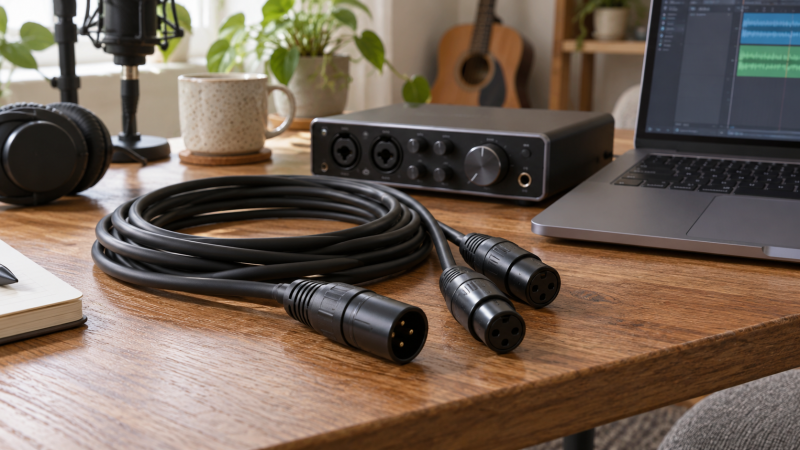
An XLR microphone does not plug straight into most laptops. In a small recording setup, the cable normally runs from the microphone’s three-pin XLR output to an audio interface or mixer, which then connects to the laptop. The cable is a practical purchase. It needs the right male and female ends, enough length to reach without strain, and connectors that stay seated during a take. A longer or more expensive cable cannot fix an incorrect interface setting or a noisy microphone.
The six active-New choices here cover 6-, 10- and 25-foot runs, single cables and two-packs. A short lead keeps a desktop tidy, and a long lead helps when the mic is across a room or on a standing boom. Pick a route first, measure it along your desk and floor, then leave a little slack at both ends. Seller claims about perfect fidelity or total hum removal are not measurements of your studio.
Before buying, check the ports. These are three-pin XLR male-to-female microphone cables, not USB cables. An XLR mic still needs a compatible interface or mixer for a laptop recording workflow, and a cable cannot add phantom power or turn a USB microphone into an XLR one.XLR Microphone Cables Compared
| Image | Product | Details | Check Price |
|---|---|---|---|
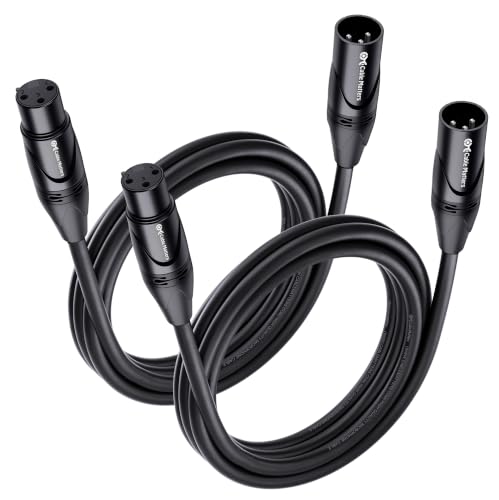 | Cable Matters 6-Foot Pair | Length: 6 ft each Count: 2 Jacket: Soft PVC Best fit: Two short runs | Check Price on Amazon |
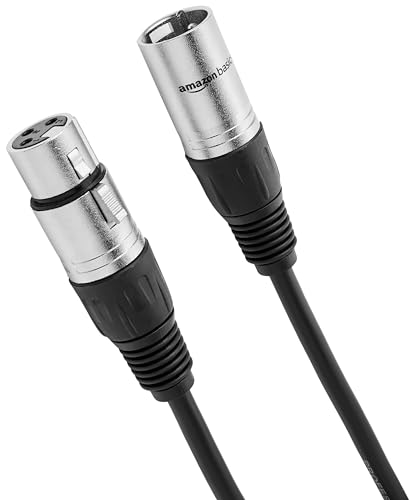 | Amazon Basics 10-Foot | Length: 10 ft Count: 1 Jacket: 6 mm PVC Best fit: Middle distance | Check Price on Amazon |
 | VANDESAIL 25-Foot Pair | Length: 25 ft each Count: 2 Jacket: Nylon braid Best fit: Two long runs | Check Price on Amazon |
 | Shure C25J | Length: 25 ft Count: 1 Jacket: Hi-Flex listed Best fit: One long run | Check Price on Amazon |
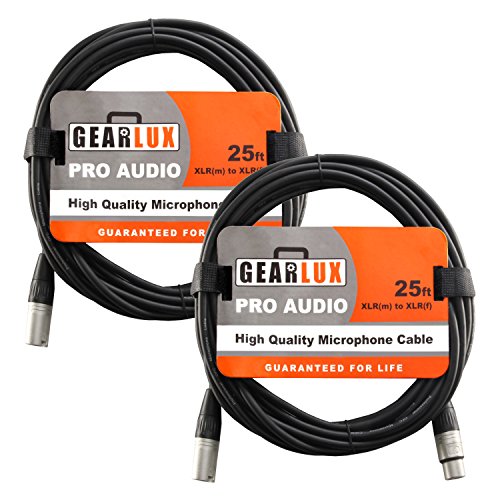 | Gearlux 25-Foot Pair | Length: 25 ft each Count: 2 Jacket: Flexible PVC Best fit: Long PVC pair | Check Price on Amazon |
 | Pig Hog PHM6 | Length: 6 ft Count: 1 Jacket: 8 mm rubber Best fit: Thick short lead | Check Price on Amazon |
1. Cable Matters 6-Foot Pair — Best Short Two-Pack
This Cable Matters package contains two 6-foot male-to-female XLR cables. The pair is an economical configuration if a laptop interface has two mic inputs near the desk, or if one short lead should remain as a spare. The listing names 21 AWG oxygen-free copper conductors, a soft PVC jacket, copper-braid shielding, metal connectors and molded strain relief. These construction details are not a measured sound-quality ranking.
Six feet is enough for a close mic stand in many desk layouts, but it may be too short once the cable follows a boom arm and drops to an interface safely. Route it along the actual path rather than measuring a straight line through the air. A cable that pulls on the mic or interface risks a loose connection. The seller’s broad compatibility list includes other three-pin XLR equipment, so match the exact male and female ports in your chain.
Our Take Pick this pair for two short runs or one run plus a spare. Measure the boom-arm route first, because a short cable should not be under tension.
- Two 6-foot cables in one package.
- 21 AWG conductors and braid listed.
- Metal connectors with molded strain relief.
- Too short for a distant mic position.
- Build claims do not prove lower noise than peers.
2. Amazon Basics 10-Foot — Best Middle Length
Amazon Basics lists a single 10-foot male-to-female XLR cable with all-copper conductors and inner copper spiral shielding. The bullets describe nickel-finished zinc-alloy three-pin connectors, protective metal housing and a 6.0 mm PVC jacket. Ten feet is a useful middle distance when a mic stands beside the desk but the interface sits farther back, below the monitor or at the side of the laptop.
The listing calls the cable low-noise, but it does not establish the noise floor in your room. Hum can come from the interface, power arrangement or a damaged connector as well as cable routing. Keep the lead away from repeated foot traffic and give both ends slack. If your setup has two microphones, note that this offer is one cable, unlike the two-pack choices on this page.
Our Take Pick this single 10-foot option if 6 feet is tight and 25 feet would leave a large coil on the floor. Confirm one cable is enough for the interface inputs you plan to use.
- Practical 10-foot middle length.
- Copper spiral shield described.
- Connector and jacket details stated.
- Only one cable in the exact offer.
- No measured noise comparison supplied.
3. VANDESAIL 25-Foot Pair — Best Braided Long Pair
VANDESAIL sells two 25-foot XLR cables in this exact offer. Its listing names 24 AWG copper conductors, a nylon-braided outer housing, foil plus copper-braid shielding, metal connectors and strain relief. The length is enough for mic stands to sit well away from a laptop interface. The two-pack helps if a second mic is needed or if one cable must remain ready as a replacement.
The seller advertises 10,000-plus bends and connector uses as durability claims, not independent test results available here. More cable also means more material to route and store. Avoid leaving a tight loop around a power brick, and do not run the cable where a chair wheel can crush it. If the mic is only a few feet from the interface, a 25-foot lead may be more cumbersome than useful.
Our Take Choose this if you need two long runs and prefer a braided jacket. Check the floor path and storage plan before committing to fifty feet of cable in one package.
- Two 25-foot cables.
- Foil and copper-braid shielding described.
- Braided outer housing listed.
- Long cable creates floor and storage clutter.
- Durability figures are seller claims.
4. Shure C25J — Best Single 25-Foot Run
Shure’s C25J listing is sparse but clear about what the cable is. It is a single 25-foot Hi-Flex microphone cable with chrome XLR connectors for low-impedance operation. The cable is a straightforward match for a long mic-to-interface route when you do not need a second cable in the package. The feature bullets do not quantify conductor gauge, shielding construction or connector life for this exact offer.
Do not fill those gaps with specs from another Shure cable. Measure the actual route including stand height, corners and safe floor placement. If the extra length is not needed, a shorter cable may be easier to keep off the desk and out of chair wheels. If you are replacing a failed cable, first confirm whether the problem is in the lead, the mic, or the interface port.
Our Take Pick this single 25-foot choice for its plainly stated length and connector type. It earns a place when the route is long, not from unsupported assumptions about hidden construction details.
- Single 25-foot cable.
- Chrome XLR connectors named.
- Clear C25J model identity.
- Sparse returned construction details.
- No spare cable in the package.
5. Gearlux 25-Foot Pair — Best PVC Long Pair
Gearlux also offers two 25-foot male-to-female XLR cables, but describes a flexible PVC jacket rather than VANDESAIL’s nylon braid. The features name oxygen-free copper cores, copper-braid shielding, metal connectors and three-pin XLR ends. Gearlux is the other route to two long runs if you prefer the listed jacket material or want an exact spare for a single distant microphone.
The seller promises noiseless transmission, which no cable can guarantee across every interface and room. Balanced wiring and shielding are relevant construction features, but audible problems still require diagnosis. Coil any unused length loosely and keep connectors out of traffic. A matched pair may simplify setup for an interview, though two microphones also require enough interface inputs and suitable gain settings.
Our Take Pick this PVC-jacket alternative if you need two long cables. Choose on run length and jacket preference, not an unmeasured promise of total hum removal.
- Two 25-foot runs.
- Flexible PVC jacket described.
- Copper cores, braid and metal ends listed.
- Long pair takes storage space.
- Noise-free claim is not independently proven.
6. Pig Hog PHM6 — Best Thick Short Cable
Pig Hog’s PHM6 is a single 6-foot XLR microphone cable. The features highlight an 8 mm rubber outer covering and heat-shrink-protected connectors. That thicker listed outer diameter may appeal when the cable remains exposed around a recording desk, though the listing does not give a measured flexibility or noise advantage over the other short lead here.
The product bullets include the word “Lifetime” without enough context to describe a warranty’s terms. Do not rely on that word as a verified replacement promise. Confirm this cable’s exact three-pin ends and run length against your microphone and interface, then route it with slack at the mic. A thick jacket is not helpful if the lead tugs on a lightweight boom arm.
Our Take Pick the PHM6 for one short run if you want the listed 8 mm rubber cover. Keep the setup loose enough that cable weight does not pull the microphone.
- 6-foot single-cable option.
- 8 mm rubber outer cover stated.
- Heat-shrink connector protection listed.
- Only one cable.
- “Lifetime” bullet lacks usable warranty terms.
Buying Guide: Plan the Whole Mic-to-Laptop Route
Confirm the connection chain before choosing a length
An XLR microphone normally needs an audio interface or mixer between mic and laptop. These six cables have three-pin XLR ends, so they do not plug into a laptop USB port. Check the microphone’s output and the interface’s input before buying. Some USB microphones use entirely different cabling. For interface choices, see our USB audio-interface guide.
If the mic requires phantom power, the interface or mixer must supply it, and the cable cannot create it. A bad connection or incorrect interface setting can sound like a cable fault. Start by testing a known-good input, connector and gain level. Do not buy a more elaborate cable to solve a problem that begins in the recording chain rather than the wire.
Measure the routed distance, not a straight line
Measure from mic to interface along the boom, desk edge and floor. Add enough slack for the mic to move to speaking height without pulling the connectors. A 6-foot cable can be ideal for a nearby interface, while 10 feet gives an intermediate route. The 25-foot choices are for distant mics or a room layout that needs a long safe path. Our desktop boom-arm guide covers the supporting hardware.
Too much cable has its own cost in clutter and trip risk. Coil unused length loosely, keep it away from chair wheels, and avoid sharp bends near the connectors. If you need two simultaneous mic runs, a two-pack is convenient, but an interface still needs two suitable inputs. A single cable plus a spare can be useful even on a one-mic desk.
Separate construction details from audible proof
The listings mention copper conductors, shielding, jacket materials and strain relief. The details help describe what you are buying, but none of these six products was compared under a controlled noise test here. Balanced XLR connections are intended for pro-audio signal runs, but a balanced connection does not mean any cable will silence a faulty interface, a loose port or electrical interference in every room.
Check connector fit and listen for crackles when the cable is gently moved during a test recording. If movement produces noise, inspect the mic, cable ends and interface port separately. A cable can be replaced, but a damaged jack or bad gain setting requires a different fix. Do not interpret a seller’s “no hum” line as a warranty of silence for your complete setup.
Frequently Asked Questions
Can I plug one of these XLR cables into a laptop?
Not directly. These cables are three-pin XLR male-to-female cables, while laptops typically do not have XLR microphone inputs. Run the cable from an XLR microphone to an audio interface or mixer, then connect that device to the laptop by its supported computer connection.
Check whether the microphone needs phantom power and whether the interface provides it. A cable does not substitute for the interface’s preamp, gain control or computer connection. If your microphone has a USB output instead, use the cable type specified for that exact microphone.
Does a 25-foot cable sound worse than a 6-foot cable?
The listing data here does not establish a measured difference. All six are sold as microphone XLR cables, but run length is only one part of a recording chain. Connector condition, routing and interface performance can count for more than a simple comparison of short and long cables.
Choose the shortest cable that reaches safely with enough slack. A 25-foot lead can be the right answer for a distant stand, but leaving most of it coiled under a nearby desk adds clutter without helping the recording. Listen to your actual system rather than assuming one length guarantees better sound.
Should I buy a two-pack if I have one microphone?
Maybe. A spare cable is useful when a connector fails or a mic position changes, and two-packs can cover two interface inputs later. Cable Matters supplies two short cables, and VANDESAIL and Gearlux supply two long ones. The other three offers here are single cables.
Do not buy a two-pack purely for a lower per-cable figure if neither length fits your desk. Measure the route first, then decide whether the second lead is a practical backup. Keep any spare dry and loosely coiled so it is usable when needed.
Source boundary: Product identities, lengths, pack counts and construction details come from six exact Amazon US listings checked for active New offers on 2026-10-01. We did not test electrical noise, connector endurance or warranty service. The featured image is illustrative, not a listed cable. Confirm current package contents and interface compatibility before buying.