A studio camera that records for hours or overwrites yesterday’s footage needs different things from its memory card than a camera used for short clips does. Endurance describes repeated writing. Capacity determines how soon the oldest recording is overwritten. Neither number alone tells you whether a card works with your exact camera, codec, and recording schedule.
This six-card selection runs from 32 to 256 GB, with very different manufacturer and seller claims for recording endurance. Write endurance, continuous capture, file recovery, and card authenticity were not independently tested for this guide. Check your camera’s approved format and maximum capacity first, and keep a separate copy of irreplaceable footage.
For a fixed studio camera, choose the exact compatible microSD capacity, confirm the mode’s minimum video speed class, then plan how and when footage leaves the card. A large claim of endurance hours is not a promise of retention or backup.High-Endurance microSD Cards Compared
Capacities, speed markings, and endurance hours below are manufacturer or seller specifications, not independent test results.
| Image | Product | Details | Check Price |
|---|---|---|---|
 | Samsung PRO Endurance 256GB | Capacity: 256 GB Video class: V30/U3 Endurance claim: 140,160 h Full HD Best fit: Documented large card | Check Price on Amazon |
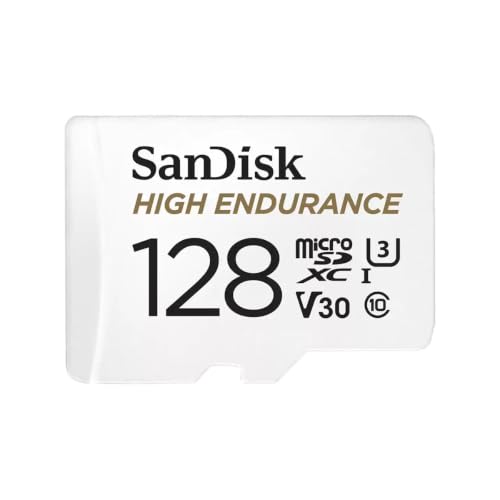 | SanDisk High Endurance 128GB | Capacity: 128 GB Video class: V30/U3 Endurance claim: 10,000 h Full HD Best fit: Middle capacity | Check Price on Amazon |
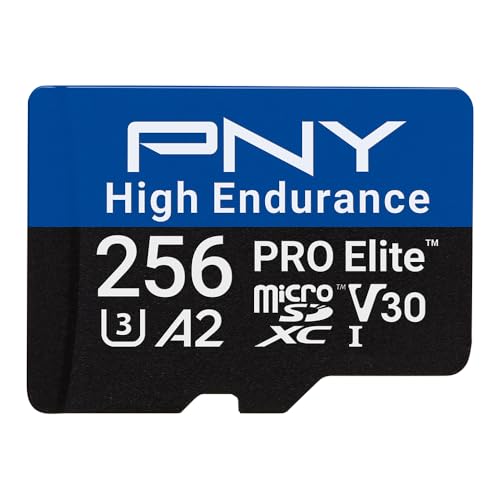 | PNY PRO Elite High Endurance 256GB | Capacity: 256 GB Video class: V30/U3 Endurance claim: 68,800 h stated Best fit: Alternative large card | Check Price on Amazon |
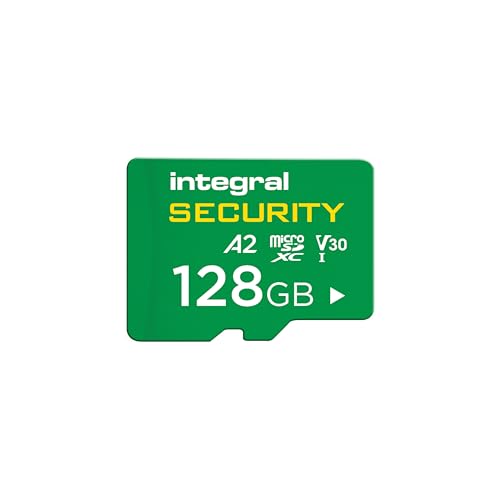 | Integral High Endurance 128GB | Capacity: 128 GB Video class: V30/U3 Endurance claim: 24,000 h stated Best fit: Power-loss claim | Check Price on Amazon |
 | Gigastone TLC High Endurance Pro 256GB | Capacity: 256 GB Video class: V30/U3 Endurance claim: Not compared Best fit: Spare handling | Check Price on Amazon |
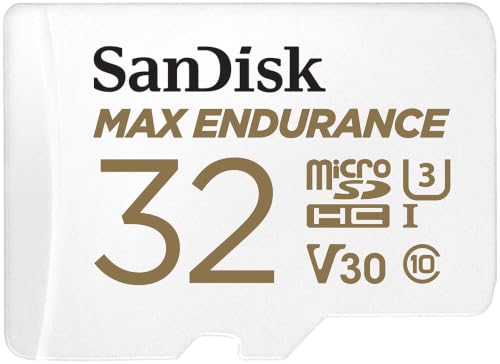 | SanDisk MAX Endurance 32GB | Capacity: 32 GB Video class: V30/U3 Endurance claim: 15,000 h Full HD Best fit: Short local history | Check Price on Amazon |
1. Samsung PRO Endurance 256GB — Best Documented Large Card
Samsung’s 256 GB PRO Endurance is the clearest choice here if you want a capacity-specific endurance number backed by a manufacturer data sheet. Samsung lists 140,160 hours for the 256 GB model under its Full HD test conditions, plus V30/U3 and up to 100 MB/s read and 40 MB/s write. That figure is a laboratory rating, not a promise of 16 years of service in a warmer studio camera or of uninterrupted recordings.
Compared with a 32 GB card at the same bitrate, the Samsung has a longer potential overwrite window. Actual retention still depends on bitrate, recording mode, and whether the camera fills or loops the card. Samsung’s table gives different hours for 128, 64, and 32 GB. Do not carry the 256 GB figure to a smaller listing; verify current availability of the exact card.
Our Take Choose the Samsung as the strongest documented large-card starting point, provided the camera accepts 256 GB microSDXC. The hour number does not replace a footage export schedule.
- 256 GB capacity for a longer overwrite window.
- Manufacturer publishes capacity-specific endurance.
- V30/U3 stated.
- 140,160 hours assumes Samsung’s test conditions.
2. SanDisk High Endurance 128GB — Best Middle-Capacity Baseline
The exact SDSQQNR-128G-GN6IA offer is 128 GB microSDXC with C10, U3, and V30 markings. Its listing gives up to 10,000 hours of Full HD recording for this capacity. The hour figure is an endurance figure stated by the seller, not a measured runtime for 4K or a camera continuously writing at a different bitrate. At 128 GB it is between the smallest card in this set and the 256 GB choices.
SanDisk shares its family text across several capacities, so read the number attached to the exact 128 GB SKU rather than borrowing a larger card’s claim. For an always-on fixed camera, a medium card can be useful if staff export footage daily and do not need a very long local history. If a camera needs a larger card to cover weekends or holidays, estimate that need from its recording settings instead of assuming 128 GB will suffice.
Our Take Choose SanDisk High Endurance if you want an uncomplicated middle-capacity pick. The V30 marking concerns minimum write speed; the 10,000-hour listing is an endurance claim, not footage retention. Check both against the camera and offload plan.
- Exact 128 GB identity is clear.
- C10/U3/V30 listed.
- Middle capacity suits a regular offload habit.
- Recording-hour claim uses Full HD conditions.
- Family bullets mix other capacities.
3. PNY PRO Elite High Endurance 256GB — Best Alternative Large Card
PNY lists this PRO Elite High Endurance as a 256 GB U3/V30 microSD card, with up to 100 MB/s read and 90 MB/s write. The read and write speeds are peak seller figures, and V30 is the relevant marking, a 30 MB/s minimum class for video. PNY also advertises up to 68,800 recording hours. Treat the hour figure as the maker’s qualified endurance claim, not a side-by-side lab measurement against Samsung’s differently specified number.
The listing mentions A2 app performance and a two-year warranty. A2 is an application I/O rating, not a measure of repeated video-write lifetime, and a warranty does not restore a missing take. PNY is another large-card option when the camera can accept 256 GB and its exact model. Compare your actual recording bitrate and planned backup interval before paying for extra capacity you will never use.
Our Take Choose PNY as a practical second 256 GB candidate. Its A2 label is not a reason to buy it for continuous studio video.
- 256 GB, U3 and V30 stated.
- Alternative large-card capacity.
- 68,800 hours is a seller claim, not an independent test.
- A2 does not answer endurance.
- Two-year warranty cannot recover footage.
4. Integral High Endurance 128GB — Best Power-Loss Claim
Integral’s exact 128 GB offer is marked V30/U3/A2 and lists up to 100 MB/s read and 50 MB/s write. Its seller describes up to 24,000 hours of continuous recording and protection against sudden power-off. The endurance and power-off claims are useful to investigate for a fixed camera on a studio power circuit, but neither was independently tested for this guide. A sudden outage can still interrupt the camera or leave a file incomplete.
Do not substitute a card claim for a reliable power supply and verified recording workflow. If power interruption is common, check how the camera closes video files and whether the camera and recording system run on an appropriate UPS. As a 128 GB card, the Integral is a middle-capacity alternative to the SanDisk High Endurance, not a route to longer local storage than the 256 GB choices at the same bitrate.
Our Take Choose Integral if its power-loss claim matches a known risk. The camera’s own behavior during an outage remains the deciding factor.
- 128 GB with V30/U3 listed.
- Sudden-power-off protection claimed.
- Power-loss and 24,000-hour claims untested here.
- 128 GB limits local retention versus 256 GB.
5. Gigastone TLC High Endurance Pro 256GB — Best Bundled Spare Handling
Gigastone lists a 256 GB TLC High Endurance Pro card with A1, U3, and V30 markings, plus up to 100 MB/s read and 60 MB/s write. The listing includes an adapter and mini case, which can help label and protect a card while it is offloaded or held as a spare. The accessories do not change video compatibility, and an adapter does not make a microSD card the equal of a camera-approved full-size SD card.
Its five-year warranty is a term of product service, not a guarantee that footage is kept. The product title also advertises five years of free data recovery; check the current terms, and do not assume a failed card’s footage can always be recovered. For studio operations, use the case as a clear “not yet copied” container and make separate copies before returning a card to a continuous-recording camera.
Our Take Choose Gigastone if you want a 256 GB card with a spare-card bundle. The case is useful for handling cards carefully, not for recording performance.
- 256 GB and V30/U3 stated.
- Adapter and mini case included.
- Five-year warranty listed.
- A1 is not a video-endurance metric.
- Recovery terms and outcome need checking.
6. SanDisk MAX Endurance 32GB — Best Small Card for Short Retention
The exact SDSQQVR-032G-GN6IA is a 32 GB MAX Endurance card marked U3 and V30. Its listing ties up to 15,000 hours of Full HD recording to the 32 GB model and lists a three-year warranty. The much larger 120,000-hour family headline belongs to a 256 GB capacity, not this card. Using that headline for the 32 GB offer would hide the very capacity distinction a continuous-recording buyer needs.
At the same bitrate, the camera overwrites old footage much sooner on 32 GB than on a 128 or 256 GB card. The short window can be acceptable for a camera that only needs a short local buffer because footage is routinely exported elsewhere. The small card is a poor choice if a weekend recording must stay on the card until Monday. Check whether the camera supports 32 GB microSDHC and how it handles full or looped media.
Our Take Choose SanDisk MAX Endurance if you want an intentionally small card, not the option with the longest life or the longest history. Its capacity-specific claim is more useful than the family headline.
- Exact 32 GB endurance claim identified.
- U3/V30 listed.
- Short local recording window.
- 120,000-hour family claim does not apply.
- Capacity and card format need a camera check.
Buying Guide: Protect the Recording, Not Just the Card
Match the physical card and recording mode
microSD is not the same physical format as full-size SD or CFexpress. Check the camera’s slot, its supported SDHC/SDXC capacities, and its current table of recording media before buying. An adapter may let you use the card in a full-size slot, but it cannot change the card’s underlying performance or make the card approved for the camera. If your studio camera needs full-size SD media, use the camera maker’s table rather than treating a microSD adapter as proof of compatibility.
V30 means a 30 MB/s minimum video speed class under the SD standard, not that every 4K mode is supported. In the SD Association’s speed-class explanation, the class is kept separate from a card’s “up to” transfer speed. Compare that class with the camera’s exact codec, frame rate, and bitrate. Test a representative long recording before relying on an unverified model for an important session.
Calculate the overwrite window separately from endurance
How much footage can remain locally at a given bitrate depends on capacity. A camera recording 24/7 will fill a 32 GB card earlier than a 256 GB card when every other setting is the same. You get a different amount with motion-triggered capture, lower bitrate, variable compression, or event-only recording. Use the camera’s own estimate or a short measured run, because a generic “days of video” chart cannot reflect your settings.
Endurance hours describe a manufacturer’s test scenario for repeated writes. Samsung’s PRO Endurance data sheet shows hours that explicitly differ by capacity. SanDisk’s High Endurance and MAX Endurance documents also distinguish models. Because recording conditions differ, hour comparisons across brands are weaker than they look.
Build a routine for copies and replacement
The copy schedule should be shorter than the required retention window. If a studio needs to keep an interview or reference-camera angle, export it before loop recording overwrites it. Check that the destination file opens and has the expected duration, then keep a second independent copy for irreplaceable material. Our USB-C hub guide can help plan laptop ports for ingest, but a hub does not verify a backup.
Watch for recording errors, failed formatting, and unexpected read-only behavior. Replace a suspect card promptly rather than trying to use the last advertised hour. A warranty may replace the hardware, not footage. Label cards by camera and date, rotate spares deliberately, and test both the camera and offload path after firmware or recording-setting changes. For a fixed ingest desk, our USB-C docking station guide covers port planning. A separate power plan is as important as the media in an unattended setup.
Frequently Asked Questions
Does an endurance-hour rating tell me how long a studio recording will stay available?
No. The hour rating comes from a card maker’s test of repeated writing, while the available history depends on capacity, bitrate, and overwrite settings. The 256 GB Samsung rating is for that exact capacity under specified Full HD conditions. The rating is not a measure of how many days of your studio footage remain on the card.
To plan retention, record a sample at the intended mode, inspect the file size and duration, and estimate the daily amount with margin. Set an export interval that ends before the camera overwrites material you need. Verify the exported files rather than assuming a successful transfer notification means the files are intact.
Will a V30 high-endurance card work for every 4K camera mode?
No. V30 is a minimum video speed class, not universal 4K certification. Some cameras and high-bitrate codecs require V60, V90, CFexpress, or a camera-approved model list. A continuous stream also puts a different load on the system than a short marketing demonstration.
Check the maker’s table for the exact camera and recording mode. Confirm physical format, supported capacity, and file system, then run a full-length trial. If the camera rejects the card or drops frames, use the media its manufacturer specifies rather than inferring compatibility from the word “endurance.”
Is a 32GB card ever sensible for continuous capture?
Yes, when local history can be short and footage is exported on a reliable schedule. The 32 GB SanDisk MAX Endurance still has a capacity-specific endurance claim, but it stores much less video before looping than a 128 or 256 GB alternative at the same bitrate. Some older cameras may have a lower limit on supported capacity, so check that limit too.
If a weekend, holiday, or overnight session must remain entirely on the card, calculate the actual data volume first. Do not buy the smaller model on the basis of a 256 GB hour headline for the whole family. An off-device copy is still necessary for any recording that cannot be recreated.
Bottom Line
Choose Samsung PRO Endurance 256GB for the clearest capacity-specific documentation, SanDisk High Endurance 128GB for a regular middle-capacity offload routine, or SanDisk MAX Endurance 32GB only when your requirement for local history is short. Confirm the camera’s format and mode before choosing among them, then export footage before the overwrite window closes.