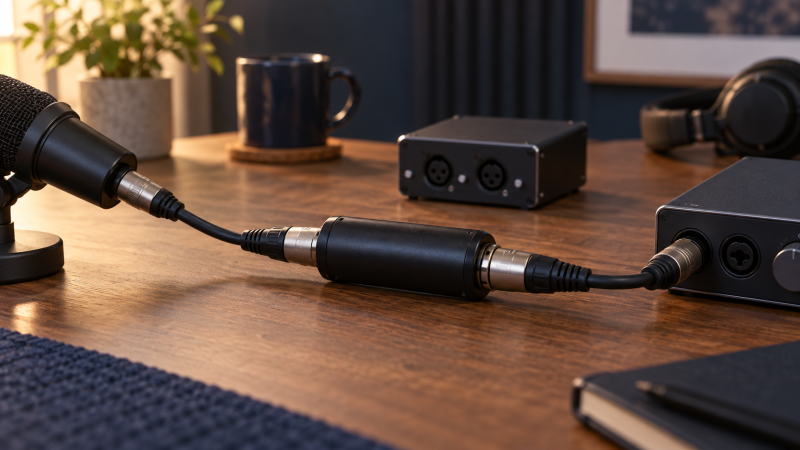
A passive dynamic or ribbon mic can need more clean gain than a particular interface preamp comfortably provides. An inline booster uses phantom power from that preamp to raise the mic signal before the preamp’s main gain stage. It does not turn a quiet room into a quiet recording, fix a faulty cable or make a mismatched mic sound like another mic.
Start by checking the gain you use at normal speaking or playing distance. If noise is audible only after pushing a preamp hard, a booster may help. If background noise is already in the microphone signal, it may make that louder too. These six exact Amazon US options had active New offers when selected. They differ by channel count, fixed versus adjustable gain and whether they are simple XLR devices or more flexible boxes.
Use a booster for a verified gain problem, and check its phantom-power path before connecting a passive ribbon mic.Inline Mic Gain Boosters Compared
| Image | Product | Details | Check Price |
|---|---|---|---|
 | Cloudlifter CL-1 | Channels: One Gain: Up to 25 dB Power: 48 V phantom at preamp Main catch: No adjustable gain control | Check Price on Amazon |
 | Triton FetHead | Channels: One Gain: Up to 27 dB Power: 24-48 V phantom at preamp Main catch: Fixed compact inline form | Check Price on Amazon |
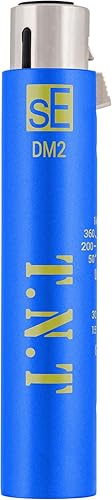 | sE DM2 TNT | Channels: One Gain: 15 or 30 dB Power: 48 V phantom at preamp Main catch: Load and gain settings need setup | Check Price on Amazon |
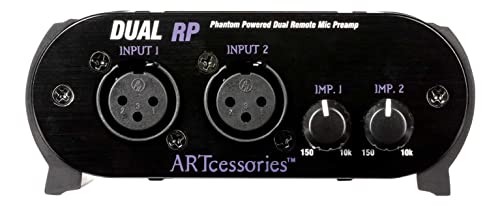 | ART Dual RP | Channels: Two Gain: Amazon lists +20 dB; load-dependent Power: 48 V phantom at preamp Main catch: Larger remote box for two mics | Check Price on Amazon |
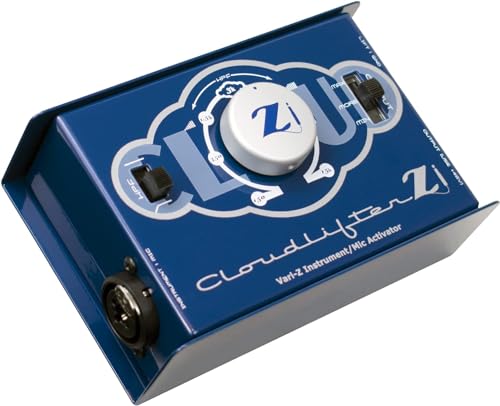 | Cloudlifter CL-Zi | Channels: One Gain: Up to 25 dB Power: 48 V phantom at preamp Main catch: Extra impedance and DI controls | Check Price on Amazon |
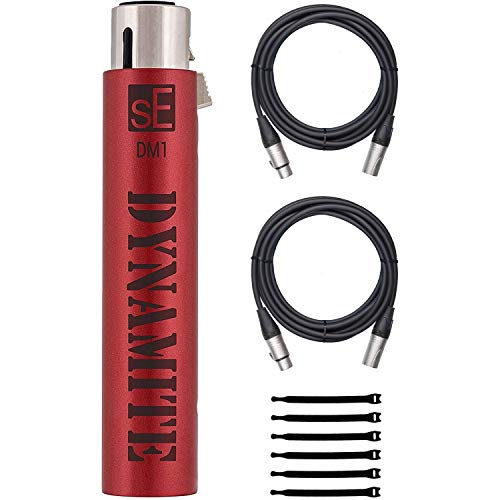 | sE DM1 Dynamite bundle | Channels: One Gain: 28 dB Power: 48 V phantom at preamp Main catch: Exact New offer includes cables | Check Price on Amazon |
1. Cloud Microphones Cloudlifter CL-1 — Best Simple One-Mic Activator
Cloud Microphones describes the CL-1 as a one-channel mic activator offering up to 25 dB of gain for passive microphones. It is a separate steel box placed between the mic and the preamp. The preamp’s 48 V phantom supply powers the booster, while the maker says phantom is not passed onward to the microphone. That last point applies when the source is a passive ribbon.
The CL-1 is not an extra recording channel or a preamp replacement. You still need one XLR preamp input, phantom supply and two cables. Fixed gain avoids switch settings but offers less tailoring than a controllable unit.
If the source is a closed-back tracking headphone session, monitor the recorded input rather than judging the booster only from a loud headphone cue.
Our Take Buy CL-1 when your existing preamp needs more usable gain for one passive mic and you want a straightforward box. First confirm that noise is not coming from the room or cable.
- One clear mic path and fixed gain.
- Maker documents up to 25 dB boost.
- Phantom does not pass to the passive mic.
- Only one microphone channel.
- No gain or load adjustment.
- Needs phantom-capable preamp and two XLR cables.
2. Triton Audio FetHead — Best Compact Inline Form
FetHead is a slim XLR inline booster for passive dynamic and ribbon microphones. Triton describes up to 27 dB gain with phantom power supplied by the preamp. Its narrow body can sit close to the microphone rather than occupying a separate desk box. For a compact podcast or vocal setup, that physical layout may count for more than a small difference in advertised gain.
Do not choose it merely because 27 exceeds another maker’s 25. Gain figures depend on loading and test conditions. No level-matched test was done here. Check connector clearance. If the inline weight strains a mount, insert a short XLR lead.
A desktop microphone boom arm can simplify cable management, but it does not change the XLR gain or phantom requirements.
Small physical size is FetHead’s useful distinction, and advertised dB figures alone are not a listening ranking.Our Take Choose FetHead if one mic needs gain and the compact inline shape fits your mount and cables. Prefer a remote box if connector clearance or handling strain is a concern.
- Compact XLR body avoids a separate desk box.
- Maker documents up to 27 dB for passive mics.
- One mic channel and fixed workflow.
- Check clearance and strain at the mic socket.
3. sE Electronics DM2 TNT — Best Adjustable Gain and Load
The DM2 TNT is for someone who needs 15 or 30 dB selectable gain plus eight input-load settings. sE specifies its use with passive microphones and says to enable 48 V phantom on the receiving mic preamp. The load choices can change how a passive mic interacts with the circuit, but they are options to evaluate, not guaranteed tonal improvements.
More settings make setup less automatic. Choose a starting load using the maker’s guidance, record it, and compare levels fairly before changing gain. A setting that sounds brighter because it is louder is not evidence that the booster is better. sE says its inline preamps do not pass phantom through to the connected mic. This DM2 listing is the blue TNT model, not a DM1 with a different paint color.
For an interface with several mic inputs, standalone audio-interface routing is a separate question from the gain available on any one input.
Our Take Buy DM2 TNT when adjustable gain and load are features you will test. For a repeatable one-setting podcast desk, a simpler booster may be easier to live with.
- Two gain positions for different source levels.
- Eight load settings allow controlled experiments.
- Maker states phantom is blocked from the mic.
- Settings need documenting between sessions.
- Still one mic channel.
4. ART Dual RP — Best Two-Mic Remote Gain
ART’s Dual RP is a two-channel remote preamp for dynamic and ribbon microphones. It takes two XLR mic inputs and sends two boosted XLR outputs onward to separate preamp channels. ART documents variable impedance on each channel and a switchable 100 Hz low-cut filter. Gain varies with load, so its advertised up-to-28 dB figure is not a fixed result in every setup.
Dual RP is bigger than a plug-in XLR tube, but it fits a different job when two low-output mics sit near each other. The maker says it draws 48 V phantom from the downstream preamps and does not pass that phantom to the mic inputs. Each of its two output channels still needs its own receiving mic-preamp input and phantom supply. Do not treat its two-channel label as stereo mixing or recording.
For a small recording session with multiple cue mixes, keep these two source channels separate from headphone distribution.
Our Take Choose Dual RP if two passive mics need gain near the source and you can supply two downstream phantom-powered preamp channels. A single-mic desk may not need its size or controls.
- Two independent mic channels in one box.
- Variable impedance and low-cut per channel.
- ART documents blocked phantom toward mics.
- Needs two receiving mic-preamp channels.
- Larger than an inline single-channel tube.
5. Cloud Microphones Cloudlifter CL-Zi — Best Mic and Instrument Flexibility
CL-Zi extends Cloud’s one-channel booster idea with a combo mic/instrument input and variable impedance. The manufacturer describes gain settings, a high-pass filter and a DI use for instruments. It says phantom powers the unit but does not pass through to a passive microphone. It therefore fits a desk that alternates a passive vocal mic with a direct instrument source.
Its controls are not a reason to expect a better recording automatically. Set the input mode and impedance deliberately for the source, then compare against a stable baseline. If you only connect one familiar dynamic mic and never use instrument DI, the CL-1’s simpler layout may be enough. This exact Amazon offer identifies CL-Zi. Do not transfer its controls to other Cloudlifter models.
A stereo direct-box roundup discusses a different two-channel playback job. CL-Zi’s one-channel instrument option is not a stereo playback DI.
CL-Zi has useful flexibility, but the microphone and instrument paths are separate jobs, not two simultaneous channels.Our Take Choose CL-Zi if variable loading and occasional instrument DI work are part of your desk routine. If you only need fixed gain on one passive mic, avoid paying for unused controls.
- Mic and instrument input roles are documented.
- Variable impedance and filter broaden setup choices.
- One channel despite the combo input.
- Controls add setup and recall work.
- More than a basic fixed-gain mic chain needs.
6. sE Electronics DM1 Dynamite Cable Bundle — Best Fixed-Gain DM1 Bundle
The exact New Amazon offer is a DM1 Dynamite bundled with two XLR cables and cable ties. The standalone DM1 listing checked for this article had only a Used offer. The bundle is not presented as the same seller package. sE documents a fixed 28 dB gain and 48 V phantom operation for the DM1. Unlike DM2, there are no selectable load and gain positions to revisit.
Check the bundle’s cable lengths and connectors against your desk before deciding they add value. Extra cables are useful only if they fit the physical route and are not already in your kit. DM1 is still one booster for one passive mic, not a two-channel product because two cables ship in the box. sE says its inline preamps block phantom toward the mic.
For a desktop boom arm, route the XLR lead so the added inline body does not pull on the mic socket.
Our Take Consider this DM1 bundle if fixed gain fits your mic and the included cables are useful. Compare the total package, not only the DM1 model name.
- Fixed 28 dB DM1 gain avoids settings drift.
- Two XLR cables are included in this exact New package.
- Still one mic channel.
- Cable bundle may duplicate gear you own.
- No DM2-style gain or load selection.
Buying Guide
1. Find the gain problem before buying
Record a short untreated sample at the intended mic distance. Set input gain so peaks leave headroom, then listen at a normal monitoring level. If hiss becomes intrusive only after the preamp is pushed, an inline activator may move useful gain earlier in the chain. If computer fans or room reflections are already clear, a booster is not a room treatment. A tracking-headphone guide helps separate listening level from recorded noise.
A booster does not replace a preamp. It feeds a mic-level signal to a preamp that still sets the final gain and reaches the interface converter. Check the preamp’s 48 V phantom capability and input type. A line-only socket cannot be assumed to power a booster or supply the mic-preamp gain it expects.
2. Trace phantom power to the booster, not the passive mic
These selected units draw power from the receiving preamp. Manufacturer pages for Cloud, sE and ART describe phantom-powered operation and blocking phantom toward passive mic inputs. Check the exact FetHead documentation and your mic’s requirements too. With a passive ribbon, the blocked path is a safety condition. Do not transfer it to an unverified inline device.
Turn gain down during connection changes. Connect the mic, booster and preamp according to the unit manual, then enable the required phantom at the preamp. Confirm a healthy signal before raising monitor level. If you use a condenser microphone that itself needs phantom, these boosters for passive mics are generally the wrong path because the mic will not receive power through the booster.
3. Match channel count and controls to your routine
One mic usually needs one booster channel. CL-1, FetHead, DM2, CL-Zi and DM1 each handle one source. ART Dual RP handles two if the interface has two phantom-capable mic inputs. Extra channels do not improve one vocal. Splitting one mic to multiple destinations is a different job. See the microphone splitter guide.
Adjustability costs attention. DM2’s gain and load switches, ART’s impedance controls and CL-Zi’s source options can serve changes in microphone or instrument setup. Record settings and compare at matched levels. If a single passive mic lives permanently on the same input, a fixed-gain device can be easier to troubleshoot.
4. Check physical fit and the exact listing
Connector placement can decide the purchase. FetHead and DM1 occupy space near an XLR connector. A short cable can move them off a tight boom mount. CL-1, CL-Zi and Dual RP require a separate place for a box and two cable runs. Route all cables so people cannot snag them during a session.
The exact Amazon package matters. The standalone DM1 was Used-only at this check, but a DM1 cable bundle had a New offer. Klark boosters had no active New offer. Do not assume a different color, bundle or model suffix has the same availability. Recheck the seller, contents and active condition when ordering.
FAQ
Can an inline booster fix background noise in my room?
No. It raises the mic signal before a receiving preamp. It cannot distinguish your voice from a fan, keyboard or untreated wall reflection already entering the mic. Improve placement and room noise first, then decide whether the remaining preamp hiss justifies added gain.
Compare a short before-and-after recording at matched playback loudness. A louder sample may feel better even if its underlying noise ratio has not improved.
Will these boosters pass phantom power to a condenser mic?
Do not assume so. The maker evidence reviewed for Cloud, sE and ART says their boosters consume phantom from the preamp while blocking it from the passive mic side. A conventional phantom-powered condenser therefore will not operate as intended through that blocked path.
Use the condenser directly with an appropriate preamp unless the exact device manual documents a different through-power mode. A passive dynamic or ribbon mic is the intended source category here.
Is more advertised gain always better?
No. Your mic output, distance, performance level, preamp headroom and input load all affect the final result. A fixed 30 dB boost can be inconvenient if it drives a preamp too hard. Selectable 15 dB may suit that case better, but only a controlled setup test answers it.
Manufacturer dB numbers were not measured under one common test here. Use them as setup ranges, not a ranking of audio quality.
Bottom Line
Cloudlifter CL-1 is the plain one-channel box, Triton FetHead is the compact inline form, and sE DM2 TNT adds selectable gain and loading. ART Dual RP is the two-mic option. CL-Zi adds instrument flexibility. The New DM1 offer is a cable bundle, not the Used-only standalone listing. Buy only after confirming the gain problem and phantom path.