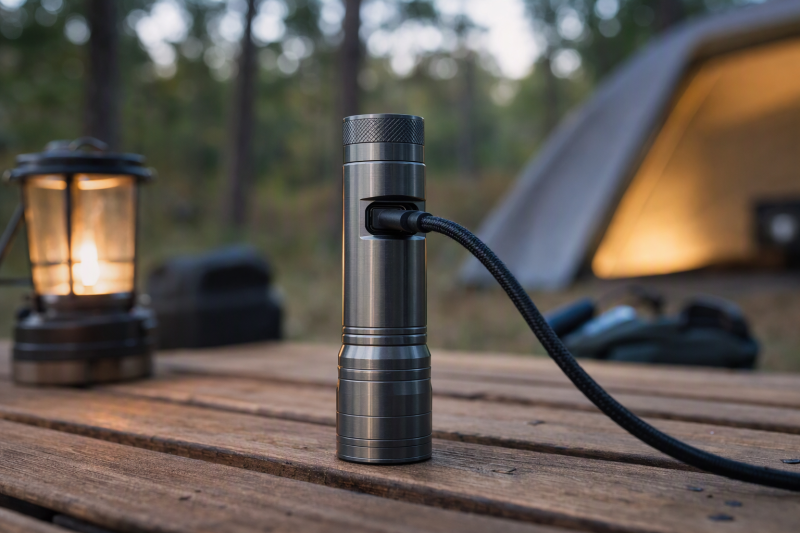
A USB-C rechargeable flashlight charges from the same cable and wall block already used for a phone or a laptop, so a camp bag, a kitchen drawer, and a car kit can share one charging setup instead of three.
Picking the right one comes down to the job: a long runtime on a low mode for an outage, a wide flood for a campsite, or a long throw for a trail or a fence line. None of the nine listings below names the measurement standard behind its lumen figure, so compare beam shape and runtime at the mode you would actually use rather than chasing the biggest number.
Every flashlight here charges from the same USB-C cable as your phone, so one charger keeps the camp bag, the drawer, and the car kit ready.Best USB-C Rechargeable Flashlights Compared
| Image | Product | Details | Check Price |
|---|---|---|---|
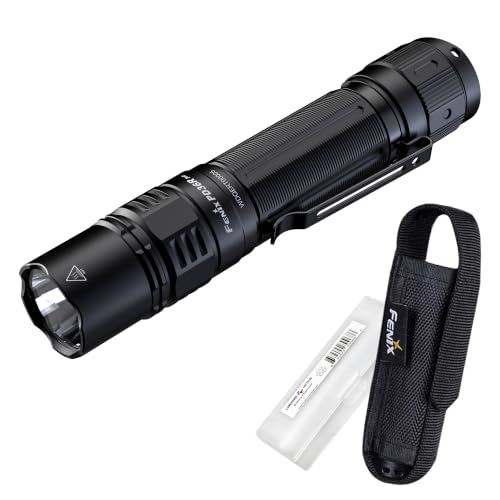 | Fenix PD36R Pro | Max output: 2800 lumens Beam distance: 416 yards Longest stated runtime: 42 h Eco Power: USB-C Water rating: IP68 | Check Price on Amazon |
 | ThruNite Archer 2A C | Max output: 1018 lumens Beam distance: 167 meters Longest stated runtime: Not stated Power: USB-C or 2 x AA Water rating: IPX8 | Check Price on Amazon |
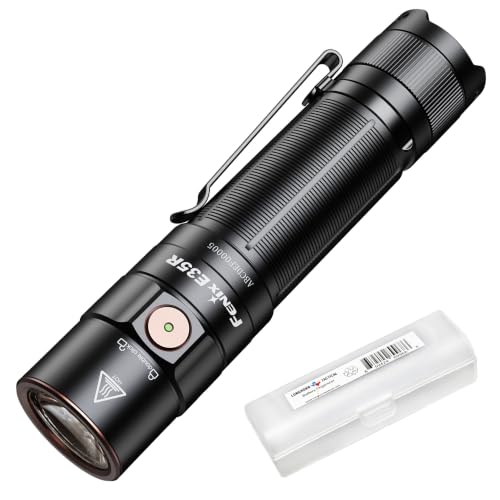 | Fenix E35R | Max output: 3100 lumens Beam distance: 284 yards Longest stated runtime: Not stated Power: USB-C Water rating: IP68 | Check Price on Amazon |
 | Nitecore MH12 Pro | Max output: 3300 lumens Beam distance: Over 552 yards Longest stated runtime: Not stated Power: USB-C Water rating: IP68 | Check Price on Amazon |
 | Nitecore EDC29 | Max output: 6500 lumens Beam distance: 437 yards Longest stated runtime: 61 h low Power: USB-C Water rating: Not stated | Check Price on Amazon |
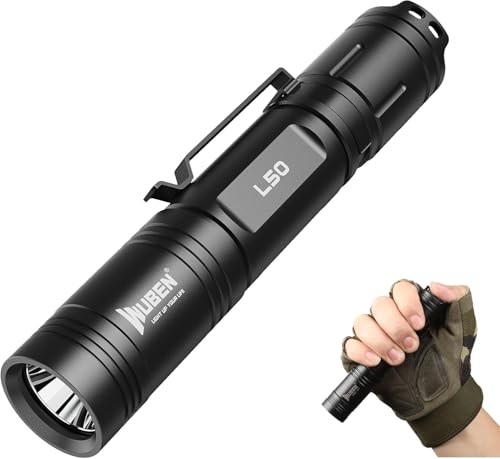 | WUBEN L50 | Max output: 1200 lumens Beam distance: 200 meters Longest stated runtime: 143 h Eco Power: USB-C Water rating: IP68 | Check Price on Amazon |
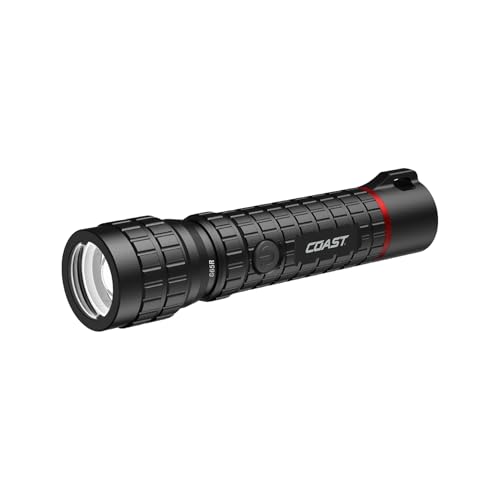 | Coast G65R | Max output: 1500 lumens Beam distance: Not stated Longest stated runtime: Not stated Power: USB-C Water rating: IP67 | Check Price on Amazon |
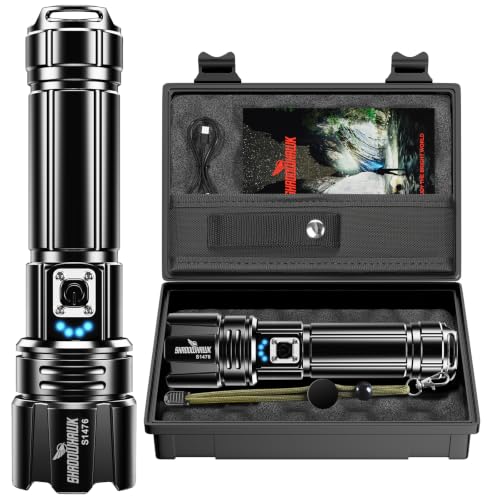 | Shadowhawk S1476 | Max output: 10000 lumens (listing claim) Beam distance: 5000 ft (listing claim) Longest stated runtime: 12 h low Power: USB-C in, USB out Water rating: IP67 | Check Price on Amazon |
 | BUCASA 3-Pack | Max output: Not stated Beam distance: Not stated Longest stated runtime: 15 h low Power: USB-C, built-in battery Water rating: Not stated | Check Price on Amazon |
1. Fenix PD36R Pro — Best Overall
A trip bag, a kitchen drawer, and a glovebox each want a different flashlight, unless one light can cover all three. Fenix built the PD36R Pro for that job, rating it at 2800 lumens with a 416-yard beam and naming patrol, search, outdoor trips, and emergencies as the intended uses on the same listing.
Fenix’s Eco mode holds for up to 42 hours, so the same light that lights a trail at full brightness can run through an overnight outage on its dimmest setting. Charging happens through a hidden USB-C port, and Fenix says that closed design is what keeps the IP68 dust and water rating intact. Further down this page, the WUBEN L50 and the Shadowhawk S1476 also pair a stated beam, a stated runtime, and a water rating on one listing, though each falls short of the PD36R Pro on at least one of those figures: the WUBEN’s peak output is a fraction of 2800 lumens, and the Shadowhawk’s rated runtime is well under half of 42 hours.
Our Take Buy the PD36R Pro if you want one flashlight that covers every job instead of three specialists. A stated beam, a stated Eco runtime, and IP68 sealing all sit on the same listing. Skip it only if a swappable spare battery is part of your plan, since Fenix will not confirm one for this model.
- Fenix pairs 2800 lumens, a 416-yard beam, and up to 42 hours on Eco mode on one listing.
- A hidden USB-C port keeps the IP68 water and dust seal intact, Fenix says.
- The box adds a holster, a lanyard, and a Lumentac Organizer to the USB-C cable.
- No USB output for charging a phone, unlike the Shadowhawk S1476 further down this page.
- Fenix does not confirm a swappable battery, so a spare-cell plan is not something the listing backs up.
2. ThruNite Archer 2A C — Best for Emergency Kits
A kit that only works while the battery has power is not much of a backup. ThruNite solves that with two ways to run the Archer 2A C: charge over the built-in USB-C port day to day, or drop in two standard AA cells when the cable is missing or the battery is flat.
On the rechargeable battery, ThruNite rates the Archer 2A C at 1018 lumens and a 167-meter beam, measured at 7000 candela. Drop in the AA cells instead and output falls to 500 lumens with a shorter 93-meter reach, the trade for not needing a cable at all. ThruNite is the only brand on this page that names a second power source. The other eight lights run on their built-in battery alone.
Keep two AA cells beside the Archer 2A C, since ThruNite ships none, and the backup only works with cells already on hand.Our Take Buy the Archer 2A C for a bug-out bag, a glovebox, or a drawer kit where backup power outranks peak brightness. A 24-month replacement backs the light if the USB-C side fails first.
- ThruNite backs the Archer 2A C with a 2 x AA backup that still gives 500 lumens at 93 meters.
- An IPX8 submersion rating and 1-meter impact testing hold up outdoors.
- A 24-month free replacement covers the light beyond the usual warranty window.
- The AA cells are not included, so the backup mode needs cells you already own.
- ThruNite states no runtime for either power source, so recharge timing comes from habit rather than a number.
3. Fenix E35R — Best for Camp and Home Area Light
A campsite or a dark garage rarely needs a narrow beam pointed at one spot, it needs light spread across the whole area. Fenix built the E35R for that: a magnetic tail cap holds it to a steel hood or a breaker panel, and the tail stands upright on its own, turning the light into a small area lamp instead of a handheld beam.
Fenix rates the flood beam at 3100 lumens reaching 284 yards, wider and brighter on paper than the PD36R Pro’s spot-focused 2800, though the two figures are not measured the same way. Charging is fast over USB-C with a lit power indicator, but Fenix gives no charge time or runtime to plan around.
Our Take Buy the E35R when the job is lighting a space, not a spot: a camp table, a car hood, or a breaker panel all work with the tail standing up and the magnet gripping steel. Skip it if a stated runtime decides your buy, since Fenix leaves this one off the listing.
- A magnetic tail cap and an upright stance turn the E35R into hands-free area light.
- Fenix rates the flood beam at 3100 lumens reaching 284 yards.
- An electronic lockout and overheat protection guard the light in a pocket or a hot engine bay.
- It throws light wide rather than far, so a fence line or a trail favors the Nitecore MH12 Pro further down this page instead.
- Fenix states no runtime for any brightness mode, so you are charging on a schedule rather than a number you can plan a trip around.
4. Nitecore MH12 Pro — Best Long Throw
A trail, a yard, or a fence line rewards reach more than spread. Nitecore rates the MH12 Pro at 3300 lumens with a beam over 552 yards, the farthest stated throw on this page apart from the Shadowhawk S1476’s own unstandardized claim further down.
Charging runs through a waterproof USB-C port with a power level indicator, and five brightness settings step down from the top, plus strobe, SOS, and beacon. Nitecore states no runtime at any setting, so plan around a full charge rather than a known number of hours.
No runtime is stated at any brightness, so a multi-day trip needs a spare cable or a power bank as backup.Our Take Buy the MH12 Pro when the job is reaching a fence line or a trail, not lighting the space around you. Charge it fully before a trip, since Nitecore gives no runtime to plan against.
- Nitecore rates the MH12 Pro at 3300 lumens with over 552 yards of throw.
- A waterproof USB-C port and IP68 sealing hold up on a wet trail.
- The box includes a holster, a clip, a lanyard, and an organizer with the cable.
- Nitecore states no runtime at any brightness setting, so a multi-day trip needs a full charge beforehand rather than a number to plan around.
- A throw-focused beam like this does not spread light across a room the way the Fenix E35R’s flood beam does.
5. Nitecore EDC29 — Best Flat Pocket Light
A light that rides in a pocket every day has to be flat, and Nitecore lists the EDC29 at 0.76 inches thick, with a digital display that shows output and status at a glance, the only light on this page with that readout.
Nitecore rates it at 6500 lumens with a beam reaching 437 yards, spread across 6 brightness levels plus spotlight, floodlight, and strobe modes. Charging is the reason to look twice at this one: Nitecore states a full USB-C charge in 1 hour and 15 minutes, the fastest stated charge time on this page, and a 61-hour runtime on low.
Our Take Pick the EDC29 when pocket size and a fast recharge outrank everything else. A mechanical slide lock and two lockout modes stop it from switching on inside a pocket.
- Nitecore states a full USB-C charge in 1 hour and 15 minutes and 61 hours on low.
- Nitecore gives the EDC29 a flat 0.76-inch body with a digital output and status display.
- Nitecore includes a mechanical slide lock plus two lockout modes.
- Nitecore states no water rating for the EDC29, so keep it away from heavy rain or a dunk until you confirm one.
- The mechanical slide lock that stops accidental activation also adds an extra step to turn the light on in a hurry.
6. WUBEN L50 — Longest Stated Eco Runtime
A power-outage drawer rewards runtime over raw brightness, and WUBEN rates the L50’s Eco mode at up to 143 hours, the longest stated runtime on this page. High, Medium, Low, and Eco each carry their own figure, from 1200 lumens down to 5, plus an SOS mode with memory for the last setting used.
WUBEN also states a 200-meter beam on High and a 3-hour full charge over USB-C, with an IP68 rating and 1.5-meter impact resistance backing it outdoors.
Pick the L50 for a drawer or a tent pocket where days of dim light beat one bright burst.Our Take The L50 fits a power-outage drawer or a tent pocket, where a dim Eco mode that lasts for days counts for more than a bright burst. Choose a higher-output light from this page if you need to light a large yard.
- WUBEN states up to 143 hours in Eco mode and a 3-hour full charge.
- WUBEN states the output of each brightness mode, from 5 to 1200 lumens.
- WUBEN states IP68 and 1.5-meter impact resistance.
- WUBEN’s 1200 lumens on High trails every Fenix and Nitecore light on this page.
- WUBEN does not name the battery type, so confirming a swappable spare before buying is not possible from the listing alone.
7. Coast G65R — Best Twist-Focus Light for Home
A household drawer light does not need a spec sheet, it needs a beam you can shape by hand. Coast built the G65R around a twist focus that dials between a wide flood and a precision spot across high, medium, and low modes, and rates the light at 1500 lumens on top.
The USB-C port sits behind a sliding collar, and Coast rates it IP67 and is the only brand on this page to state the depth and time behind its rating: submersion up to 1 meter for 30 minutes.
Our Take Choose the G65R for a home or garage drawer where a covered port and a shapeable beam count for more than a spec sheet. Keep a second light with a stated runtime in your emergency kit.
- Coast’s twist focus moves from a flood beam to a spot beam.
- A sliding collar protects the USB-C charging port.
- Coast states IP67 submersion up to 1 meter for 30 minutes.
- Coast states no beam distance, runtime, charge time, or battery type, so there is no figure here to plan a trip around.
- At 1500 lumens, the G65R trails every Fenix, Nitecore, and Shadowhawk light on this page, ahead of only the ThruNite Archer 2A C and the WUBEN L50.
8. Shadowhawk S1476 — With USB Output for a Phone
The S1476 is the one light here that can also feed a phone: a USB discharge port pushes power out in an emergency, alongside the USB-C input that charges the light itself.
Shadowhawk’s own figures, a 30W XHP70.2 chip claimed at up to 10000 lumens and a 5000 ft spotlight throw, carry no stated measurement standard, so read them as Shadowhawk’s own claim rather than a like-for-like match against the Fenix or Nitecore lights above. Five modes step from High to SOS, and an LED indicator shows charge in 25 percent steps. Shadowhawk rates the body IP67 with a 5-meter drop claim, and Amazon’s product details list it at 7.09 inches, the longest light on this page.
Our Take Choose the S1476 when a phone top-up during an outage outranks a verified lumen number. Treat the lumen and throw figures as Shadowhawk’s own claims rather than a measured comparison.
- Shadowhawk states a USB output port that can power a phone in an emergency.
- Shadowhawk gives a sliding focus head and a 25-to-100-percent power indicator.
- Shadowhawk includes a holster and a lanyard with the USB-C cable.
- Shadowhawk’s 10000-lumen and 5000 ft figures come with no stated measurement standard, so they read as marketing rather than a verified number.
- Shadowhawk states no battery capacity or charge time, so how much of a phone charge the USB output can deliver is not something the listing confirms.
9. BUCASA 3-Pack — Best Multi-Pack for the House
One flashlight rarely covers a kitchen drawer, a car, and a bedside table at once. BUCASA solves that with three rechargeable flashlights and three USB charging cables in one set, plus a user manual, each light 4.4 inches long and 86 grams with its own lanyard.
BUCASA states a built-in battery that charges over a USB-C cable from a computer, a wall outlet, or a power bank, with a full charge in 3 to 4 hours and up to 15 hours of use in low-light mode. The title reads High Lumens, but BUCASA gives no lumen figure and no beam distance, the only light on this page missing both.
Send one BUCASA light to the car, keep one in the garage, and leave one by the bed, since all three share a cable and a charge time.Our Take The BUCASA set is the way to cover a whole house with lights that share one cable type. Pick a light with a stated output and water rating from elsewhere on this page for camping or yard work, since BUCASA states neither.
- BUCASA includes 3 flashlights and 3 USB charging cables in one set.
- BUCASA states up to 15 hours in low-light mode and a 3-to-4-hour charge.
- BUCASA gives a 4.4-inch, 86-gram light with a zoom head.
- BUCASA gives no lumen figure and no beam distance, so brightness for outdoor use is not something you can check before buying.
- BUCASA’s 3-to-4-hour charge time is the slowest stated on this page, next to the EDC29’s 1 hour 15 minutes and the WUBEN’s 3 hours.
Buying Guide: Choosing a USB-C Rechargeable Flashlight
Read lumen and throw figures as listed claims
Lumens describe how much light leaves the flashlight, and throw describes how far the beam reaches before it fades. None of the nine listings here names the measurement standard behind its numbers, so a bigger figure on one listing is not proof of a brighter or farther beam than a smaller one on another.
Compare the beam shape to the job instead of chasing the highest number. A wide flood beam suits a campsite or a kitchen table, and if the whole tent or table needs light rather than one handheld beam, our guide to USB-C camping lanterns covers lights built for exactly that.
Match runtime to the mode you will actually use
Every runtime named in this guide belongs to a specific brightness, not the flashlight’s peak output. The WUBEN L50 states up to 143 hours only on its dimmest Eco setting, where output drops to 5 lumens, and the Nitecore EDC29 states 61 hours on low rather than at its rated 6500-lumen peak.
Four of the nine lights here, the ThruNite Archer 2A C, Fenix E35R, Nitecore MH12 Pro, and Coast G65R, state no runtime at all. For an outage kit, favor a listing that puts a number on the mode you would actually leave it on, and pair the flashlight with a radio from our guide to USB-C emergency radios for a longer one.
Know how the battery is arranged
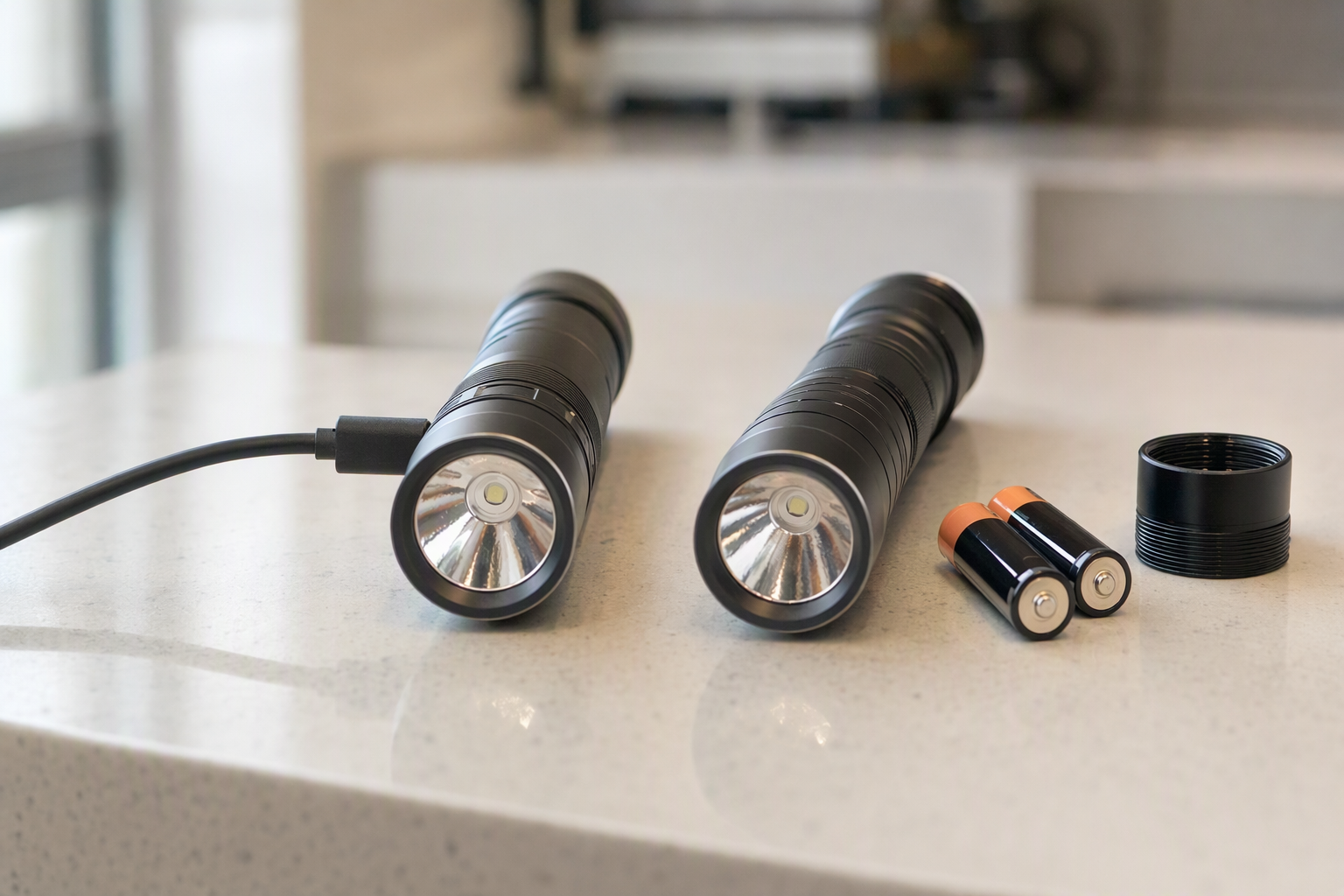
Your options when the light goes flat depend on how the battery is built. The ThruNite Archer 2A C is the only light here that also runs on two AA cells, a backup that keeps working with no cable or wall outlet nearby. BUCASA states a built-in battery for its 3-pack.
The other seven lights name no battery type and do not say whether it comes out, so a spare cell is not something you can plan around without asking the brand directly. A light you cannot swap needs a way to recharge away from the wall, and our guides to USB-C power banks for Macs and USB-C solar charger panels cover both options for a trip or a long outage.
Check how it charges over USB-C
Every light on this page charges over USB-C, but the port itself is built differently: Fenix hides the PD36R Pro’s port to protect the IP68 seal, Nitecore builds a waterproof port into the MH12 Pro, and Coast covers the G65R’s port with a sliding collar instead.
Charge time only appears on three listings: Nitecore states 1 hour 15 minutes for the EDC29, WUBEN states 3 hours for the L50, and BUCASA states 3 to 4 hours for its 3-pack. Keep a spare from our guide to USB-C cables in the kit. Any USB-C wall charger already in the house should work, since none of these listings names a special charger, and for travel, our guide to slim GaN USB-C wall chargers covers flat plugs that pack easily.
Match water rating and size to where the light lives
Four of the nine lights here, the Fenix PD36R Pro, Fenix E35R, Nitecore MH12 Pro, and WUBEN L50, state IP68, and Coast backs its IP67 rating on the G65R with an exact depth and time, 1 meter for 30 minutes. The Nitecore EDC29 and BUCASA 3-Pack state no water rating at all, so keep either one away from heavy rain until you confirm one.
Size decides where a light actually lives day to day: Nitecore lists the EDC29 at 0.76 inches thick for a pocket, while Amazon’s product details put the Shadowhawk S1476 at 7.09 inches, the longest body on this page. A rugged cable from our guide to heavy-duty braided USB-C cables suits a car or camp bag where a thin cable gets crushed.
FAQ
Why do lumen numbers vary so much between these listings?
Each brand states its own figure, with no shared measurement standard behind it, so a bigger number does not mean a brighter beam. The Nitecore EDC29’s claimed 6500 lumens and the Shadowhawk S1476’s claimed 10000 lumens are each brand’s own figure, not measurements against the same test.
Compare beam shape and throw at the mode you would use instead of ranking lights by the biggest number. The BUCASA 3-Pack states no lumen figure at all, so treat brightness as one input among several, not the whole decision.
Can a USB-C flashlight charge my phone?
One light in this guide states that it can. The Shadowhawk S1476 carries a USB discharge port that can power a phone in an emergency, while the other eight lights describe USB-C for charging only.
A phone top-up from the S1476 draws on the same battery the light uses after dark, so a dedicated power bank is the better tool for regular phone charging on a trip.
What is the best flashlight for an emergency kit?
A light with a backup power option or a long stated low-mode runtime. The ThruNite Archer 2A C runs on two AA cells when its battery is flat, and the WUBEN L50 rates its Eco mode at up to 143 hours.
Keep the charging cable in the kit either way, and if you rely on the AA backup, keep fresh cells beside the light rather than in a separate drawer.
How long does a USB-C flashlight take to charge?
Only three listings here state a time. Nitecore rates the EDC29 at 1 hour and 15 minutes, WUBEN rates the L50 at 3 hours, and BUCASA states 3 to 4 hours for its 3-pack.
The other listings describe fast charging or a power indicator without a time, so plan on a full charge before a trip rather than a quick top-up on the way out.
Is IP68 better than IP67 for camping?
Both ratings show up on this page, and Coast is the only brand that states a depth and a time behind its IP67 rating on the G65R, 1 meter for 30 minutes.
The IP68 listings here, such as the Fenix PD36R Pro, do not state a depth or a time of their own. Any stated IP67 or IP68 rating suits rain, snow, or a dropped light on a trip, but avoid relying on the Nitecore EDC29 or BUCASA 3-Pack in wet conditions, since their listings give no rating at all.
Can I swap the battery in these flashlights?
Only the ThruNite Archer 2A C names a second power source, its 2 AA cell backup. BUCASA states a built-in battery, and the other seven listings do not name a battery type at all.
If a spare cell is part of your plan, ask the brand which cell the light uses before you buy, since none of these listings names one directly.
Bottom Line
For most buyers, the Fenix PD36R Pro is the best all-around USB-C flashlight here, a stated beam, a stated Eco runtime, and IP68 sealing all on one listing. Pick the ThruNite Archer 2A C for an emergency kit, since it runs on AA cells when the battery is flat, the Fenix E35R for hands-free camp light, or the BUCASA 3-Pack to put a light in every room of the house. Whichever you choose, match the runtime at the mode you will actually use to the job, and keep a cable and a charger with the light.