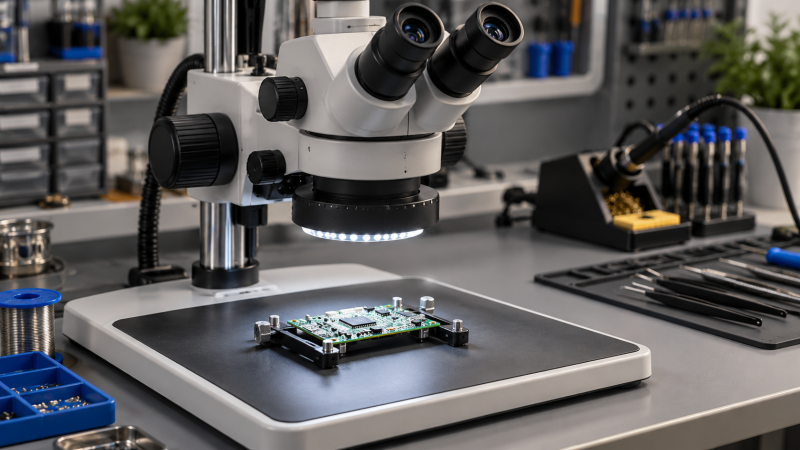
A stereo zoom microscope gives a repairer binocular optical viewing and adjustable magnification for board inspection and microsoldering. The useful differences are zoom range, working floor, stand geometry, eyepiece field, and light or fume-control accessories.
Choose the stand and work floor first, then match optical zoom, eyepiece field, camera path, lighting, and fume management to the repair bench. Our picks: Kaisi TX Soldering Microscope for a complete bench, Kaisi 36565M&P for large boards, and FeelTech RF-6555PROMAX for flexible positioning.Best Stereo Zoom Microscopes for Electronics Microsoldering Compared
| Image | Product | Details | Check Price |
|---|---|---|---|
 | Kaisi TX Soldering Microscope | Best fit: Complete repair workstation Magnification: 7X to 50X stated Work floor: 14.9 by 10 inches stated | Check Price on Amazon |
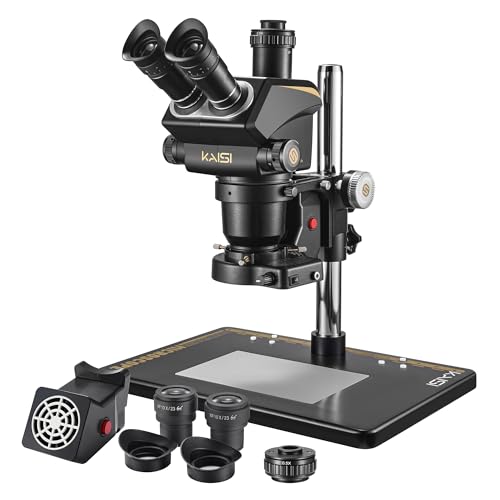 | Kaisi S6 | Best fit: Longer working distance Magnification: 6.8X to 68X stated Stand: 13.7 inches stated | Check Price on Amazon |
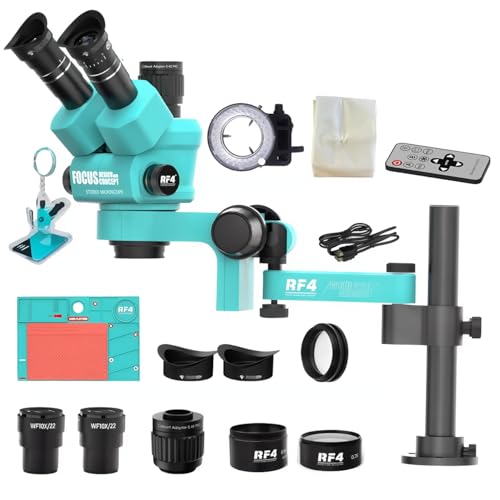 | FeelTech RF-6555PROMAX | Best fit: Articulating-arm positioning Magnification: 6.5X to 55X stated Adjustment: Seven gear zoom locks stated | Check Price on Amazon |
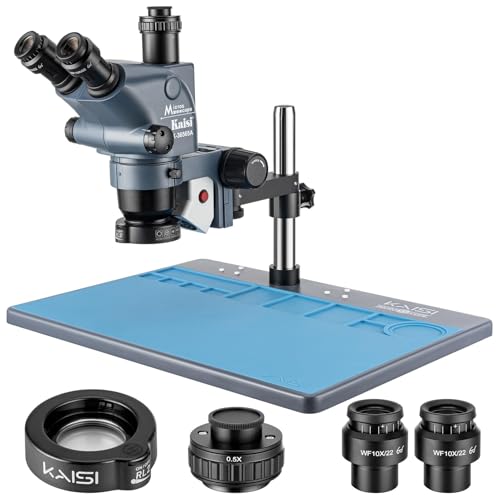 | Kaisi 36565M&P | Best fit: Large PCB work area Magnification: 6.5X to 65X stated Work floor: 19.69 by 14.96 inches stated | Check Price on Amazon |
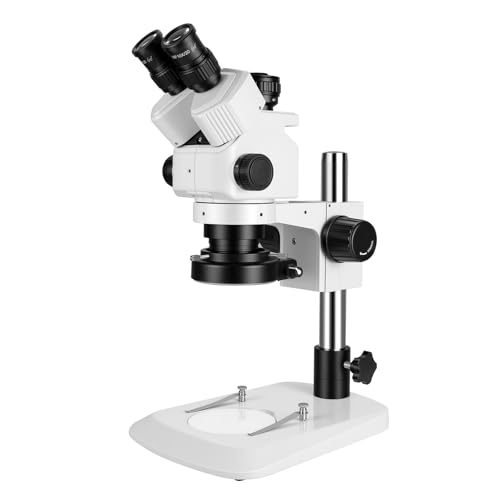 | ZTEEERS 6045 | Best fit: Stable pillar stand Magnification: 6X to 45X stated Lighting: 56-bulb LED ring light stated | Check Price on Amazon |
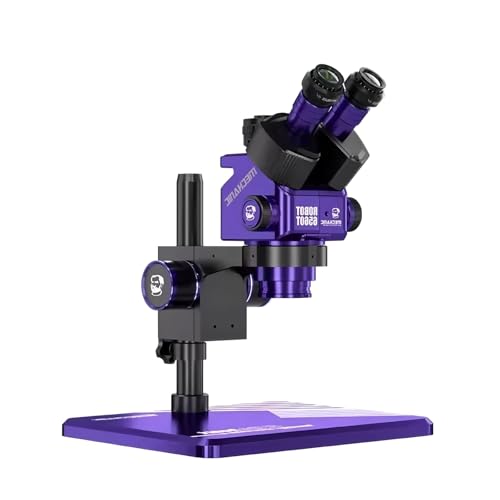 | MECHANIC ROBOT 6560T-B11 | Best fit: Wide-field eyepieces Magnification: 6.5X to 60X stated Eyepieces: WF10X25 stated | Check Price on Amazon |
The microscope has to fit a complete repair bench. A silicone soldering mat, fume extractor, precision tweezers, hot-air station, USB microscope, ESD wrist strap, bench power supply, and camera arm affect the room left beneath the optics.
1. Kaisi TX Soldering Microscope — Best Complete Repair Workstation
Kaisi lists 7X to 50X magnification from a 0.7X to 5X zoom objective and WF10X23 eyepieces. Those wider-field eyepieces help when a repairer needs to see a connector, nearby passives, and tweezer tips together rather than continually moving the board. The combination is suited to a bench where optical viewing stays central to the work.
The stated 14.9 by 10-inch work floor includes a 7.4 by 4.7-inch silicone mat, three parts trays, an LED ring light, and a soldering exhaust fan. That bundled layout suits a new repair bench, but it takes more space than a bare head and pillar stand. Measure the board, hot-air tool, and fume hose route before treating the built-in accessories as an automatic fit.
Decision point: A 7X-to-50X range, WF10X23 eyepieces, 14.9-by-10-inch floor, ring light, and fan suit a self-contained repair bench. Our TakeChoose the Kaisi TX when you want a microscope package that already includes a work surface, illumination, and a listed fume-control accessory. Its wide-field eyepieces make it a strong starting point for routine board inspection and microsoldering.
- The stated 7X-to-50X range gives a useful spread for connector inspection and fine solder work.
- WF10X23 eyepieces provide a wider listed field than conventional WF10X20 eyepieces for board context.
- A 14.9-by-10-inch work floor gives tools and a board a defined operating area.
- The included LED ring light supplies listed illumination without adding a separate first accessory.
- A listed soldering exhaust fan is part of the microscope package for fume removal.
- The 14.9-by-10-inch workstation needs more bench space than a microscope head alone.
- The 7X-to-50X ceiling is lower than the 6.8X-to-68X range listed for Kaisi S6.
2. Kaisi S6 — Best for Longer Working Distance
Kaisi S6 lists a 6.8X to 68X total range from a 0.68X to 6.8X objective, plus WF10X23 high-eye-point eyepieces. The low end helps a repairer frame a whole board, while the higher end is for checking smaller joints and traces. Its adjustable interpupillary distance and high-eye-point design are practical figures for buyers who wear glasses or spend long sessions at the scope.
The S6 adds a stated 13.7-inch stand, a 14.9 by 10-inch work surface, a 7.4 by 4.7-inch silicone mat, a 144-LED ring light, and an extractor. The stand height is the buying figure to compare with hot-air handles, board holders, and forearm room. A high zoom range cannot solve a cramped tool path below the objective.
Choose Kaisi S6 when working clearance and a broader stated zoom range outweigh a minimal bench footprint. It is the better fit for a repairer who already knows that hot-air and hand tools need extra vertical room.
- The 6.8X-to-68X stated range extends farther than the common 7X-to-50X workstation packages.
- WF10X23 high-eye-point eyepieces support more comfortable viewing for buyers who wear glasses.
- A 13.7-inch stand gives a concrete clearance figure for hot-air tools and taller board fixtures.
- The 144-LED ring light gives a stated light count for inspecting small solder joints.
- A 14.9-by-10-inch work surface and silicone mat organize a compact microsoldering station.
- The 13.7-inch stand should be checked against shelves, camera mounts, and overhead task lighting.
- The bundled work floor still needs room for a separate board holder and external fume duct.
3. FeelTech RF-6555PROMAX — Best Articulating-Arm Positioning
FeelTech lists 6.5X to 55X magnification and seven mechanical zoom-locking positions. Those locks give a buyer repeatable named settings rather than relying only on a freely moving zoom ring. The eye-mask design is also described as reducing stray afterglow, which addresses the light surrounding the eyepieces rather than the actual work illumination.
Its differentiator is a 360-degree adjustable articulating metal arm with telescopic lift support. That geometry helps when boards or devices must move under the optics from several sides, but the arm needs a stable bench edge and a clear swing path. It is more useful for varied device positions than a fixed pillar stand, not automatically better for a crowded bench with shelves close above it.
Decision point: A 6.5X-to-55X range, seven zoom locks, and 360-degree articulating support suit varied board positions. Our TakeChoose FeelTech when stand movement is the main constraint and a fixed central column would block the board or tool path. Its seven locked zoom positions make repeated inspection framing easier to reproduce.
- The 360-degree articulating arm can bring the optics around boards from different bench positions.
- Seven mechanical zoom locks give repeatable magnification positions for repeated repair tasks.
- The stated 6.5X-to-55X range covers broad inspection and closer component examination on one head.
- Telescopic lift support gives more placement flexibility than a fixed-height microscope column.
- The eye-mask design is listed to limit afterglow around the optical viewing area.
- An articulating arm requires clear swing space that small wall-side benches may not provide.
- The 55X upper figure is below the 60X, 65X, and 68X maxima listed elsewhere here.
4. Kaisi 36565M&P — Best Large PCB Work Area
Kaisi 36565M&P lists 6.5X to 65X continuous zoom and WF10X22 adjustable eyepieces. Its key buyer distinction is the stated 19.69 by 14.96-inch work floor, substantially larger than the 14.9 by 10-inch floors listed for the compact Kaisi packages. That extra surface is useful when a laptop board, fixture, parts tray, and hot-air station must coexist below the head.
The listing also names a telescopic stand, adjustable LED ring light, oilproof mirror, silicone pad, and solder fan. A wide floor does not mean every board is easier to manipulate, because the buyer still needs a comfortable reach to the tool and enough clearance under the optics. Choose it for the larger physical board area, then confirm the bench can absorb its larger footprint.
Choose Kaisi 36565M&P when board size and tool staging set the buying decision. The larger listed floor is the strongest reason to choose it over smaller all-in-one microscope benches.
- The 19.69-by-14.96-inch work floor leaves more stated space for larger boards and fixtures.
- A 6.5X-to-65X continuous range supports broad framing before moving to detailed joint inspection.
- WF10X22 adjustable eyepieces provide a named viewing format for fitting individual eye spacing.
- The telescopic stand can move the observation point within the stated work area.
- An adjustable LED ring light gives direct control over the listed work illumination accessory.
- The 19.69-by-14.96-inch floor needs a deep bench and reduces room for nearby test equipment.
- Its larger physical station is excessive when repair work centers on small phone boards only.
5. ZTEEERS 6045 — Best Stable Pillar Stand
ZTEEERS 6045 lists 6X to 45X magnification, WF10X eyepieces, and a 0.6X to 4.5X zoom objective. Its lower 6X starting point suits broad board framing before the buyer increases magnification for smaller components. The range is lower than some of the Kaisi options, so it is better for a buyer who values a straightforward fixed setup than the highest stated ceiling.
The listing specifies a 56-bulb LED ring light, aluminum alloy frame, stable pillar stand, and approximately 10-pound weight. Its simpler fixed stand suits a bench where the board position is predictable and the buyer wants stability over arm movement. It is a useful choice when camera selection will be handled independently.
Choose ZTEEERS 6045 when a stable pillar stand and a simple repeated work position are more valuable than an articulating arm. Its listed weight and fixed geometry suit a central repair bench.
- A 6X-to-45X range suits broad board framing before closer component work begins.
- The 56-bulb ring light supplies a clear stated illumination configuration for the work area.
- An approximately 10-pound listed weight supports a stable pillar-stand microscope layout.
- WF10X eyepieces and a 0.6X-to-4.5X objective define the basic optical package.
- The fixed pillar stand suits a repeated central bench position with predictable board placement.
- The 45X upper range is lower than several 50X-to-68X alternatives in this comparison.
- A fixed pillar stand has less placement flexibility than FeelTech’s 360-degree articulating arm.
6. MECHANIC ROBOT 6560T-B11 — Best Wide-Field Eyepieces
MECHANIC ROBOT 6560T-B11 lists 6.5X to 60X continuous zoom, WF10X25 eyepieces, and a 1:9.2 zoom ratio. The WF10X25 eyepiece figure is its main distinction because it describes a wider stated eyepiece field than the WF10X22 and WF10X23 options elsewhere in this group. The wider field can make it easier to maintain board context while working through a small repair zone.
The listing also names all-metal construction, FMC anti-reflection coatings, and dust protection. Those details suit a buyer who prioritizes optical-head specifications and a wide stated field. Confirm the included support and bench geometry independently, because the listing’s key strengths are optical rather than workstation-surface related.
Choose MECHANIC ROBOT 6560T-B11 when a wider stated eyepiece field is more important than a bundled workstation surface. It is the option that puts the optical head first on a planned custom bench.
- WF10X25 eyepieces provide the widest stated eyepiece figure among the compared microscope listings.
- The 6.5X-to-60X continuous range covers broad board view and detailed component inspection work.
- A 1:9.2 zoom ratio gives buyers a stated zoom ratio to compare.
- All-metal construction gives the listed optical head a durable material basis for a planned bench.
- FMC anti-reflection coatings are listed optical details for buyers comparing head specifications.
- The listing gives fewer details about the work surface than the Kaisi packages that state a work floor.
- A custom optical-head setup requires the buyer to confirm support geometry before purchase.
Buying Guide: Choosing a Stereo Zoom Microscope for Electronics Microsoldering
Start with the stand and the board footprint
The stand determines how much room you have to move tools around the board. Kaisi specifies a 19.69 by 14.96-inch floor on the 36565M&P, which fits a large laptop board and staging tools better than Kaisi TX’s 14.9 by 10-inch floor. Measure the maximum board, fixture, and mat together before selecting an optical head.
The base needs to leave room for the tool hand and the fume hose. The 14.9 by 10-inch surface listed for the Kaisi TX is useful for a self-contained repair station, while the 19.69 by 14.96-inch Kaisi 36565M&P floor suits larger board layouts. Choose the smaller package when power supplies, hot air, and a microscope must share one shallow desk.
Match zoom range to the way you inspect boards
Do not choose the highest stated maximum without considering the useful low end. The 6.8X to 68X range listed for Kaisi S6 lets a buyer frame a board first, then move closer for joints or traces. The 6X-to-45X range specified for ZTEEERS 6045 can still work well when the buyer values a simpler optical station.
Continuous zoom is useful when inspection moves between connectors and individual components. MECHANIC ROBOT lists a 1:9.2 zoom ratio on the 6560T-B11 to give a concrete optical comparison point. The buyer should still set the board at a comfortable working height, because magnification cannot add space for irons, tweezers, or fingers.
Treat eyepiece field as a productivity choice
Eyepiece figures help compare how much visual context the listing is designed to offer. WF10X25 eyepieces on the MECHANIC option have the widest stated designation in this comparison, while Kaisi TX and Kaisi S6 list WF10X23. The extra context can reduce the need to reposition a board when the target joint sits near a larger connector.
Comfort depends on the mechanics of the stand as well as the optics. High-eye-point WF10X23 eyepieces on Kaisi S6 are listed for users who wear glasses, while adjustable eye spacing appears across several models. Set the chair, board height, and eyepiece spacing before deciding that a longer session is workable.
Decide whether fixed or articulating support fits the bench
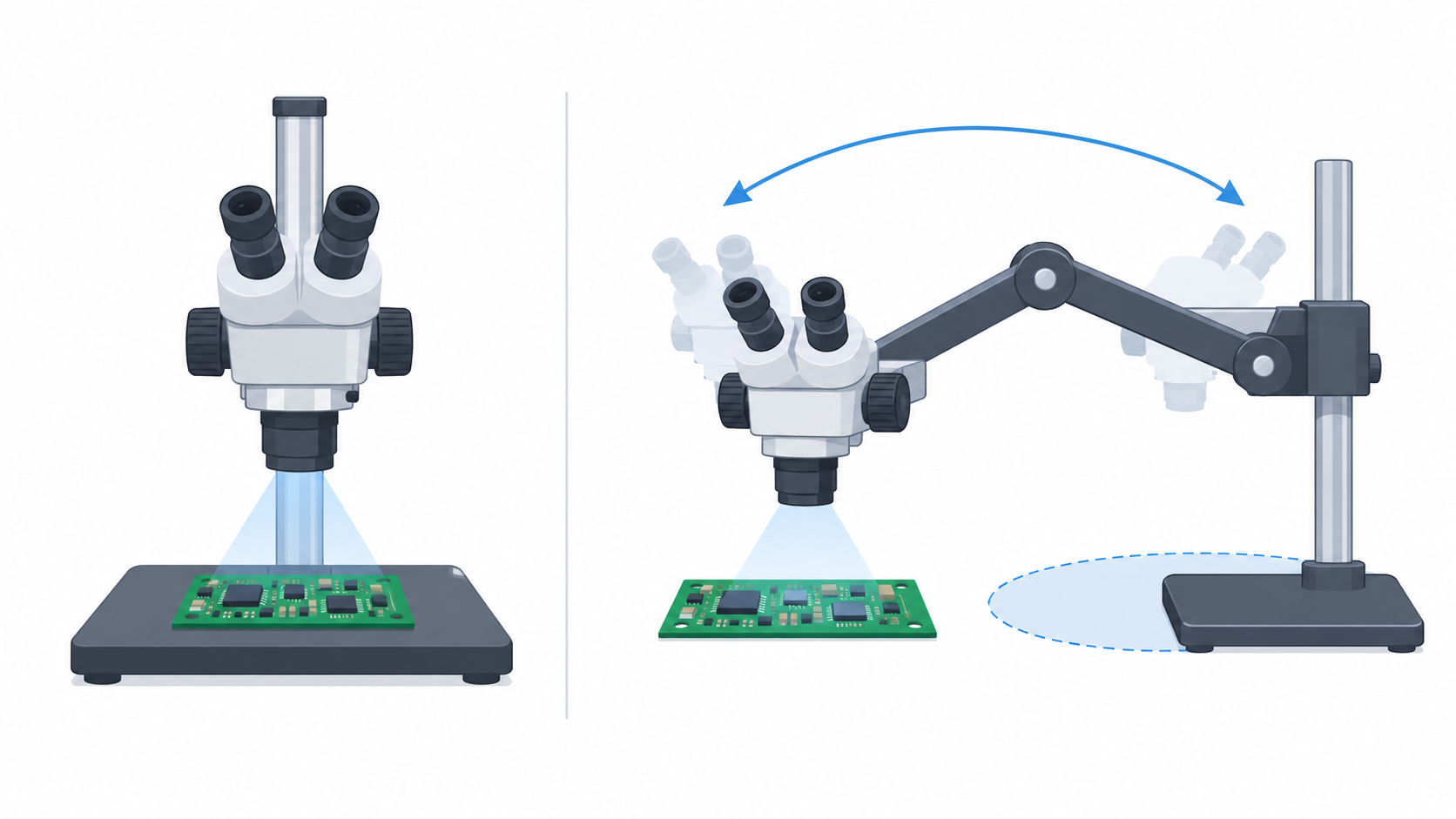
Stand geometry determines whether the board can approach the optics from the needed direction. FeelTech’s 360-degree articulating arm, according to its listing, and telescopic lift suit varied device positions, while the Kaisi and ZTEEERS pillar arrangements better suit a stable, repeated central position. Leave swing space for an arm before choosing it over a simple column.
The work surface matters as much as the head when the repair setup includes fixtures and hand tools. Kaisi 36565M&P’s 19.69 by 14.96-inch floor has more room for a laptop board than the compact 14.9 by 10-inch Kaisi TX floor. Measure the board, holder, and hand position together rather than choosing only from a magnification figure.
Plan illumination and fume control around the optical head
Ring lights make the work visible, but they do not replace directional task lighting or smoke control. A 144-LED ring light on Kaisi S6 and 56-bulb light on ZTEEERS 6045 are useful listing figures for comparison. Adjusting illumination can reveal solder bridges or surface texture without pushing reflections into the eyepieces.
Solder smoke should be pulled away before it reaches the optics and the worker. The listed extractor and fan on several Kaisi workstations are package features, while a dedicated fume extractor can still be necessary for the larger bench. Route the hose so it does not block the objective, ring light, or board access.
Frequently Asked Questions
Why choose an optical stereo zoom microscope instead of a digital microscope?
An optical stereo zoom microscope gives the buyer direct binocular viewing and adjustable magnification for hands-on microsoldering. Stereo optical viewing is the reason to choose it when depth perception and a clear hand-to-board path matter more than an on-device display.
Digital microscopes are often simpler for documentation, but their viewing method and work geometry differ. A 13.7-inch stand as listed for the Kaisi S6 gives a concrete clearance figure for hot-air tools and tall fixtures below an optical head.
How much magnification is useful for PCB repair?
Useful magnification is the range that lets you frame the board and still inspect a small joint. A 6.8X low end helps with broader layout context, while a 50X-to-68X stated maximum gives more close-up adjustment for detailed work.
More magnification does not create working room beneath the objective. The stand height and floor size decide whether the soldering iron, hot-air nozzle, and tweezers can reach the board without forcing an awkward hand position.
How do I choose between a fixed and articulating stand?
Choose an articulating stand when the board must approach the optics from several positions. FeelTech’s 360-degree arm and telescopic lift suit varied device placement, but the arm needs clear swing space beside and above the work area.
Choose a fixed stand when the board remains at one repeated central position. ZTEEERS’ approximately 10-pound listed weight and pillar stand suit a stable bench, while the Kaisi workstations add defined surfaces for tools and boards.
Is a larger work floor always better?
No, a larger work floor is not always better. It helps when the board, fixture, mat, and tools need the surface. The 19.69 by 14.96-inch Kaisi floor is valuable for large motherboard layouts and staging multiple repair tools.
It is not automatically better on a shallow desk. A 14.9 by 10-inch work floor can leave more room beside it for power equipment and fume extraction, so a smaller floor may produce a more usable total bench rather than simply a smaller microscope area.
What should I check before fitting a fume extractor?
Check the hose route, intake position, ring-light clearance, and the space around the working hand. The included extractor listings show that smoke management belongs in the microscope decision, but not that every included fan suits every bench.
The intake should pull smoke away without blocking the board or optics. A 13.7-inch stand such as the Kaisi S6 gives a clearance figure to compare with hose arcs, but the actual tool layout still needs to be measured on the bench.
Bottom Line
Choose Kaisi TX Soldering Microscope for a complete stated workstation with a 14.9 by 10-inch floor, 7X-to-50X zoom, ring light, and extractor. Choose Kaisi 36565M&P when its 19.69 by 14.96-inch floor is the deciding advantage for large boards. Choose FeelTech RF-6555PROMAX when its articulating arm is a better match for varied board positions than a fixed central column.