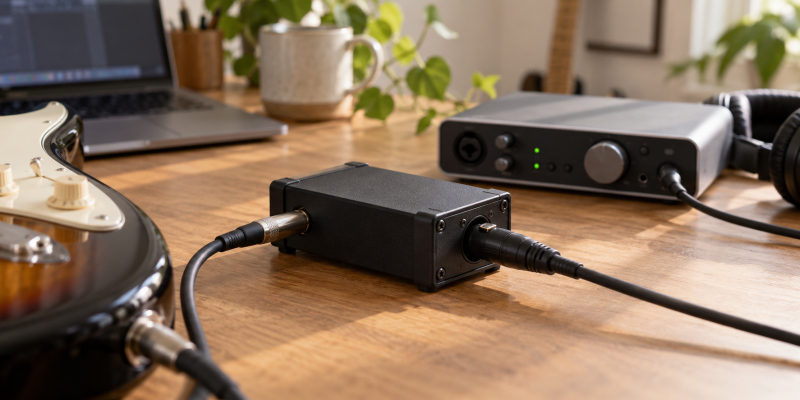
A guitar can connect straight to an interface only when the interface has the input and controls that match it. An active direct box gives a high-impedance 1/4-inch instrument signal a balanced XLR path, which is useful when the next destination expects an XLR input or when the cable run needs a different layout.
The useful differences here are power method, channel count, pad, ground lift, and the available thru or XLR connections. A one-guitar laptop desk usually needs a mono box with a clear power plan, while stereo keys or two instruments make the dual-channel choices more practical. A USB-C audio interface for guitar recording is a separate choice, and a podcasting audio interface solves a different source-and-input problem.
Match the DI to the input you actually have. A balanced XLR output is useful only when the interface, mixer, or preamp has a suitable XLR input waiting for it.Active Direct Boxes Compared
| Image | Product | Details | Check Price |
|---|---|---|---|
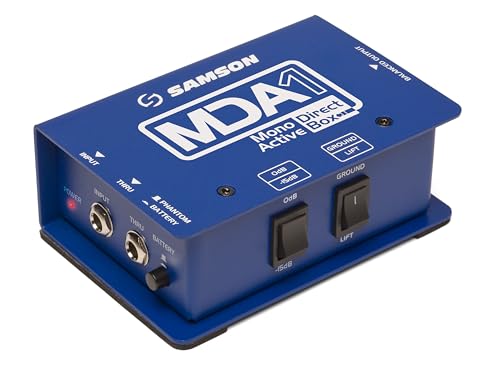 | Samson MDA1 Mono Active Direct Box | Best fit: Simple mono guitar connection Input: 1/4-inch input and thru Output: Balanced XLR Power: 48V phantom or 9V battery Controls: 0/-15dB pad, ground lift | Check Price on Amazon |
 | Riworal Dual Stereo Active DI Box | Best fit: Two-channel instrument routing Inputs: Dual 1/4-inch high-impedance Outputs: Dual thru and XLR Power: USB-C 5V or 9V battery Channels: Stereo / dual | Check Price on Amazon |
 | Radial Pro48 Active Direct Box | Best fit: Phantom-powered passive guitar or bass Power: 48V phantom Controls: -15dB pad Input: Passive guitar or bass Format: Compact mono | Check Price on Amazon |
 | Pegcabac PD-22ST Active Direct Box | Best fit: Dual-channel source routing Channels: Dual Outputs: Two 3-pin XLR Controls: -15dB pad, ground lift Use: Guitar, bass, keyboard, DJ gear | Check Price on Amazon |
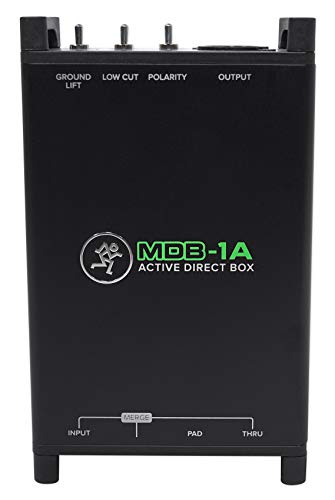 | Mackie MDB-1A Active Direct Box | Best fit: Mono DI with source controls Input: High-impedance 1/4-inch with thru Output: Balanced XLR Controls: Low cut, polarity, ground lift, merge Power: 48V phantom | Check Price on Amazon |
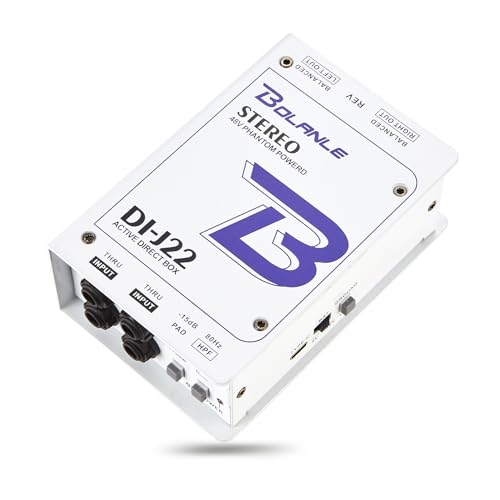 | Bolanle J22 Active Stereo DI Box | Best fit: Stereo keyboards and two instruments Inputs: Dual 1/4-inch TRS Outputs: Dual balanced XLR Power: 48V phantom, 9V, or USB Controls: Ground lift, polarity | Check Price on Amazon |
1. Samson MDA1 Mono Active Direct Box — Best for Simple Mono Guitar Connection
The Samson MDA1 is the straightforward starting point for one guitar, bass, or other mono instrument that needs a 1/4-inch input, balanced XLR output, and a matching thru jack. Its listing pairs those connections with a 0/-15dB attenuation switch and a ground-lift switch, so the box keeps the common routing and control choices on one compact mono unit.
Samson also lists two power paths: 48V phantom power and a 9V battery. Phantom power suits a desk with a phantom-capable XLR input, while a different setup can use the battery slot instead. The all-metal, impact-resistant enclosure is a listed construction detail, but the buyer decision is still the ordinary mono connection and its two power options.
Our Take Buy the MDA1 when one guitar needs a normal mono DI path and the next device can supply 48V or the DI can use a 9V battery. The Mackie adds low-cut and polarity controls, while Radial is the more focused phantom-power choice.
- Its 1/4-inch input and thru plus balanced XLR output suit a conventional mono guitar signal path.
- A 0/-15dB pad and ground lift provide listed controls before the instrument reaches the interface.
- 48V phantom power or a 9V battery gives two stated ways to run the box.
- The mono layout cannot keep left and right keyboard outputs separate like the Bolanle J22.
- A 9V battery is a separate item, so battery-powered use needs one already available.
2. Riworal Dual Stereo Active DI Box — Best for Two-Channel Instrument Routing
Riworal is the option for a desk that needs two high-impedance 1/4-inch inputs rather than one. The listing describes stereo input or mixed mono input, dual 1/4-inch thru connections, and stereo XLR output. The two-channel layout suits two instruments or a stereo source when the next stage can accept two XLR channels.
The listing also names a USB-C 5V power input and a built-in 9V battery slot. The battery is not included. Its compatibility claims include guitar, bass, keyboards, and other processors, but the important check is whether the signal plan actually uses both channels. A single guitar does not automatically benefit from a dual-channel box.
Our Take Buy Riworal when the layout needs two 1/4-inch inputs, two thru paths, and stereo XLR output. For one guitar, Samson, Radial, or Mackie is the simpler connection. For two channels with three power choices, Bolanle is the more flexible alternative.
- Dual high-impedance 1/4-inch inputs fit a stereo source or two separately connected instruments.
- Dual thru paths and stereo XLR output preserve the listing’s two-channel routing arrangement.
- USB-C 5V power and a 9V battery slot offer two stated alternatives for placement.
- The listing says the 9V battery is not included, so portable power needs a separate battery.
- Two channels add connections that a single guitar-and-interface desk may never use.
3. Radial Pro48 Active Direct Box — Best for Phantom-Powered Passive Guitar or Bass
The Radial Pro48 is the focused choice for a passive guitar or bass when the downstream input can supply 48V phantom power. Its listing calls it a high-resolution active direct box and specifies a -15dB pad for passive guitars and basses. The small set of stated features makes the power requirement particularly important to confirm before buying.
A single-purpose design can be a strength on a fixed desk. There is no battery or USB power route in the supplied listing, so the wiring decision stays simple. An appropriate phantom-powered XLR input has to be part of the chain. Buyers who need a battery fallback should choose Samson, Riworal, or Bolanle instead.
Our Take Buy the Pro48 when a passive guitar or bass feeds a phantom-powered XLR input and the -15dB pad suits the instrument’s output. It is less flexible on power than Samson, Riworal, or Bolanle, so check that one requirement first.
- 48V phantom power suits a fixed interface or mixer path that already supplies phantom power.
- The -15dB pad is stated specifically for passive guitars and basses with stronger output.
- A compact mono format avoids unused second-channel controls on a one-instrument desk.
- Its stated power method is only 48V phantom, unlike the battery and USB alternatives here.
- The listing targets passive guitars and basses, so other source needs require a closer feature match.
4. Pegcabac PD-22ST Active Direct Box — Best for Dual-Channel Source Routing
Pegcabac’s PD-22ST is a dual-channel option for a guitar, bass, keyboard, or DJ source that needs two listed 3-pin XLR outputs. The listing describes converting high-impedance unbalanced signals to low-impedance balanced signals, along with a -15dB pad and ground-lift switch. Those controls give a buyer concrete checks for a two-channel route.
It also claims a low background noise figure below -99dB and heavy-duty construction. The noise figure and construction are listing claims rather than a measurement comparison with the other boxes, so use the physical channel count, outputs, pad, and ground lift as the more useful decision points. The box makes sense when both channels have a destination.
Our Take Buy Pegcabac when two XLR outputs, a -15dB pad, and ground lift match a dual-channel source layout. Riworal includes stated USB-C and battery routes, while Bolanle adds a third stated power method and dual 1/4-inch TRS inputs.
- Two 3-pin XLR outputs fit a dual-channel source path rather than forcing both signals together.
- A -15dB pad and ground-lift switch are listed controls for the connected instrument route.
- The listing names guitar, bass, keyboard, and DJ equipment as intended source categories.
- The supplied listing does not name USB or battery power options for a placement without phantom power.
- A dual-channel unit adds unused hardware when the desk has only one guitar input to route.
5. Mackie MDB-1A Active Direct Box — Best for Mono DI with Source Controls
The Mackie MDB-1A is for a mono instrument path that needs more listed switches around the source. It has a high-impedance 1/4-inch input with thru output, balanced XLR output, ground lift, low cut, polarity, and a merge switch that can sum a stereo source to mono at its output. The control list is broader than the basic mono choices.
Mackie specifies that it runs on 48V phantom power, which keeps the wiring clean when an interface or mixer supplies it. The merge switch does not preserve stereo. Its stated job is to sum a stereo source to mono. A keyboard user deciding between the MDB-1A and the dual-XLR options on this page should treat the merge switch as a mono feature.
Our Take Buy the MDB-1A when a mono guitar path benefits from low-cut, polarity, and ground-lift controls, with phantom power already available. Pick Bolanle, Riworal, or Pegcabac instead if the goal is keeping a stereo source on two outputs.
- Low cut, polarity, ground lift, and merge controls broaden the stated mono source-control set.
- A high-impedance 1/4-inch input with thru and balanced XLR output fits common guitar connections.
- The merge switch can sum a stereo source to mono when one output is the intended destination.
- Its 48V phantom power requirement excludes placements where the downstream device cannot provide it.
- The merge switch produces mono output, so it is not the choice for preserving stereo channels.
6. Bolanle J22 Active Stereo DI Box — Best for Stereo Keyboards and Two Instruments
The Bolanle J22 is the most flexible option in this group for power and channel choices. Its listing gives it dual 1/4-inch TRS inputs, dual balanced XLR outputs, ground lift, and polarity reversal, aimed at stereo keyboards, dual-output synths, or two separate instruments. The dual outputs are the key distinction for a buyer who wants left and right kept as separate paths.
The listing also names 48V phantom, a 9V battery, and 5V USB power. It says a USB cable is included while batteries are not. The extra power paths give a laptop desk more placement choices, but they also mean more connections and controls than a straightforward mono guitar chain necessarily needs.
Our Take Buy the J22 when a stereo keyboard or two separate instruments need dual XLR outputs and the setup benefits from phantom, battery, or USB power. For one guitar routed to one XLR input, Samson or Mackie is the simpler purchase.
- Dual 1/4-inch TRS inputs and dual balanced XLR outputs keep two stated channels separate.
- 48V phantom, 9V battery, and 5V USB give three listed ways to power placement.
- Ground lift and polarity reversal are listed controls for the two-channel signal path.
- Batteries are not included, so the 9V power route needs a separate battery ready.
- Two channels and several power methods are unnecessary complexity for one fixed mono guitar connection.
Buying Guide: Choosing an Active Direct Box for a Laptop Guitar Desk
Start with the input waiting at the other end
Samson, Mackie, Radial, and the dual-channel models all list balanced XLR outputs, but the next device must have the matching XLR input and the right controls. A laptop itself does not provide that connection. Follow the signal path from guitar to the interface, mixer, or preamp before choosing a box.
Samson and Mackie each list a 1/4-inch input with a thru connection, while the J22 and Riworal list dual 1/4-inch inputs. Buy one channel for one source and two only when both channels have a destination. A simple count avoids paying for stereo hardware that never leaves mono.
Confirm the power method before choosing the box
Radial Pro48 and Mackie MDB-1A list 48V phantom power, so an appropriate downstream XLR input must provide it. Samson gives the MDA1 48V phantom and 9V battery options. Power is a compatibility requirement, because the box cannot operate without one of its listed paths.
Riworal adds 5V USB-C to a 9V battery slot, and Bolanle lists 48V phantom, 9V battery, and 5V USB power. The Riworal and Bolanle listings say batteries are not included. Choose a USB or battery route only when it solves a placement issue on the desk.
Use a pad and ground lift as stated controls, not promises
Samson and Pegcabac list a -15dB pad and ground lift. Radial lists its -15dB pad for passive guitars and basses, while Mackie lists ground lift alongside low cut and polarity. The listing says the box provides these controls, which does not guarantee that every noise or level problem disappears.
Match the control set to the source and the wiring plan. A simple mono route may need only the MDA1’s basic pad and ground lift, while Mackie’s low-cut and polarity switches are relevant only when those controls are useful to the rest of the signal chain.
Decide whether a thru output has a job
A thru jack can pass the instrument connection onward while the XLR output heads to the interface or mixer. Samson and Mackie list 1/4-inch thru outputs, and Riworal lists dual thru outputs. Count the actual parallel route before treating a thru jack as a required feature.
If the guitar only needs one path from the DI to the interface, a second output may sit unused. On a desk with another destination already planned, the listed thru connection can make the routing cleaner. Write the intended destinations down before selecting mono or dual-channel hardware.
Keep stereo sources separate when that is the purpose
Riworal, Pegcabac, and Bolanle list dual-channel arrangements, while Mackie’s merge switch specifically sums a stereo source to mono. A stereo keyboard needs two separate outputs only when the next device accepts and uses both channels. Otherwise a mono route may be the more direct setup.
Bolanle lists dual TRS inputs and dual balanced XLR outputs, while Riworal lists stereo input and stereo XLR output. Pegcabac lists two XLR outputs. Compare those connections against the source’s outputs and the interface’s available inputs, rather than buying stereo hardware by default.
Frequently Asked Questions
Does a guitar recording desk always need an active DI box?
No. This page covers active DI boxes for a specific routing job: taking a high-impedance 1/4-inch instrument signal to a balanced XLR path. Whether that is necessary depends on the actual input available on the audio interface, mixer, or preamp at the other end.
Samson and Mackie list a high-impedance 1/4-inch input and balanced XLR output, while Radial’s listing targets passive guitar and bass. Check the connection on the existing interface before adding another box to the chain.
Can I use phantom power with these boxes?
Several listings name 48V phantom power. Radial Pro48, Mackie MDB-1A, Samson MDA1, and Bolanle J22 each list phantom as a power method. Phantom power requires a suitable downstream XLR input that supplies it.
Riworal lists USB-C 5V and a 9V battery slot instead, while Samson, Riworal, and Bolanle also name a battery option. Read the specific power requirement before connecting the box, and note that Riworal and Bolanle say batteries are not included.
When is a dual-channel DI box useful?
It is useful when the source and destination both use two channels. Riworal lists dual high-impedance inputs and stereo XLR output, Pegcabac lists two XLR outputs, and Bolanle lists dual TRS inputs with dual balanced XLR outputs.
For one guitar feeding one input, those extra channels may simply be unused. A mono option such as Samson, Radial, or Mackie keeps the physical routing simpler while still giving a listed balanced XLR path.
What does a thru output do on this page’s DI boxes?
A thru output gives the instrument signal another stated 1/4-inch path while the balanced XLR output heads elsewhere. Samson and Mackie list one 1/4-inch thru output, while Riworal lists dual 1/4-inch thru connections for its two-channel arrangement.
Use it only when there is a defined second destination in the setup. The presence of a thru jack does not require a second connection. It is a routing option that can remain unused on a simple desk with one guitar and one interface.
Which listed controls should I compare first?
Start with the features that change the actual route: channel count, input and output connections, and power. Then compare the stated pad, ground-lift, low-cut, polarity, or merge controls. Samson and Pegcabac list a -15dB pad and ground lift, for example.
Mackie adds low cut, polarity, and mono merge, while Bolanle lists ground lift and polarity reversal. A control helps only when it fits the source and downstream device already on the desk, so make the connection plan first.
Bottom Line
For one guitar, Samson MDA1 is the flexible mono choice, Radial Pro48 is the focused phantom-powered passive-instrument option, and Mackie MDB-1A adds a fuller set of mono source controls. Choose Riworal, Pegcabac, or Bolanle only when the desk needs the dual-channel connections those listings actually provide.