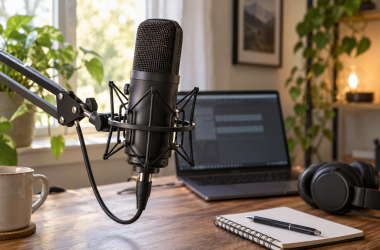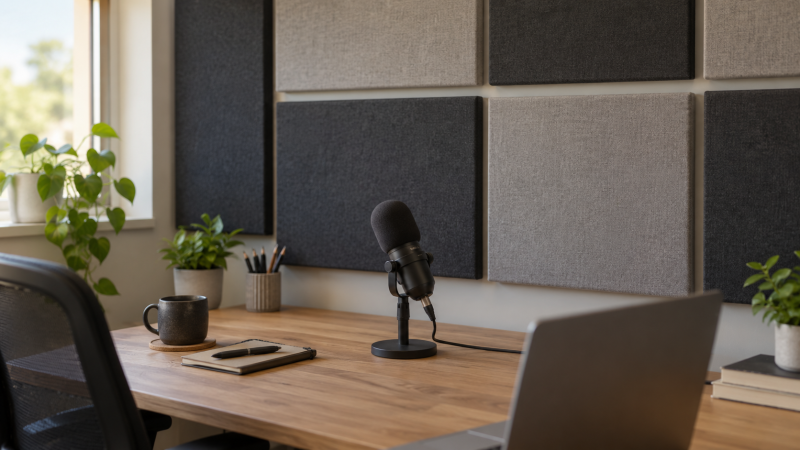
Wall-mounted acoustic panels can be a useful part of a desk recording setup when the room adds obvious reflections around a microphone. They are not a guarantee of isolation from neighbours, traffic, or other rooms. The practical choice is the panel type, coverage area, thickness, and mounting method that fit the wall behind or beside the narration position.
This guide compares six Amazon US panel packs with active New offers. The listings describe materials, dimensions, mounting approaches, and their own acoustic claims. Use that information to plan coverage and installation, then keep expectations focused on treating reflections inside the recording space.
Wall panels can address reflections near a desk microphone, but they do not turn a standard room into an isolated vocal booth.Acoustic Wall Panels Compared

1. TroyStudio 2in Foam Panels — Large 2-Inch Coverage Pack
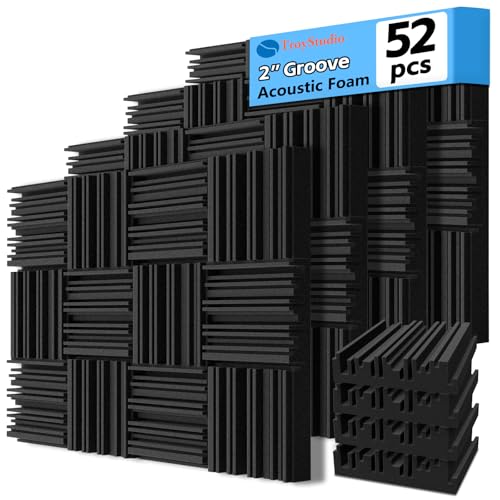
TroyStudio lists a pack of 52 polyurethane foam panels, each measuring 12 by 12 by 2 inches, with a listed 52 square feet of coverage. The 2-inch thickness and high panel count make it the package to consider when the job is a defined wall area near a desk rather than a few decorative tiles around a microphone.
The listing describes groove-pattern foam, a claimed NRC of 0.8, and installation with separately sold tape, spray adhesive, or screws. The NRC figure and installation options are listing claims, not a prediction of results in every room. Measure the wall, identify the surface, and decide how much coverage can be mounted safely before buying a large pack.
Our Take Buy the TroyStudio pack if broad 2-inch panel coverage is your goal and you have a defined mounting plan. The large pack gives you flexibility, but adhesive or mounting hardware is a separate decision.
- Lists 52 panels with 2-inch thickness.
- Listed coverage is 52 square feet.
- Mounting tape or other adhesive is sold separately.
- Listing coefficients are not room-specific measurements.
2. Saiqiang Wedge Panels — Large 1-Inch Wedge Pack
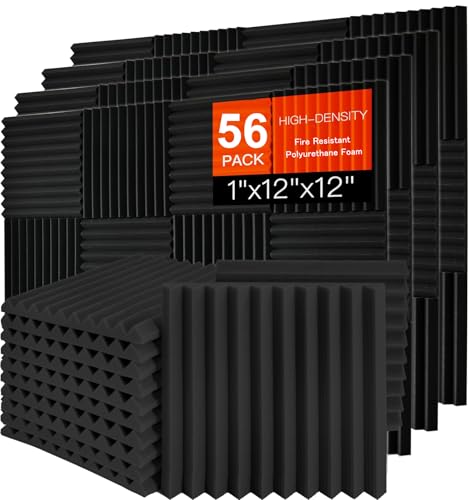
Saiqiang lists a 56-pack of 12 by 12 by 1-inch wedge panels. The product page describes high-density, fire-resistant foam and frames the panels as a way to manage reflections and echo in studios, vocal booths, offices, and podcast spaces. The large panel count is useful when a desk has more than one treatment surface to consider.
The listing says the panels are vacuum packed and may need 24 to 48 hours to expand. Plan for the expansion time during installation rather than measuring the panels immediately after opening. A 1-inch tile is a different physical product from a 2-inch tile, so choose it for coverage and surface fit instead of assuming that all foam thicknesses behave the same.
Our Take Buy the Saiqiang Wedge Panels if a large number of 1-inch panels suits the layout you have in mind. Give the foam time to expand and treat the listing’s sound claims as manufacturer statements, not an installation guarantee.
- Lists 56 panels for flexible layout coverage.
- Fire-resistant foam is listed.
- Panels are listed as 1 inch thick.
- Vacuum-packed foam needs expansion time.
3. XyraSound Self-Adhesive Panels — Peel-and-Stick Mounting
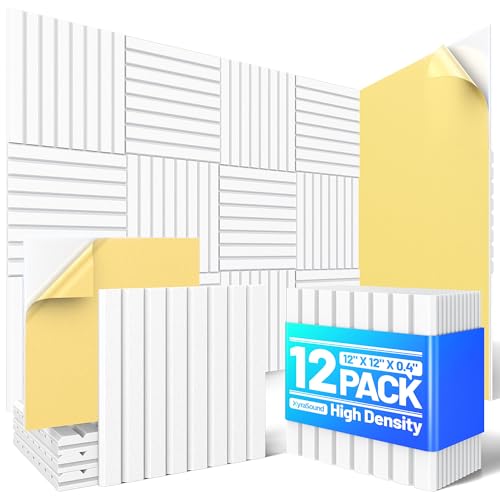
XyraSound lists 12 self-adhesive polyester-fiber panels, each 12 by 12 by 0.4 inches, for a stated 12 square feet of coverage. The peel-and-stick backing is the central distinction. It can simplify a small treatment experiment on a clean, smooth wall where drilling and separate adhesive are undesirable.
The listing claims an NRC up to 0.95 and describes a slatted three-dimensional appearance. The NRC figure and the visual claims come from the seller. Because the panels are thin, focus on the surface area and placement you can cover, and do not expect a few tiles to solve every acoustic issue in a room.
Our Take Buy the XyraSound Self-Adhesive Panels if you want the listed self-adhesive mounting for a small coverage area. They suit a focused wall section near a desk and are not a substitute for a complete room treatment plan.
- Self-adhesive backing is listed.
- Polyester panels have a slim 0.4-inch profile.
- Pack covers a stated 12 square feet only.
- Thin panels do not establish whole-room performance.
4. TEMGCUAM Wedge Panels — Included Adhesive Pads
TEMGCUAM lists a 54-pack of 12 by 12 by 1-inch polyurethane foam panels with a wedge-cut surface. The listing says premium adhesive pads are included, which distinguishes the package from large foam packs that require a separate adhesive choice before anything can go on the wall.
The listing advises using clean, dry, smooth walls and choosing a more secure method for unsuitable surfaces. The surface caveat applies to a desk recording area, where painted, textured, dusty, or damp walls can change the installation decision. Test a limited area and follow the product instructions rather than covering a large wall without checking the surface.
Our Take Buy the TEMGCUAM Wedge Panels if included adhesive pads make a 1-inch foam layout more practical. Check the mounting guidance as carefully as the panel count, especially on an older or textured wall.
- Lists 54 1-inch panels.
- Adhesive pads are listed as included.
- Requires a clean, dry, smooth mounting surface.
- Textured or damp walls may need another method.
5. Knightsacoustic 2in Wedges — Thicker 50-Pack Foam
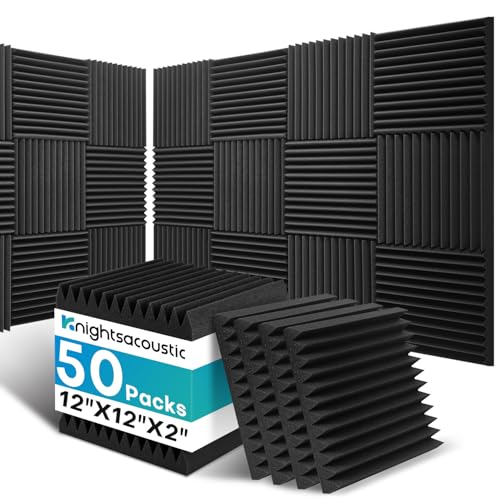
Knightsacoustic lists 50 black foam wedges measuring 12 by 12 by 2 inches. The product page describes the foam as intended to manage reverberation rather than block sound, and it explicitly says adhesive is not included. A thicker pack without adhesive suits a buyer who already has a preferred mounting method.
The listing says compressed panels should recover over several hours and gives a drying process if they do not. Let the panels recover before measuring or mounting them. Keep the expected result limited to reflection treatment inside the space, not external noise isolation.
Our Take Buy the Knightsacoustic wedges if you want 2-inch wedge foam and prefer to select adhesive separately. The pack is substantial, but installation materials and wall preparation remain part of the cost and effort.
- Lists 50 panels with 2-inch thickness.
- Listing distinguishes absorption from blocking sound.
- Adhesive is explicitly not included.
- Compressed foam needs time to recover its shape.
6. YPY Decorative Art Panels — Decorative Polyester Panels
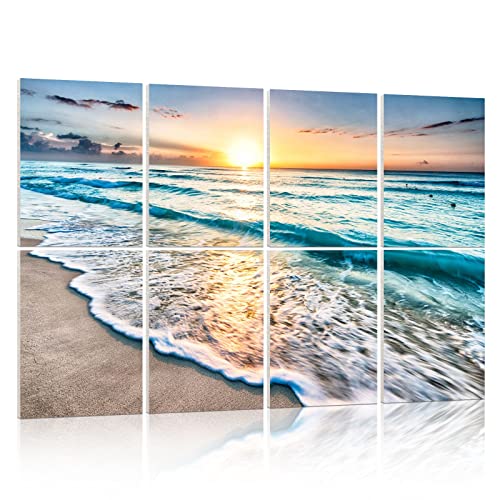
YPY lists an eight-pack of 12 by 16-inch polyester panels with decorative printed faces and supplied Velcro-style adhesive backing. The YPY pack differs from plain foam tiles because visual treatment is part of the stated product. It can suit a desk wall where the panels will remain visible in a home office or video-call frame.
The listing supplies its own coefficient and density claims. The two claims do not establish how the art panels will perform on your wall or with your microphone. The eight-panel count calls for layout planning. Decide whether the priority is a focused reflection point or a decorative pattern over a wider area.
Our Take Buy the YPY Decorative Art Panels if visible decorative polyester panels and supplied Velcro mounting fit the room. They suit a small, intentional wall layout better than broad foam coverage.
- Lists eight 12 by 16-inch decorative panels.
- Velcro-style adhesive backing is listed as included.
- Eight panels offer less broad coverage than foam packs.
- Listing coefficients are not room-specific proof.
Buying Guide
Treat reflections, not the whole building
Wall panels are for the acoustic behaviour inside the recording space. Foam and polyester products can be used near reflective surfaces around a desk microphone, but they do not establish that sound from outside the room will be blocked. Keep the purchase goal specific. Reduce a problematic nearby reflection or add controlled coverage around a narration position.
Start with the wall closest to the microphone position. Speak at the usual seat, then identify the hard bare surface that is most likely to reflect sound back into the recording area. A focused panel layout can be easier to install and revise than covering every available surface without a plan.
Count tiles and measure the actual coverage area
Pack count and tile dimensions determine what you can cover. TroyStudio lists 52 12-inch tiles, Saiqiang lists 56, and YPY lists eight larger art panels. Sketch the wall width and height before buying. A sketch prevents a large pack from becoming a random pattern and a small pack from falling short of the intended treatment area.
Thickness is a physical choice. The TroyStudio and Knightsacoustic products list 2-inch panels, while Saiqiang and TEMGCUAM list 1-inch foam and XyraSound lists 0.4-inch polyester. Choose the format that fits the space and planned coverage, without converting a seller’s dimension into a guaranteed acoustic result.
Choose mounting for the wall you have
Self-adhesive panels simplify a suitable smooth wall. XyraSound lists peel-and-stick backing, TEMGCUAM lists adhesive pads, and YPY lists Velcro-style backing. Check the wall finish, paint condition, and whether you may need to remove the panels later. An easy application method can still damage a surface or fail on an unsuitable one.
Separate adhesive gives more control but adds work. TroyStudio and Knightsacoustic list installation options or separately needed adhesive. A separate adhesive can be appropriate when you have a preferred mounting system, but include the additional material and surface preparation in the plan before choosing the panel that looks cheapest.
Frequently Asked Questions
Will acoustic wall panels block neighbour or street noise?
No. Wall-mounted absorption panels are not the same as building isolation. The products here are sold for managing reflections and echo inside a room. They do not establish a barrier against outside noise, voices from another room, or structural vibration.
For desk narration, focus first on the room surface nearest the microphone and on a consistent recording position. External noise requires a different assessment involving the room construction and sound path.
How many panels do I need for a desk recording area?
It depends on the wall area and the specific reflection you are trying to address. Measure the wall and calculate coverage from the tile dimensions and count. A pack of 12 small panels serves a different layout from 50 or 56 foam tiles.
Start with a planned section around the recording position rather than treating panel count as a coverage target by itself. Starting small makes it easier to mount, listen, and adjust without committing to an entire room at once.
Should I use self-adhesive or separate mounting hardware?
Use the method that suits the wall surface and your removal needs. Self-adhesive backing works only on the conditions the listing specifies, while separate tape, spray adhesive, or screws may be more appropriate for another surface or a heavier installation.
Read the product instructions, clean the surface, and test a small spot when possible. Do not assume a panel pack includes adhesive, because the Knightsacoustic listing explicitly says it does not.
Bottom Line
For broad 2-inch foam coverage, TroyStudio 2in Foam Panels gives you a listed panel count and coverage figure for a defined wall area. For included adhesive pads, TEMGCUAM Wedge Panels is the one to look at. For a thinner self-adhesive choice, XyraSound Self-Adhesive Panels is the fit.