A SanDisk Extreme or Extreme PRO label does not tell you everything about the card inside the package. Capacity, the UHS bus and the video speed class all change the decision, even when two full-size cards look much alike.
The six cards below run from a 32GB UHS-I V30 model to UHS-II cards rated V60 and V90. Match the camera’s card and recording requirements first, then check the reader you will use to move files to a laptop. SanDisk and the Amazon listings give transfer and write speeds as “up to” maximums, so the speed you see can depend on the host and the card reader.
SanDisk Extreme and Extreme PRO SD Cards Compared
| Image | Product | Best fit | Format and capacity | Stated performance | Video class | Watch-outs | Check Price |
|---|---|---|---|---|---|---|---|
 | SanDisk Extreme 128GB | 128GB V30 camera use | 128GB SDXC, UHS-I | Up to 150 MB/s transfer, 70 MB/s shot speed | V30, U3 | 150 MB/s requires a compatible device | Check Price on Amazon |
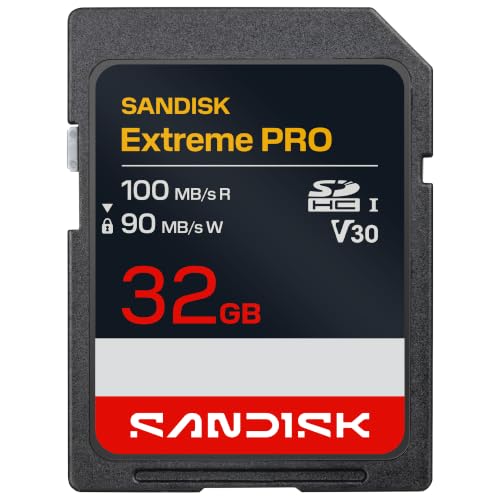 | SanDisk Extreme PRO 32GB | Smaller-capacity V30 card | 32GB SDHC, UHS-I | Up to 100 MB/s read, 90 MB/s write | V30, U3 | 32GB holds less than the larger cards | Check Price on Amazon |
 | SanDisk Extreme PRO 64GB | 64GB with QuickFlow transfer | 64GB SDXC, UHS-I | Up to 200 MB/s read, 90 MB/s write | V30, U3 | 200 MB/s requires a compatible device | Check Price on Amazon |
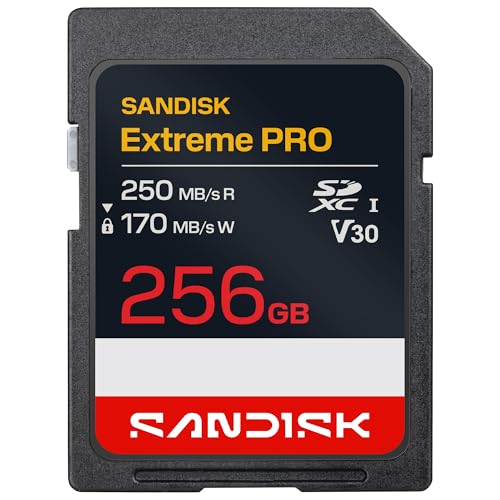 | SanDisk Extreme PRO 256GB | Higher-capacity V30 card | 256GB SDXC, UHS-I | Up to 250 MB/s read, 170 MB/s write | V30, U3 | Headline speeds depend on host and reader | Check Price on Amazon |
 | SanDisk Extreme PRO 512GB V60 | 512GB UHS-II capture | 512GB SDXC, UHS-II | Up to 280 MB/s read, 150 MB/s write | V60, U3 | UHS-II hardware is needed for its interface advantage | Check Price on Amazon |
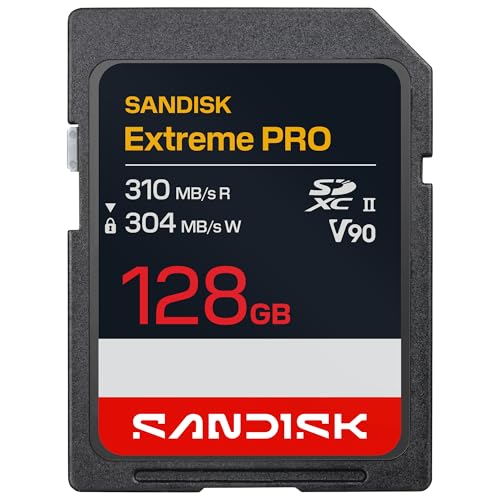 | SanDisk Extreme PRO 128GB V90 | V90 camera mode | 128GB SDXC, UHS-II | Up to 310 MB/s read, 304 MB/s write | V90, U3 | 128GB offers less space than the 512GB V60 card | Check Price on Amazon |
1. SanDisk Extreme 128GB — Best for a V30 Camera Card
The SDSDXV5-128G-GNCIN is a 128GB SDXC card on UHS-I with U3 and V30 ratings. The Amazon listing states up to 150 MB/s transfer and up to 70 MB/s shot speed, and it says the 150 MB/s figure needs a compatible device capable of reaching it. It also says the card is temperature-proof, waterproof, shock-proof and X-ray-proof, for the card only.
The Amazon listing describes V30 as a sustained video capture rate of 30 MB/s and names 4K UHD video and sequential burst photography, with video support varying by host device and file attributes. SanDisk’s Extreme product page does not list this model number, so every figure for this card comes from the Amazon listing.
Decision point: choose 128GB and V30 for a compatible camera and reader. Our TakeChoose this Extreme card when the camera calls for V30 and 128GB suits the workflow. The Amazon listing ties its 150 MB/s figure to a compatible device, so check the reader before expecting that transfer speed.
- The SanDisk Extreme has 128GB of capacity, more than the 32GB and 64GB cards in this comparison.
- The Amazon listing for the Extreme card states U3 and V30 ratings and describes V30 as a sustained video capture rate of 30 MB/s.
- The Amazon listing gives a shot speed of up to 70 MB/s next to the 150 MB/s transfer figure.
- The Amazon listing says the Extreme card is temperature-proof, waterproof, shock-proof and X-ray-proof, for the card only.
- The Amazon listing says the 150 MB/s transfer speed requires a compatible device capable of reaching it.
- The SanDisk Extreme listing names UHS-I, while the listings for the 512GB V60 and 128GB V90 cards name UHS-II.
2. SanDisk Extreme PRO 32GB — Best Small-Capacity Option
The SDSDXXO-032G-GN4IN is the smallest card here. SanDisk’s product page lists it as a 32GB SDHC UHS-I card with up to 100 MB/s read and 90 MB/s write, and the Amazon listing gives the same two figures with U3 and V30 ratings. The Amazon listing names 4K UHD video and sequential burst photography and says support varies with the host device and file attributes.
SanDisk’s page adds an offer for two years of RescuePRO Deluxe data recovery software and an operating temperature range of -25°C to 85°C. The 100 MB/s read figure is half the 200 MB/s that SanDisk’s page gives for the 64GB PRO.
The 32GB Extreme PRO is the V30 card with the least space in this comparison. Pick a larger card when you want more room between offloads.
- SanDisk’s page lists the 32GB model with up to 100 MB/s read and 90 MB/s write.
- The Amazon listing gives this PRO card U3 and V30 ratings to compare with a camera’s required class.
- The Amazon listing names 4K UHD video and sequential burst photography, with support varying by host device and file attributes.
- SanDisk’s page lists an offer for two years of RescuePRO Deluxe data recovery software.
- At 32GB, the PRO card is the smallest in this comparison.
- SanDisk’s page lists 100 MB/s read for this card, lower than the 200 MB/s it lists for the 64GB PRO.
- The SanDisk PRO card uses UHS-I, while the V60 and V90 cards use UHS-II.
3. SanDisk Extreme PRO 64GB — Best for QuickFlow Transfers
The SDSDXXU-064G-GN4IN is a 64GB UHS-I card rated U3 and V30. The Amazon listing states up to 200 MB/s read with SanDisk QuickFlow Technology and up to 90 MB/s shot speed, and SanDisk’s product page gives the same 200 MB/s read and 90 MB/s write for the 64GB size. The Amazon title calls the card SDXC, while SanDisk’s specification table labels the 64GB size SDHC, so confirm the formats your camera accepts.
The Amazon listing says the 200 MB/s figure is engineered to go beyond the UHS-I 104 MB/s standard and requires a compatible device. It names the separately sold SanDisk Professional PRO-READER SD and microSD for reaching maximum speeds, and SanDisk’s page repeats that pairing.
Decision point: pair 64GB QuickFlow with a compatible reader for its stated maximum. Our TakeChoose this card for the 200 MB/s QuickFlow read figure at 64GB. Both the Amazon listing and SanDisk’s page tie that figure to a compatible device and name the PRO-READER for maximum speeds.
- The Amazon listing states up to 200 MB/s read for the PRO card, higher than the 100 MB/s SanDisk gives for the 32GB card.
- The Amazon listing gives U3 and V30 ratings to check against a camera’s recording mode.
- The Amazon listing and SanDisk’s page both name the separately sold PRO-READER for maximum speeds.
- The Amazon listing says the 200 MB/s QuickFlow figure requires a compatible device capable of reaching it.
- At 64GB, the PRO card has half the nominal capacity of the 128GB Extreme card.
- The Amazon title says SDXC, while SanDisk’s specification table labels the 64GB size SDHC.
4. SanDisk Extreme PRO 256GB — Best Larger UHS-I Card
The SDSDXXJ-256G-GSCIN is a 256GB UHS-I card rated U3 and V30. The Amazon listing states up to 250 MB/s read and up to 170 MB/s write and applies the write figure to 256GB through 1TB sizes. SanDisk’s product page lists the same 250 and 170 MB/s for this model number as an SDXC card, and it lists 120 MB/s write for the 128GB size of the same line.
The Amazon listing names 4K UHD video and the SanDisk Memory Zone desktop app for backing up, organizing and transferring files, whether you use a card slot or a reader. At 256GB it is the largest UHS-I card here, with twice the capacity of either 128GB card.
Decision point: select 256GB V30 for more capacity within the UHS-I group. Our TakePick this card when V30 meets the camera requirement and you want the most UHS-I capacity in this comparison. The Amazon listing ties its write figure to the 256GB to 1TB sizes, so compare the figure for the size you buy.
- As the largest UHS-I card here, the SanDisk PRO has twice the nominal capacity of either 128GB card.
- SanDisk’s page lists up to 250 MB/s read and 170 MB/s write for this model number.
- The Amazon listing gives the card U3 and V30 ratings and names 4K UHD video.
- The Amazon listing names the SanDisk Memory Zone desktop app for backing up and transferring files, whether you use a card slot or a reader.
- The V60 and V90 cards use UHS-II, while this PRO card uses UHS-I.
- The Amazon listing applies the 170 MB/s write figure to the 256GB to 1TB sizes, while SanDisk’s page lists 120 MB/s for the 128GB size.
5. SanDisk Extreme PRO 512GB V60 — Best for Capacity and UHS-II
SanDisk’s product page lists the SDSDXEP-512G-GN4IN as a 512GB SDXC UHS-II card with up to 280 MB/s read and 150 MB/s write, and the Amazon listing states the same two figures with U3 and V60 ratings. The Amazon listing aims the card at prosumers and professionals shooting with mirrorless interchangeable-lens and cinema cameras. It describes V60 as a sustained video capture rate of 60 MB/s for 6K and 4K UHD video, with support varying by host device and file attributes.
The Amazon listing also names continuous burst and time-lapse images at shot speeds up to 150 MB/s. SanDisk’s page tells buyers to pair the card with the SanDisk Professional PRO-READER Multi Card reader for the fastest speeds. Against the 128GB V90, it has four times the nominal capacity and a lower video class.
The 512GB V60 is the largest card in this comparison, with SanDisk’s 150 MB/s write maximum on a UHS-II bus. Select the V90 model when the recording mode calls for that class.
- At 512GB, the SanDisk PRO V60 is the largest of the six cards in this comparison.
- SanDisk’s page lists UHS-II with up to 280 MB/s read and 150 MB/s write for this model number.
- The Amazon listing names 6K and 4K UHD video with a V60 rating.
- The Amazon listing names continuous burst and time-lapse images at shot speeds up to 150 MB/s.
- The V60 class is lower than the V90 rating of SanDisk’s 128GB PRO card.
- SanDisk’s page tells buyers to pair it with the separately sold PRO-READER Multi Card reader for the fastest speeds.
- The Amazon listing says 6K and 4K UHD support varies by host device and file attributes.
6. SanDisk Extreme PRO 128GB V90 — Best for a V90 Requirement
The SDSDXDE-128G-GN4IN is the only V90 card in this comparison. SanDisk’s product page lists it as a 128GB SDXC card with up to 310 MB/s read and 304 MB/s write, and describes V90 as a sustained video capture rate of 90 MB/s. The Amazon title adds UHS-II, 8K video and IP68 water and dust resistance, and SanDisk’s page says the card is IP68 rated and tested to withstand drops up to 6 meters. SanDisk’s page also says a 128GB card stores up to 1,118 minutes of 8K video at 30 fps.
The Amazon listing has a 305 MB/s write bullet for 512GB through 2TB sizes, and SanDisk’s page lists 305 MB/s for those sizes and 304 MB/s for 128GB. The Amazon listing also says RescuePRO Deluxe recovery software is included.
Pick this card when the camera mode calls for V90 and accepts a full-size UHS-II card. Its 128GB capacity is a quarter of the 512GB V60’s.
- SanDisk’s page describes V90 as a sustained 90 MB/s video capture rate, the highest class in this comparison.
- SanDisk’s page lists up to 310 MB/s read and 304 MB/s write for the 128GB size.
- The card is IP68 rated and tested to withstand drops up to 6 meters, according to SanDisk’s page.
- The Amazon listing says RescuePRO Deluxe recovery software is included.
- At 128GB, the V90 card holds one quarter of the nominal capacity of the 512GB V60 card.
- The Amazon listing’s 305 MB/s write bullet applies to 512GB and larger sizes, not to the V90 card.
Buying Guide: Choose the Right SD Card for Your Camera and Reader
Match the video class to the camera mode
Start with the camera manual’s card requirement for the recording mode you use. The Amazon listings mark the Extreme 128GB and the three UHS-I PRO cards as V30 and the 512GB PRO as V60. The 128GB V90 has the highest class here. Capacity alone does not tell you whether a card meets that requirement.
Several of the Amazon listings mention 4K or 6K video, and some say support varies by host device and file attributes. SanDisk’s page for the 512GB card describes V60 as a sustained video capture rate of 60 MB/s. Check the camera manual for your recording mode before paying for capacity or a higher read figure.
Check the full-size card slot and interface
All six are full-size SD cards, not microSD cards. The Amazon titles call the 64GB PRO and the 128GB Extreme SDXC, and SanDisk’s page calls the 32GB PRO SDHC. SanDisk’s table labels its 64GB size SDHC too, so check which formats the camera accepts, especially in an older body. A laptop needs a full-size SD slot or a separate reader to take these cards.
The four V30 cards use UHS-I, and the V60 and V90 cards use UHS-II, according to their Amazon titles. SanDisk names its PRO-READER readers for the fastest speeds on the 64GB PRO and the 512GB V60. Our guide to Thunderbolt SD card readers covers the reader decision when the laptop has no suitable slot.
Compare capacities by model number
The six cards cover 32GB, 64GB, 128GB, 256GB and 512GB, and the Amazon listings for the 64GB PRO and the 512GB V60 say actual user storage is less than the labeled capacity. Two cards share 128GB. The Extreme is V30 on UHS-I and the PRO is V90 on UHS-II. The 512GB V60 has the most nominal space between transfers.
Speed claims also change with capacity. The Amazon listing for the 256GB PRO gives its 170 MB/s write figure for 256GB to 1TB sizes, and SanDisk’s page lists 120 MB/s for the 128GB size of that line. For the V90 card, SanDisk’s page lists 304 MB/s write at 128GB and 305 MB/s from 512GB up, so use the figure for the size you buy.
Separate read speed from shot speed
Read speed covers copying files off the card, and shot or write speed covers saving pictures and video to it. The Amazon listing for the 128GB Extreme states up to 150 MB/s transfer and 70 MB/s shot speed, and SanDisk’s page for the 512GB V60 lists up to 280 MB/s read and 150 MB/s write. Both are stated maximums, so compare both numbers and the conditions around them instead of choosing by the largest read figure.
The 64GB PRO comes with a reader condition. The Amazon listing says its 200 MB/s QuickFlow figure requires a compatible device and names the separately sold PRO-READER for maximum speeds. If a reader fails to appear, see the USB-C reader troubleshooting guide before assuming the card’s speed rating is the cause.
Balance storage against the video class
The 512GB V60 and 128GB V90 both use UHS-II but answer different needs. The V60 has four times the nominal capacity, while SanDisk’s page describes V90 as a 90 MB/s sustained video capture rate against 60 MB/s for V60. Decide on the camera’s required class first, then on how much footage you need to hold between offloads.
If the camera asks only for V30, each of the four UHS-I cards carries that rating on its Amazon listing. For a wider look at the higher class, the V90 SD card guide compares other options for mirrorless video. Keep a second copy of important files after transferring them, whichever card you use.
Frequently Asked Questions
What is the difference between Extreme and Extreme PRO?
In this comparison the differences are the interface, the video class and the stated speeds, and they vary by model number. The Amazon listing for the 128GB Extreme states UHS-I, V30 and up to 150 MB/s transfer. SanDisk’s pages list the UHS-I V30 PRO cards at up to 100, 200 and 250 MB/s read for the 32GB, 64GB and 256GB sizes, and the PRO choices also include a UHS-II V60 and a UHS-II V90.
A PRO label alone does not settle the interface or the class. Compare the stated read and write maximums, the camera’s requirements and the reader conditions for the model you are considering.
Is V90 always necessary for 4K video?
A 4K label does not tell you the card class every camera mode needs. The Amazon listings for the 128GB Extreme and the 32GB PRO mention 4K UHD and carry V30, while the 512GB PRO listing names 4K and 6K with V60. Each listing says video support varies by host device and file attributes.
Check the camera’s requirement for the recording mode you use. The 128GB V90 is the card in this comparison for a mode that calls for V90, which SanDisk describes as a sustained video capture rate of 90 MB/s.
Can a laptop reach the advertised transfer speed?
It depends on the reader and host as well as the card. The Amazon listing for the 64GB PRO says its up to 200 MB/s QuickFlow speed requires a compatible device and names the separately sold PRO-READER for maximum speeds. The Amazon listing for the 128GB Extreme likewise ties its 150 MB/s figure to compatible devices capable of reaching it.
A laptop’s built-in slot is convenient, but neither listing mentions it as a way to reach those figures. Check the reader’s specifications, then treat the card’s stated number as an upper limit.
Which card offers the most storage?
The 512GB Extreme PRO V60 has the most storage of the six cards. It has twice the nominal capacity of the 256GB PRO and four times that of the 128GB V90, and its Amazon listing says actual user storage is less than the labeled capacity.
Storage is one part of the decision. If the camera mode requires V90, the 512GB V60 does not meet that requirement however much it holds, so settle the class first.
Are these cards interchangeable with microSD cards?
All six cards are full-size SD cards. A device with only a microSD slot needs a card in that smaller form factor, and a full-size SD card does not fit that slot. The camera or laptop reader must also support the card’s capacity and format.
The Amazon titles call the 64GB PRO and the 128GB Extreme SDXC, and SanDisk’s page calls the 32GB PRO SDHC. Check the host’s supported formats and capacity before buying, particularly with older equipment.