An SD card with fast headline speeds can still be rejected by a mirrorless camera’s demanding movie mode if it lacks the required speed-class marking. V90 means a minimum 90 MB/s sequential-write class under the SD Association standard, not a promise that every camera records every codec on that card. Check the body and exact mode first. Some settings accept V60, some need V90, and some require CFexpress instead of SD.
This six-card selection spans 64, 128, and 256 GB full-size SDXC UHS-II V90 models. Peak read/write claims vary by exact model and capacity. In-camera recording, sustained speed, and seller durability claims were not independently tested for this guide. Plan enough cards for the bitrate and shoot duration, then make verified copies before reusing them.
Use the camera’s current table of recording media. Match SDXC, UHS bus, and V90 requirements for the exact codec and frame rate before comparing peak read numbers.V90 SD Cards Compared
Capacities and peak speeds below are manufacturer or seller specifications, not independently measured results.
| Image | Product | Details | Check Price |
|---|---|---|---|
 | ProGrade Iridium 128GB | Capacity: 128 GB Class: SDXC UHS-II V90 Peak read: 300 MB/s stated Best fit: Managed card rotation | Check Price on Amazon |
 | Lexar 2000x 256GB | Capacity: 256 GB Class: SDXC UHS-II V90 Peak read: 300 MB/s stated Best fit: Longer between swaps | Check Price on Amazon |
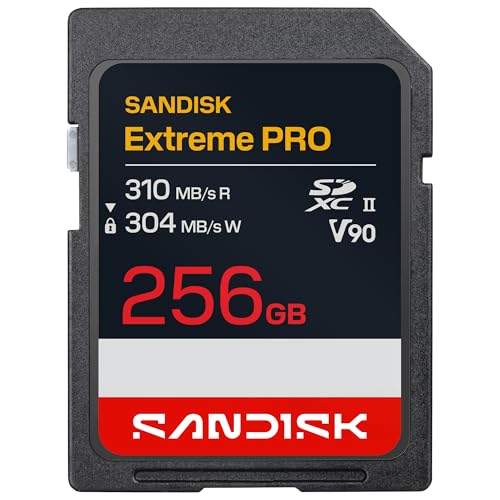 | SanDisk Extreme PRO 256GB | Capacity: 256 GB Class: SDXC UHS-II V90 Peak read: 310 MB/s stated Best fit: Rugged-claim option | Check Price on Amazon |
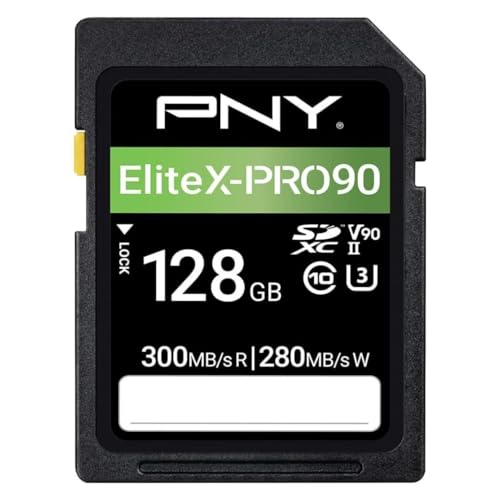 | PNY EliteX-PRO90 128GB | Capacity: 128 GB Class: SDXC UHS-II V90 Peak read: 300 MB/s stated Best fit: Plain 128 GB choice | Check Price on Amazon |
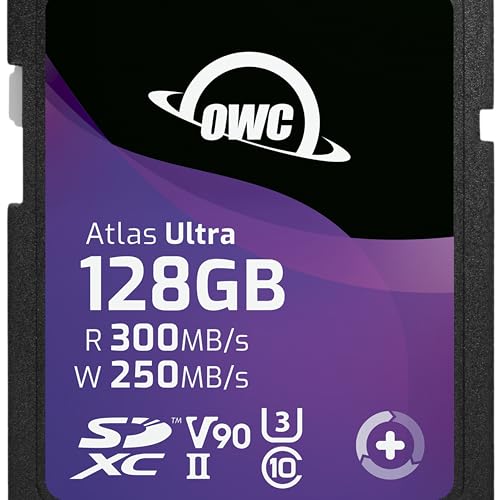 | OWC Atlas Ultra 128GB | Capacity: 128 GB Class: SDXC UHS-II V90 Peak read: 300 MB/s stated Best fit: Explicit minimum | Check Price on Amazon |
 | Kingston Canvas React Plus 64GB | Capacity: 64 GB Class: SDXC UHS-II V90 Peak read: 300 MB/s stated Best fit: Short-take rotation | Check Price on Amazon |
1. ProGrade Iridium 128GB — Best Explicit V90 Workflow Card
ProGrade’s exact Iridium 128 GB card lists SDXC UHS-II, U3, V90, up to 300 MB/s read and 200 MB/s write, and a minimum sustained write figure of 90 MB/s. The last number is consistent with the V90 class. The larger figures are peak product claims, so do not read them as a guarantee for a recording mode. If you edit video from a handful of camera cards, you can rotate them deliberately at 128 GB without putting an entire long project on one piece of media.
The seller describes serialized tracking, a three-year warranty, and optional Refresh Pro software. Software is not a verified copy of footage and cannot rescue every failed card. The broad Canon/Sony/Nikon/Panasonic compatibility paragraph is also not proof of every recording mode. Check the camera’s own media table and test one full-length take. Decide whether the optional tool is relevant only after you have settled the V90 decision for your camera.
Our Take Choose Iridium if you want a clear 128 GB V90 starting point with an explicit statement of its minimum class. The management extras are no substitute for the mode check or the backup routine.
- UHS-II/U3/V90 and 90 MB/s minimum stated.
- 128 GB suits controlled rotation.
- Optional card tool listed.
- Peak write claim is not every-mode proof.
- Optional software is separate.
2. Lexar 2000x 256GB — Best Larger Classic V90 Card
Lexar’s 2000x offer is a 256 GB SDXC UHS-II card marked V90 and U3, with up to 300 MB/s read in the checked listing. With a 256 GB card you can go longer between swaps on a long mirrorless video day, provided the camera accepts this exact model and the chosen mode. The 300 MB/s read number is a best-case host transfer claim, not the V90 minimum and not a guarantee through a basic UHS-I reader.
The seller says it is backward-compatible with UHS-I devices at their own limit. Backward compatibility is useful for file access, but a slower host may not provide UHS-II peak speed and still might not enable a recording mode that requires V90. The generic “8K” phrase is not approval of a camera mode. Verify current availability and the exact 256 GB model rather than substituting an unverified capacity.
Our Take Choose Lexar if 256 GB helps your rotation and you want a straightforward V90 card. The body and reader still set the practical limits.
- 256 GB and V90/UHS-II stated.
- UHS-I backward compatibility listed.
- 300 MB/s is a peak read claim.
3. SanDisk Extreme PRO 256GB — Best Rugged-Claim Option
The exact SDSDXDE-256G-GN4IN offer is a 256 GB full-size UHS-II V90 card. Its title lists up to 310 MB/s read and 304 MB/s write, while the bullets discuss 305 MB/s write for 512 GB to 2 TB capacities, not this 256 GB model. That internal mismatch prevents treating one family-wide peak write speed as a tested figure for this card. The V90 class is the durable technical comparison for eligibility in a camera mode, subject to body support.
SanDisk’s listing also claims IP68 water/dust resistance and drop testing, plus RescuePRO Deluxe recovery software. Those claims are not independently verified here, and a weather-resistant card still needs a second copy of its files. With 256 GB you can change cards fewer times during long takes, but if the camera requires CFexpress for one setting, the V90 SD label will not override that requirement.
Our Take Choose SanDisk as the 256 GB candidate marketed as rugged. Confirm the exact SKU and ignore write headlines that mix capacities when comparing it with other V90 cards.
- 256 GB UHS-II V90 identity clear.
- IP68 and recovery-software claims listed.
- Write-speed bullets mix capacities.
- Durability claims not tested here.
4. PNY EliteX-PRO90 128GB — Best Plain 128GB Alternative
PNY’s EliteX-PRO90 is a 128 GB SDXC UHS-II U3 V90 card with up to 300 MB/s read and 280 MB/s write listed. The card is a 128 GB choice for an editing kit that uses smaller rotating cards. The V90 marking is the minimum class, while the 280 MB/s is a seller peak write claim. A particular high-bitrate codec may still require a different medium or a product on the camera’s approved list.
The listing advertises 8K/4K use and several durability traits. None is a test of your camera’s full-length recording mode. In a dual-slot camera, check whether the second card has a different limit during simultaneous backup recording. PNY says it is backward-compatible with UHS-I devices, but those devices operate at UHS-I speeds. Separate recording eligibility from how fast files offload through a reader.
Our Take Choose PNY if you want a straightforward 128 GB V90 alternative with a clear UHS-II identity. Do not turn the 8K marketing line into a mode guarantee.
- UHS-II/U3/V90 stated.
- 128 GB rotation size.
- UHS-I access listed.
- 280 MB/s is a peak claim.
- Broad 8K/durability claims unverified here.
5. OWC Atlas Ultra 128GB — Best Stated 90 MB/s Minimum
OWC lists this exact Atlas Ultra as 128 GB SDXC UHS-II V90, with up to 300 MB/s read, up to 250 MB/s write, and an explicit 90 MB/s minimum sustained write. The minimum and the peaks are different figures. The minimum matches the V90 class, while the peaks describe favorable transfer conditions. OWC positions it for high-bitrate 4K/6K work, but that positioning does not prove any specific mirrorless body accepts it for all such modes.
The seller claims IP67 dust/water resistance and bend, shock, and X-ray resistance. Those protection claims and long-take performance were not independently tested. It also lists a three-year warranty, which is for product service rather than footage recovery. A 128 GB card can be easier to rotate and verify in stages than one very large card, but only if the ingest workflow prevents premature formatting.
Our Take Choose Atlas Ultra if you want a listing whose wording distinguishes peak speeds from the stated minimum. Its 128 GB size and protection claims still need an exact camera and workflow match.
- 90 MB/s minimum expressly stated.
- 128 GB UHS-II V90.
- Protection claims and warranty listed.
- IP67 and endurance not tested here.
6. Kingston Canvas React Plus 64GB — Best Short-Take Rotation Card
Kingston’s Canvas React Plus is the smallest capacity in this group, at 64 GB SDXC UHS-II U3 V90, with 300 MB/s read and 260 MB/s write peak figures in its checked title. The small size can make sense for short, planned takes or a camera kit that swaps cards frequently and ingests immediately. It is not a sensible single-card plan for a long high-bitrate session. Estimate minutes from the camera’s actual bitrate before buying.
The seller claims 4K/8K capture without dropped frames, but V90 is a 90 MB/s class, not an all-codec guarantee. Some camera modes demand CFexpress or a different media class. With a small card you can keep less footage at risk per card, but you get more handoffs and more chances to mix up copied and uncopied media. Label each card and keep it out of rotation until two verified copies exist.
Our Take Choose Kingston for deliberate 64 GB rotation, not for long takes. Its V90 class still must match the actual camera mode.
- 64 GB UHS-II V90 is explicit.
- Small card can support staged ingest.
- Fills quickly at high bitrates.
- More card swaps and tracking work.
Buying Guide: Read the Camera Table, Then Plan the Shoot
Match the full recording setting
V90 is a speed class, not a blanket 8K approval. The SD Association speed-class explanation defines V90 as 90 MB/s minimum sequential write under its conditions. Sony’s camera-media guidance shows that different recording formats can require different SD speed markings or CFexpress media. Use your own body’s current media table rather than transferring one Sony example to every Canon, Nikon, or Panasonic camera.
Resolution alone does not set the storage requirement. Codec, compression mode, frame rate, S&Q/slow motion, and simultaneous dual-slot recording can change the required media. Check the body firmware and both slots if making an in-camera backup. A card that records ordinary 4K may be rejected by an intraframe or high-frame-rate setting. Test the complete planned mode for a take as long as the production needs.
Distinguish V90, UHS-II, and peak transfer speed
The V90 logo is a minimum class for sustained video recording. UHS-II describes the interface, and “up to 300 MB/s” usually describes a peak read through a matching host. They are related but not interchangeable. A UHS-II card can be read in many UHS-I devices at a slower rate. A UHS-I reader does not achieve the card’s advertised peak. Use the camera’s mode table for recording and a compatible reader for fast offload.
Performance figures can differ by capacity. The checked SanDisk 256 GB offer mentions a write number for 512 GB to 2 TB variants in its bullets. Compare exact capacity/model specifications rather than applying a family maximum to every card. Even when two cards share V90, their transfer time in use, controller behavior, and durability claims may differ; those differences were not independently measured here. Our USB-C hub guide covers laptop ports, not SD recording eligibility.
Size cards for a verified ingest cadence
Use the selected camera mode’s bitrate and expected take length to estimate storage needs, leaving margin before a card fills. The 64 GB Kingston needs frequent swaps. The 128 GB ProGrade, PNY, and OWC cards are the middle option. The 256 GB Lexar and SanDisk cards mean fewer swaps but more unbacked footage on one card. Neither small nor large is automatically safer. Bring enough cards to avoid reusing one before the required copies have been made and checked.
After shooting, copy to two independent destinations and verify representative files before formatting. Keep card IDs and a clear “unread / ingested / verified” status. Our USB-C docking station guide can help with a fixed editing desk, but a dock does not validate copies. Recovery software and a warranty are fallbacks, not the primary ingest plan.
Frequently Asked Questions
Does V90 mean every mirrorless camera can record 8K on it?
No. V90 is a minimum sequential-write class, not a universal codec or resolution guarantee. Some 8K modes demand more sustained throughput or a different card format, and some lower-resolution high-frame-rate modes can also be demanding. Follow the camera’s current mode/media table.
Check body firmware, codec, frame rate, and any second-slot recording setting. Test a representative long take before a paid shoot. Marketing that says “8K” on an SD-card box does not replace that check.
Is a 256GB card better than several 64GB cards?
It depends on take length and offload cadence. With a 256 GB card you swap fewer times during long scenes, while with several 64 GB cards a crew rotates and ingests sooner. Small cards also add chances to mislabel or prematurely erase a card. Calculate minutes from the recording bitrate and bring margin.
Neither layout is a backup. Label cards, separate exposed from reusable media, and verify copies before formatting. A large card can lose more footage at once. A small card can interrupt an unplanned long take.
Will a UHS-II V90 card read in an older UHS-I reader?
Usually it can be accessed at UHS-I reader speeds, and Lexar and PNY explicitly state backward compatibility. The UHS-II peak read number will not appear through a slower reader. The camera can also impose its own write and speed-class checks separate from the reader used at the editing desk.
For a reliable ingest plan, confirm the exact reader, cable, host port, and destination drive. Then verify the files. Faster hardware reduces waiting, but it does not establish that footage was copied completely.
Bottom Line
Choose ProGrade Iridium 128GB or OWC Atlas Ultra 128GB if you want a card that explicitly names the V90 minimum, Lexar 2000x 256GB for more capacity between swaps, or Kingston 64GB for deliberate rotation of small cards. Pick from the camera’s media table, not a generic 8K or peak-speed label.