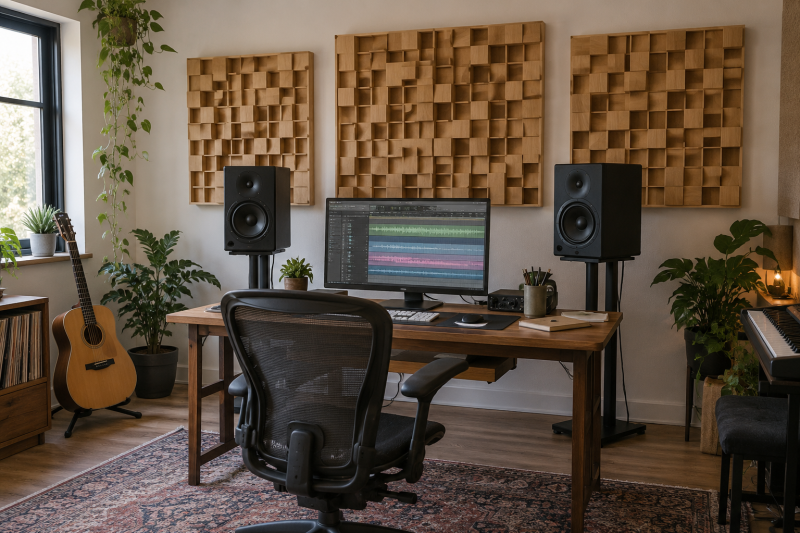
A home recording room can sound too sharp, and fixing it does not have to leave the room acoustically dead. Diffusion addresses the problem by scattering strong reflections in multiple directions, which preserves more room energy than broad absorptive treatment. A diffuser is therefore especially useful behind a listening position, on a rear wall, or at another reflection point where extra absorption would remove too much life.
The seven options below cover lightweight decorative tiles, modular EVA designs, and substantial wood quadratic-residue diffusers. They are not interchangeable. Coverage, depth, scattering direction, mounting weight, and the manufacturer’s stated operating range count for more than visual pattern alone. Every pick had an active new offer when checked, but room measurements and placement should decide the final choice.
A diffuser redirects reflections. It does not soundproof a room, stop sound transmission, or replace bass trapping. In a very small room, keep enough listening distance for the scattered energy to integrate.- Best overall for serious listening rooms: BXI 2D Wood Diffuser combines a wood build with two-dimensional scattering and a stated 410 Hz to 24,571 Hz diffuseness range.
- Best lightweight full-wall kit: TroyStudio 12-Pack covers a stated 32.34 square feet without placing heavy wood panels across the wall.
- Best wood alternative with hardware included: HypSpace 7-Well Diffuser is a 23.6 x 23.6 x 3.2-inch pine panel supplied with mounting hardware.
Acoustic Diffuser Panel Comparison
| Image | Product | Details | Check Price |
|---|---|---|---|
 | SA-3D Acoustic Diffuser Wall Art | Configuration: 9 pieces Combined size: 24 x 24 x 2 in Material: PLA Mounting: 10 ft double-sided tape included | Check Price on Amazon |
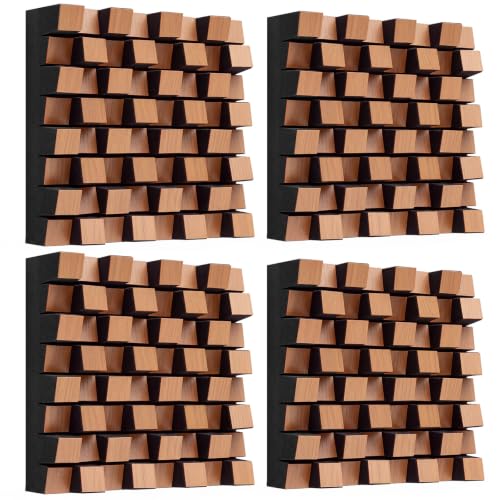 | Yeshone 4-Piece Sound Diffuser Panels | Configuration: 4 panels Coverage: Approx. 11.1 sq ft Stated scattering: 625-5,000 Hz Stated NRC: 0.48 Depth note: Listing data conflicts; verify before purchase | Check Price on Amazon |
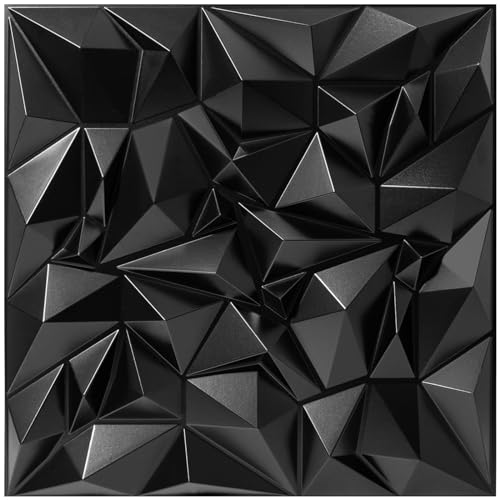 | TroyStudio 12-Pack PVC Diffusers | Configuration: 12 panels Panel size: 19.7 x 19.7 x 1 in Coverage: 32.34 sq ft Weight: 0.69 lb per panel Material: PVC | Check Price on Amazon |
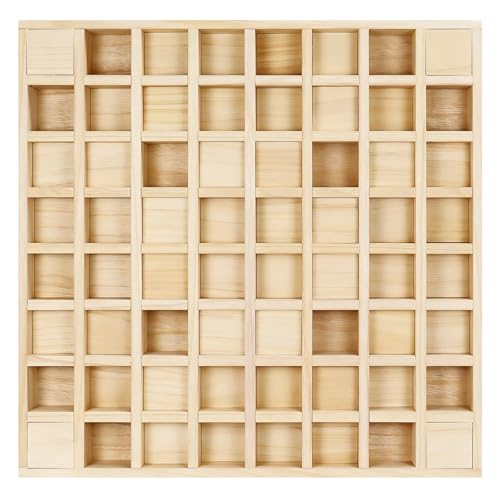 | BXI Wood Sound Diffuser 2D | Design: 2D quadratic residue Size: 24 x 24 x 2.8 in Weight: 9.3 lb Stated range: 410-24,571 Hz Material: Wood | Check Price on Amazon |
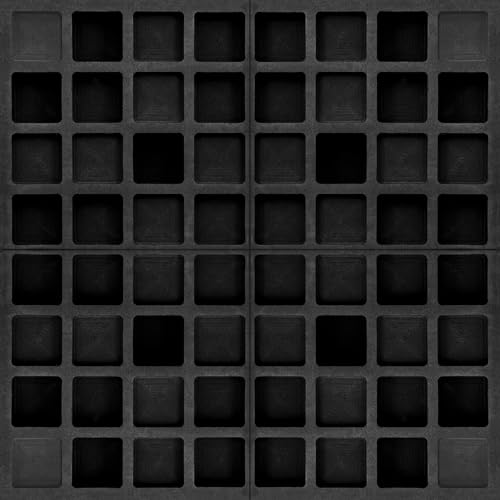 | FOROOMACO Waffle Diffuser Kit | Configuration: 4 modules Combined size: 24 x 24 x 2 in Module size: Approx. 12 x 12 x 2 in Material: Semi-rigid EVA Design: QRD-inspired waffle geometry | Check Price on Amazon |
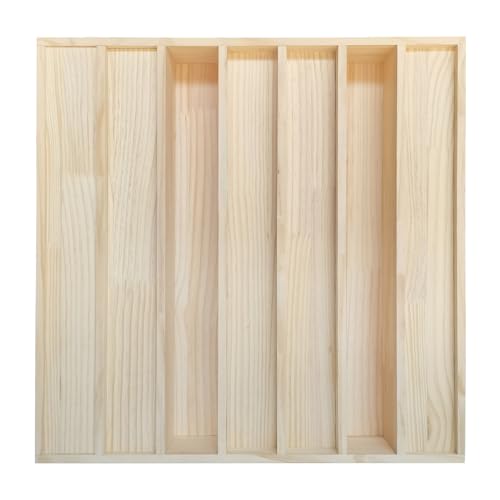 | HypSpace 7-Well Wood QRD | Design: 7-well QRD Size: 23.6 x 23.6 x 3.2 in Weight: 9.5 lb Material: Natural pine Mounting: Hardware included | Check Price on Amazon |
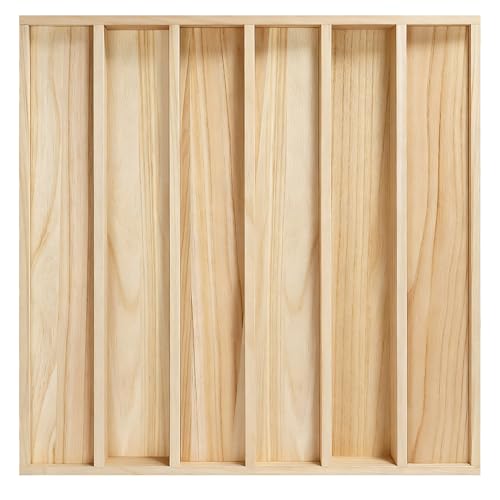 | BXI Wood Sound Diffuser 1D | Design: 6-well 1D quadratic residue Size: 24 x 24 x 2.8 in Weight: 7.3 lb Stated range: 544-24,571 Hz Dispersion: Horizontal | Check Price on Amazon |
1. SA-3D Acoustic Diffuser Wall Art — Best Compact Modular Pick
The SA-3D set is specified to divide a 24 x 24 x 2-inch treatment area into nine individual 8 x 8-inch pieces. That modular format is useful when a full square panel would conflict with outlets, shelves, monitor stands, or wall art. The pieces can remain in one grid or be separated across a selected reflection zone, although changing the intended arrangement may also change how evenly the surface scatters sound.
According to the manufacturer, the panels are made from PLA, a thermoplastic derived from renewable organic sources such as corn starch or sugar cane. The PLA build makes this set a light, manageable alternative to a solid wood diffuser. The listing says the set can reduce reverberation and echo while improving clarity, but it does not give a measured diffusion range or absorption coefficient. Treat it as a compact scattering treatment rather than a quantified broadband acoustic solution.
Installation is unusually complete for a lightweight set because the package is listed as including a 10-foot roll of double-sided mounting tape. The black finish and nine-piece geometry can suit a visible recording backdrop as well as a control-room wall. Still, adhesive mounting is only as reliable as the paint, surface preparation, and tape contact, so confirm that the wall can accept adhesive before committing to the layout.
[accentbox]Choose the SA-3D when you want a compact, low-fuss diffuser that can work around furniture. Choose a published-range wood QRD instead when predictable frequency coverage counts for more than installation convenience.[/accentbox]- Nine-piece modular layout
- Mounting tape included
- Lightweight PLA construction
- No measured scattering range stated
- Adhesive suitability depends on the wall finish
2. Yeshone 4-Piece Sound Diffuser Panels — Best Hybrid Decorative Set
Yeshone’s four-panel set is positioned between pure diffusion and hybrid acoustic treatment. The listed specifications claim scattering from 625 to 5,000 Hz, absorption across low, middle, and high frequencies, and an overall NRC of 0.48. That combination may appeal in a bright home room where some absorption is welcome but covering the wall in conventional absorbers would make it feel too dry.
The decorative wood-color face and three-dimensional geometry make the panels better suited to a living space than plain studio foam. A self-adhesive backing simplifies mounting on a suitable smooth wall, and the listed total coverage is approximately 11.1 square feet. Adhesive placement should still be planned carefully because repositioning can damage paint or weaken the bond.
There is an important listing inconsistency to resolve before buying. The title describes 20 x 20 x 2-inch panels, while a supplied bullet describes each panel as 20 x 20 x 6 inches. Those depths have very different consequences for clearance and acoustic behavior. Confirm the dimensions with the seller and do not design a ceiling or wall layout around either number until verified.
[accentbox]This is the only pick here with both a stated 625-5,000 Hz scattering range and 0.48 NRC, but the conflicting depth information makes confirmation essential.[/accentbox]- Published scattering range
- Stated 0.48 NRC
- Self-adhesive decorative panels
- Conflicting depth specifications
- Hybrid absorption may not suit rooms already heavily damped
3. TroyStudio 12-Pack PVC Diffusers — Best Lightweight Coverage
The TroyStudio package prioritizes broad coverage: twelve 19.7 x 19.7 x 1-inch tiles cover a stated 32.34 square feet. Each panel weighs only 0.69 pound, so this set can spread diffusion across a larger rear wall without the structural load of multiple wood QRDs. Low weight can decide the choice in rentals or rooms with lightweight partitions.
Irregular PVC surfaces scatter reflections rather than absorb or block them. The manufacturer explicitly says these panels are not sound absorbers or sound blockers, which makes their role clearer than products that blur those functions. They are intended to address direct bounce-back and standing-wave effects while keeping vocals and music from losing all room character. No numerical scattering band is provided, so placement testing remains important.
The matte black geometric panels are paintable and cuttable, allowing the layout to work around corners and fixtures. Construction adhesive or TroyStudio double-sided tape is required, and the tape is sold separately. At only 1 inch deep, the tiles save space, but shallower relief generally offers less physical path-length variation than the 2.8- or 3.2-inch wood options in this guide.
[accentbox]Use the TroyStudio kit when square-foot coverage and low wall load matter most. It is a diffusion-only surface, not a substitute for absorbers, bass traps, or isolation construction.[/accentbox]- 32.34-square-foot stated coverage
- Only 0.69 pound per panel
- Paintable and cuttable
- Mounting adhesive sold separately
- No stated diffusion-frequency range
4. BXI Wood Sound Diffuser 2D — Best Overall for Two-Axis Scattering
BXI’s 2D wood model is the most technically specific conventional diffuser in the group. Its quadratic-residue design scatters in two dimensions, distributing energy both horizontally and vertically instead of favoring one plane. The stated broadband diffuseness range is 410 Hz to 24,571 Hz, giving buyers a concrete basis for comparison even though real-room performance still depends on placement and listening distance.
BXI specifies the panel measures 24 x 24 x 2.8 inches, covers four square feet, and weighs 9.3 pounds. Its greater depth and solid wood construction demand more mounting care than thin PVC or EVA tiles. BXI recommends a sawtooth picture hanger or anchor screws, but those parts are sold separately. Ceiling mounting should use hardware and structure rated for the load, not a casual adhesive solution.
This panel is meant to preserve liveliness while reducing distinct bounce-backs and flutter. BXI clearly notes that it does not absorb sound or block noise. It is therefore best used as part of a treatment plan that assigns low-frequency buildup to bass traps and early-reflection control to the appropriate mix of absorption and diffusion.
[accentbox]The 2D scattering pattern makes this the stronger BXI choice when the panel will sit near both seated and standing ear heights, or when lateral and vertical dispersion are equally valuable.[/accentbox]- Two-dimensional QRD design
- 410-24,571 Hz stated range
- Durable paintable wood
- 9.3-pound mounting load
- Hardware sold separately
5. FOROOMACO Waffle Diffuser Kit — Best Lightweight QRD-Inspired Layout
FOROOMACO uses four approximately 12 x 12 x 2-inch molded EVA modules to form a combined 24 x 24 x 2-inch layout. The stepped waffle geometry is QRD-inspired, with varied surface depths intended to redirect concentrated reflections. Because the modules are separate, they can form one square or be arranged over selected reflection areas.
Semi-rigid EVA keeps the shape while remaining easier to handle than solid wood. That combination is useful when a renter wants more geometric depth than a thin decorative PVC tile without putting a 9-pound object on the wall. The black finish also creates visual depth behind a desk or camera without requiring a natural-wood room design.
The listed specifications do not give a measured scattering band, diffusion coefficient, or mounting method. The kit is therefore a choice based on fit, not the pick for someone designing to an exact acoustic target. The manufacturer recommends combining it with absorptive panels and bass traps, which accurately frames diffusion as one part of a balanced room rather than a single cure.
[accentbox]The modular four-piece EVA construction is the main advantage. Confirm the mounting requirements and wall compatibility because those details are not stated in the listing.[/accentbox]- Four flexible modules
- 2-inch stepped profile
- Lighter handling than solid wood
- No scattering range stated
- Mounting method not specified in the supplied data
6. HypSpace 7-Well Wood QRD — Best Hardware-Included Wood Pick
The HypSpace is a 7-well quadratic-residue diffuser made from natural pine. Measuring 23.6 x 23.6 x 3.2 inches according to manufacturer specifications, it is the deepest panel in this group, giving its well pattern more physical depth than the 1- and 2-inch molded alternatives. CNC manufacturing is claimed for dimensional precision, and QRD behavior depends on consistent well dimensions.
Its natural grain suits a home studio where the acoustic treatment is meant to resemble furniture rather than equipment. The listed weight is 9.5 pounds, so secure anchoring is required, especially on a ceiling. Unlike the BXI panels, professional mounting hardware is included. Included hardware removes one shopping step, although the installer must still verify that the supplied hardware suits the actual wall or ceiling substrate.
HypSpace says the panel scatters reflections to create clearer, more even acoustics, but it does not provide a frequency range in the supplied record. Buyers choosing between the HypSpace and the BXI panels should therefore decide whether extra physical depth and included hardware outweigh the BXI models’ published diffuseness bands. Neither should be expected to absorb bass or isolate adjoining rooms.
[accentbox]At 3.2 inches deep, this is the most space-demanding option here. Measure rear-wall and ceiling clearance before choosing it for a compact room.[/accentbox]- Deep 3.2-inch profile
- Natural pine construction
- Mounting hardware included
- Heavy 9.5-pound panel
- No frequency range stated
7. BXI Wood Sound Diffuser 1D — Best for Horizontal Scattering
This BXI uses a 6-well one-dimensional QRD that disperses sound horizontally. That controlled orientation can suit a rear wall when the listening area spreads from left to right at roughly one height. The stated broadband diffuseness range is 544 Hz to 24,571 Hz, starting higher than BXI’s 2D model but still covering much of the midrange and high-frequency region where flutter and obvious reflections can be distracting.
The panel shares the other BXI’s 24 x 24 x 2.8-inch footprint and four-square-foot coverage, but BXI lists the weight at a somewhat lighter 7.3 pounds. It remains a substantial wood object requiring a sawtooth hanger or suitable anchor screws, both sold separately. The paintable face allows it to match a studio, though painting should not fill or reshape the wells.
Choosing 1D rather than 2D should be deliberate. Horizontal scattering can distribute reflections across a seated listening zone, while a rotated installation changes the scattering orientation. If vertical dispersion and multiple listening heights matter, the BXI 2D is the more direct fit. Both are diffusers, not absorbers or sound barriers.
[accentbox]Pick the 1D model for an intentionally oriented horizontal scattering field, not simply because it weighs two pounds less than the 2D version.[/accentbox]- Defined horizontal dispersion
- 544-24,571 Hz stated range
- Lighter than the BXI 2D
- One-axis scattering requires thoughtful orientation
- Mounting hardware sold separately
Buying Guide: How to Choose Acoustic Diffusers for a Home Recording Room
Decide whether the room needs diffusion or absorption
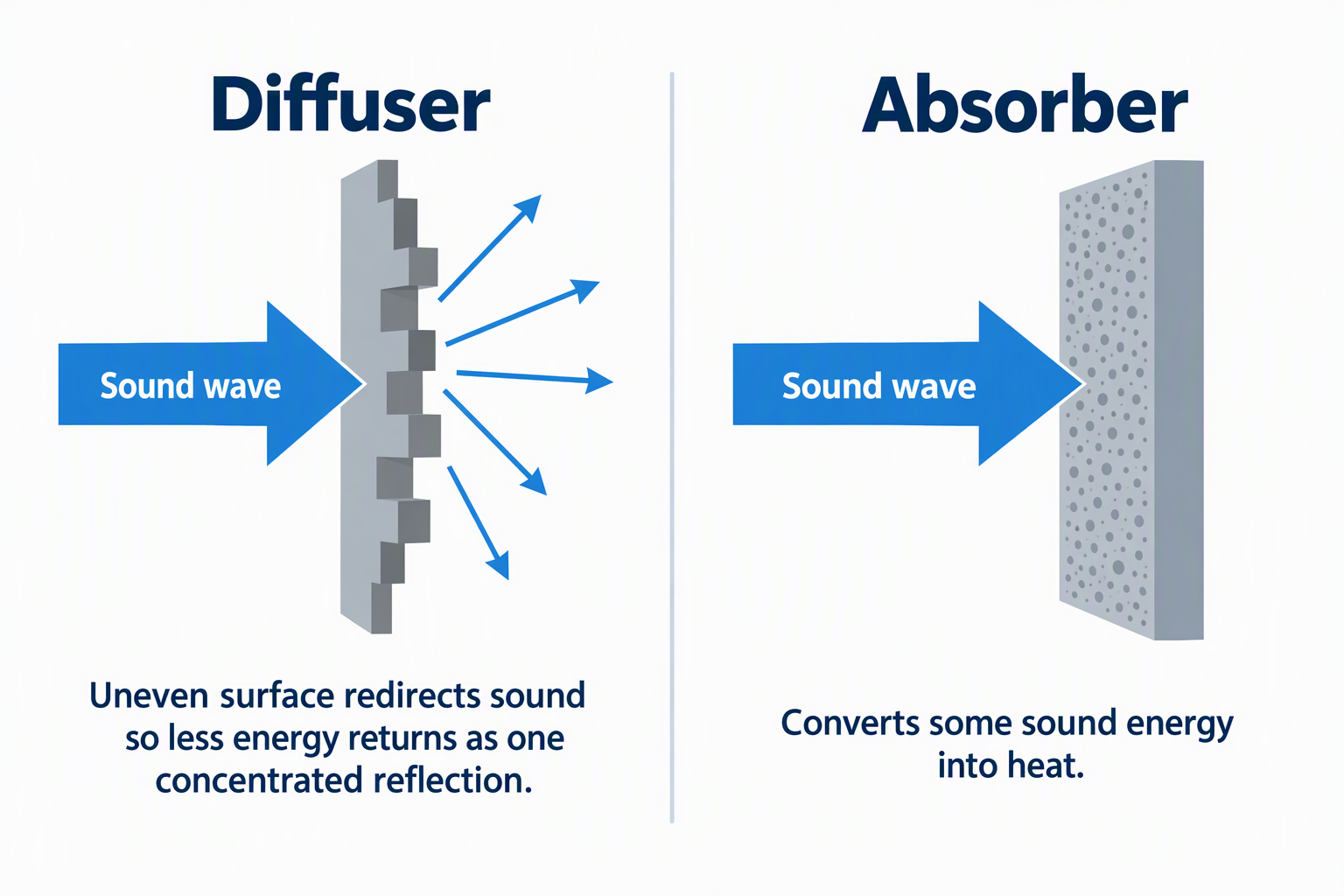
Diffusion is most useful when a room has audible reflections but still benefits from natural energy. A diffuser’s uneven surface redirects incident sound so less energy returns as one concentrated reflection. It can increase the sense of spaciousness and reduce flutter without stripping the room of all ambience. Porous absorption is different, because it converts some sound energy into heat.
Start by identifying the actual problem. Bass buildup needs low-frequency trapping and placement work, not a shallow diffuser. Sound heard through the next wall needs isolation construction, not acoustic tiles. If a clap produces a hard metallic flutter, or the rear wall throws a distinct reflection toward the mix position, diffusion may be appropriate. In an already lively untreated room, absorption at early-reflection points may need to come first.
Match depth and stated range to the target frequencies
Physical depth affects how low a diffuser can scatter. Deeper well variation supports scattering at lower frequencies than a very shallow relief can usually manage. In this group, profiles run from the TroyStudio’s 1 inch to the HypSpace’s 3.2 inches. Depth does not automatically rank performance, because sequence, well width, material, and placement also matter, but depth remains a key constraint.
Published ranges give a better comparison when available. The BXI 2D starts at a stated 410 Hz, the BXI 1D at 544 Hz, and Yeshone states 625 to 5,000 Hz. Products without a range may still scatter useful upper-frequency reflections, but their coverage cannot be inferred precisely from appearance. Do not invent a performance band from panel dimensions alone.
Choose one-dimensional or two-dimensional scattering
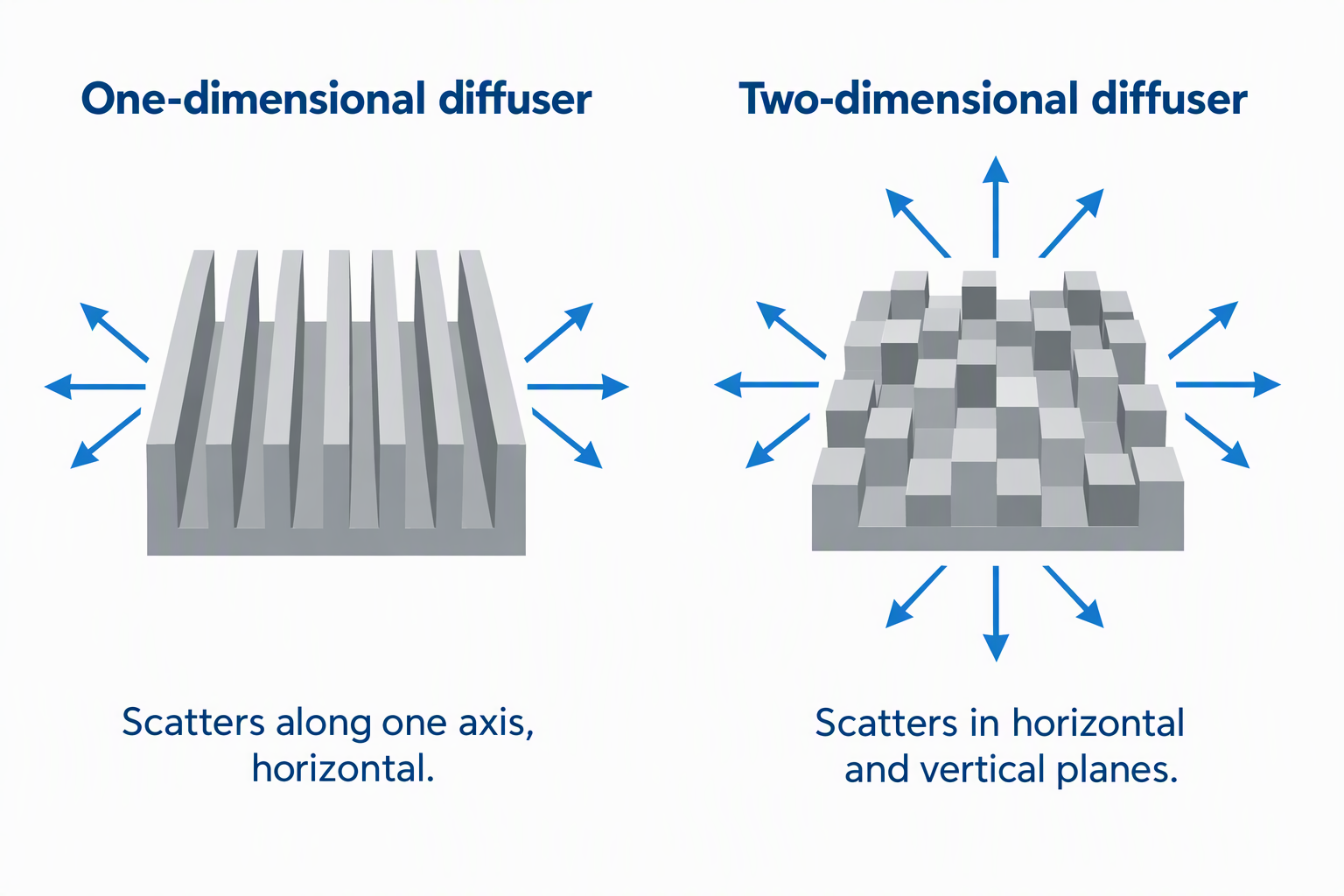
A one-dimensional diffuser scatters primarily along one axis. The BXI 1D is specified for horizontal dispersion, which can spread rear-wall reflections across a row of seated listeners. Orientation counts, because rotating a one-dimensional design also rotates its scattering plane. This directivity is useful when the room layout and listening height are stable.
A two-dimensional diffuser scatters in horizontal and vertical planes. The BXI 2D provides two-axis distribution, making it the more adaptable choice for a room used while sitting, standing, tracking, and mixing. Decorative irregular tiles may also redirect sound in multiple directions, but buyers should distinguish a stated 2D QRD design from a general sculpted surface.
Calculate coverage without overtreating the room
Coverage varies sharply. One BXI panel covers 4 square feet, while the TroyStudio 12-pack claims 32.34 square feet. More coverage is not automatically better. A targeted array at the strongest rear-wall or side-wall reflection may be more useful than covering every available surface with shallow tiles.
Plan treatment around the mix position, speaker layout, and room symmetry. Keep the left and right acoustic environment reasonably balanced, then test before making the installation permanent. Modular sets such as SA-3D and FOROOMACO make staged placement easier because their smaller elements can be adjusted before the final pattern is fixed.
Leave enough distance between listener and diffuser
Diffusion needs distance for separate reflections to combine into a useful scattered field. In a very tight room, sitting inches from a deep well pattern can expose the listener to uneven individual returns rather than an integrated field. There is no single minimum listening distance stated for these seven products, so do not assume that every diffuser suits every rear-wall gap.
Measure from the diffuser face, not the bare wall, because the panel projects 1 to 3.2 inches into the room. If the chair is very close to the rear boundary, thick absorption may be the more predictable first treatment. When possible, move the listening position, test temporary placement, and evaluate speech, claps, reference tracks, and recordings before drilling.
Plan mounting around weight and wall construction
Mounting demands range from adhesive-backed lightweight panels to wood units weighing 9.5 pounds each. Adhesive can fail on dusty, textured, damp, or weakly painted surfaces, while screws must enter suitable anchors or framing. A pack spread across a ceiling also creates more installation points than one wall-mounted square.
For overhead use, treat the stated weight as a safety requirement, not a suggestion. The HypSpace includes hardware, but the substrate still determines whether that hardware is correct. The BXI models require separately purchased mounting parts. Use appropriately rated hardware and never rely on ordinary double-sided tape for a heavy wood panel above people or equipment.
Balance diffusion with absorption and bass control
Most home recording rooms need a treatment mix. Use broadband absorbers at strong early-reflection points when imaging and comb filtering are the main problems, bass traps where modal buildup dominates, and diffusion where preserving later energy improves the room. The ratio depends on dimensions, furnishings, speaker position, and recording use.
Hybrid products complicate comparison. Yeshone lists an NRC of 0.48, meaning it is not presented as diffusion alone, whereas TroyStudio and BXI explicitly say their panels are not absorbers. A hybrid may help a bright multipurpose room but could remove more energy than desired in an already damped studio. Read the product’s function, not just its geometric appearance.
Frequently Asked Questions
Will acoustic diffuser panels soundproof my recording room?
No. A diffuser changes how sound reflects inside a room. It does not provide the mass, airtightness, decoupling, or structural damping needed to stop transmission. It may make the room sound more controlled to the person inside, but neighbors can still hear the source.
Soundproofing is a construction problem involving walls, doors, windows, ventilation paths, and structural connections. Use a diffuser only for room-acoustic goals such as scattering a rear-wall reflection or reducing flutter. Even the thickest 3.2-inch panel in this guide is not an isolation assembly.
Where should I put diffusion in a small mixing room?
The rear wall behind the listening position is a common candidate when it is far enough away for scattered reflections to integrate. Side walls or ceilings can also work when measurements or listening tests identify a concentrated reflection. Preserve left-right symmetry around the mix position when treatment affects stereo monitoring.
Do not copy a generic layout without considering distance. In a shallow room where the chair nearly touches the rear wall, absorption may be safer than deep diffusion directly behind the head. Temporary placement and acoustic measurement can reveal whether a candidate location improves imaging or merely changes tonal balance.
Are wood diffusers better than PVC or EVA panels?
Wood is rigid and supports deeper, precisely formed well structures, but material alone does not prove better scattering. The BXI products provide a published diffuseness range, while the PVC and EVA options emphasize low weight, modularity, and larger coverage. The correct choice depends on the acoustic target and mounting limits.
A wood panel can weigh 7.3 to 9.5 pounds in this selection, requiring secure anchors. PVC and EVA are easier to mount and distribute, especially in a rental, but often provide less published performance data. Compare geometry, depth, range, and placement rather than treating material as a quality score.
How many diffuser panels do I need?
There is no universal count. Begin with the reflection area that counts most and compare its dimensions with the stated coverage. One 24-inch square panel covers about 4 square feet, while a twelve-tile kit can cover more than 32 square feet. Room size alone does not determine the useful amount.
Install in stages where possible. Listen and measure after the first treatment zone before covering another wall. Staging protects against overtreatment and makes it easier to separate the effect of diffusion, absorption, furniture, and placement. It also avoids buying a large kit before confirming that the chosen surface is the actual problem.
Can these panels be mounted on a ceiling?
Several listings describe wall or ceiling use, but safe mounting depends on weight and substrate. A lightweight 0.69-pound PVC tile presents a different risk from a 9.5-pound wood QRD. Adhesive-only ceiling mounting should follow the adhesive maker’s load, surface, and overhead-use requirements.
For wood panels, use appropriately rated hardware into sound structure and consider professional installation. Confirm clearances from lights, sprinklers, ventilation, doors, and moving equipment. Supplied hardware is convenient, but it is not proof that every ceiling construction can carry the panel safely.
Related Home Studio Guides
- Acoustic ceiling clouds for small mixing rooms
- Bass traps for compact home studios
- Studio monitor isolation pads
- Desktop monitor stands for home studios
- XLR microphone cable snakes for podcast desks
- Audio cable testers for studio patch cables
- Rack shelves for non-rack studio gear
- Standalone microphone preamps for laptop recording
Bottom Line
For the most clearly specified permanent installation, the BXI 2D Wood Diffuser is the leading choice because it combines a stated 410-24,571 Hz range with two-axis scattering. The TroyStudio 12-Pack is more practical when low weight and broad coverage come first, while the HypSpace 7-Well offers a deeper wood profile with hardware included.