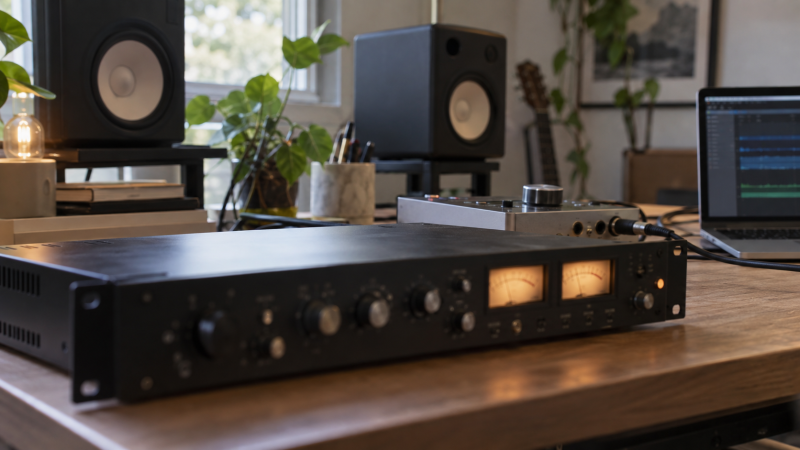
A hardware compressor belongs in a hybrid desk only if audio can leave your interface and return to the DAW. Before choosing FET, optical or multiband controls, check spare line outputs and inputs. A mono unit handles one channel. Stereo needs two channels or a linked pair.
These six exact Amazon US compressors had active New offers when selected. They cover different channel counts and control styles, not a ranking of sound quality. Manufacturer descriptions support the features below. Whether a unit fits your setup depends on your interface, cables and gain staging.
Choose the channel count and insert route first. The compressor circuit comes after the signal path is clear.Standalone Analog Compressors Compared
| Image | Product | Details | Check Price |
|---|---|---|---|
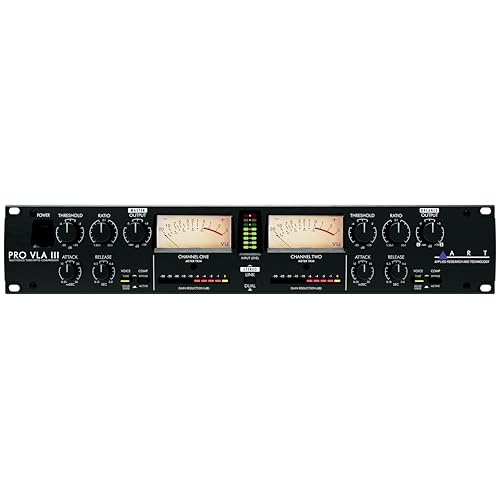 | ART Pro VLA III | Channels: Two, linkable Type: Optical, tube or solid-state path Main catch: Rack and stereo line I/O needed Buyer fit: Flexible stereo desk insert | Check Price on Amazon |
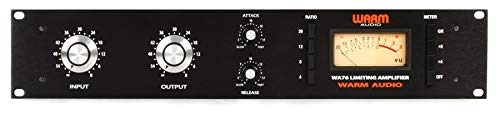 | Warm Audio WA76 | Channels: One Type: Discrete FET Main catch: One box is mono Buyer fit: Single vocal or instrument | Check Price on Amazon |
 | Klark Teknik 2A-KT | Channels: One Type: Tube optical Main catch: Legacy model; one box is mono Buyer fit: Single-channel leveling | Check Price on Amazon |
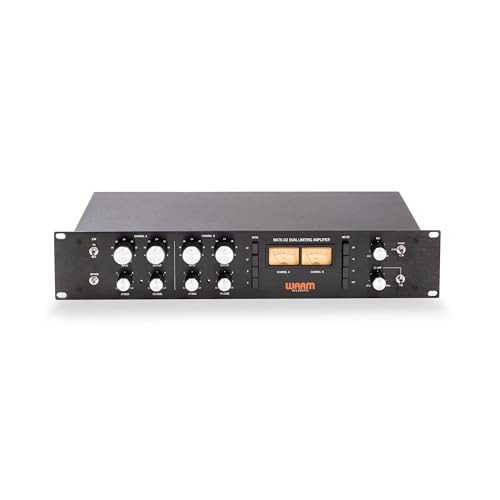 | Warm Audio WA76-D2 | Channels: Two Type: Discrete FET Main catch: Mode and linking must be set Buyer fit: Stereo or dual-mono FET | Check Price on Amazon |
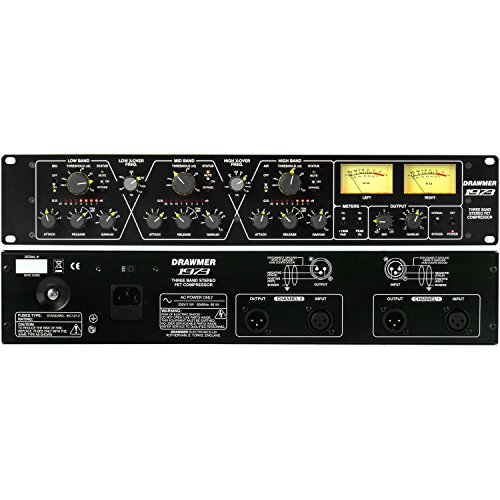 | Drawmer 1973 | Channels: Stereo, three bands Type: Multiband FET Main catch: More controls and crossover choices Buyer fit: Stereo frequency-dependent work | Check Price on Amazon |
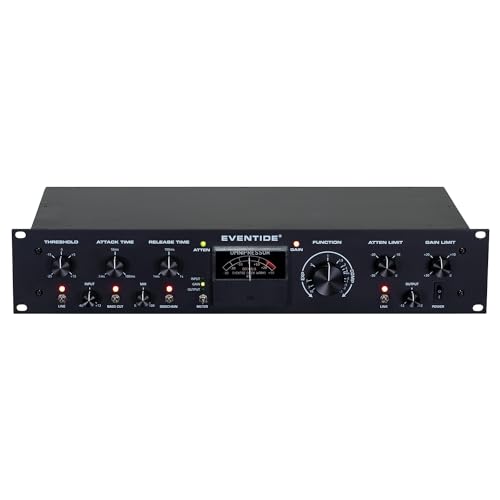 | Eventide Omnipressor 2830Au | Channels: One Type: Compressor, expander, gate, limiter Main catch: Specialized, mono processing Buyer fit: Experimental dynamics work | Check Price on Amazon |
1. ART Pro VLA III — Best Two-Channel Optical Flexibility
ART describes the Pro VLA III as a two-channel optical compressor whose channels can run independently or link for stereo operation. Its voice switch selects a tube or solid-state signal path. The unit is a practical first look when the same desk needs a mono vocal insert on one day and a stereo loop on another. The exact Amazon listing identifies the Pro VLA III, not the older Pro VLA II.
The extra path choice is not a guarantee of improvement on every recording. Decide whether you will connect both line inputs and outputs, then budget for cables and rack space. ART publishes a 19-inch rack width and a 10.5-pound weight.
Our standalone-routing interface roundup is a starting point for thinking about I/O, but the insert path depends on your interface and DAW.
Our Take Choose Pro VLA III if two channels and a tube or solid-state path are useful to your workflow. Set up the complete stereo loop before relying on its extra options.
- Two channels can be independent or linked.
- Tube and solid-state voicings give a documented choice.
- Exact listing is the current Pro VLA III.
- Full stereo use needs two interface sends and returns.
- Rack size and weight matter at a small desk.
2. Warm Audio WA76 — Best Simple Mono FET Channel
The exact WA76 listing is a single-channel discrete FET compressor. Warm Audio’s product page describes an 1176-style control layout and CineMag transformers. It is a straightforward candidate for someone building one repeatable vocal, bass or instrument hardware insert rather than processing a stereo mix. The single channel is the purchase boundary, however the circuitry is described.
One WA76 cannot compress both sides of a stereo bus by itself. You can use it on one recorded mono track, or place it in a mono tracking chain with an appropriate preamp and interface. Warm Audio lists newer WA76-D variants, so verify that the older WA76 model in this exact Amazon offer is the unit whose controls and rear connections you want.
A balanced TRS patchbay can make one channel easier to route between sessions, provided you label the send and return accurately.
Buy one WA76 for one channel. Do not count it as a stereo processor because it occupies a rack slot.Our Take Buy the WA76 when one FET channel is the job and you can dedicate a proper line-level insert to it. If stereo processing is the main goal, start with a two-channel design.
- One clear FET channel for a mono insert.
- Warm Audio documents the classic control layout.
- One unit does not cover a stereo bus.
- Older WA76 model should not be confused with WA76-D or D2.
- Microphone use still needs an appropriate preamp.
3. Klark Teknik 2A-KT — Best Mono Tube-Optical Option
Klark Teknik describes the 2A-KT as a single-channel tube-and-optical leveling amplifier with Midas transformers. Its control method differs from the FET units here because of the tube and optical parts Klark Teknik names. For a desk owner looking at one vocal or instrument channel, it has a different manual control style and does not demand a stereo interface loop on day one.
The manufacturer marks the 2A-KT as a legacy model, even though the exact Amazon offer showed an active New listing when selected. Verify the seller, support and return terms before ordering. A mono optical unit is not a ready-made processor for a stereo mix bus. Leave room in the rack for ventilation and connect it at the correct level.
If you use a headphone distribution amplifier, keep cue monitoring separate from the compressor insert. Moving a unit in the monitoring chain can change what performers hear without changing the recorded track.
The 2A-KT is listed as legacy by its maker. An active Amazon New offer does not resolve the support question.Our Take Choose 2A-KT if one tube and optical channel is what you need and the legacy support position is acceptable. Confirm the exact seller and the line-level routing before buying.
- Officially documented tube-optical design.
- Single channel needs only one send-and-return pair.
- Manufacturer labels the model legacy.
- Not a stereo processor on its own.
- Still requires a suitable line-level signal path.
4. Warm Audio WA76-D2 — Best Stereo FET Flexibility
Warm Audio says the WA76-D2 combines two FET channels with stereo, dual-mono and lead/follow operating modes. Its manufacturer page also describes input-impedance choices intended for different source gear. The mode you pick decides whether the channels act together or process two independent signals, so the WA76-D2 is not two copies of a single WA76 in a box.
Use stereo mode only when your interface can send and capture left and right channels as a pair. For two independent mono inserts, check how the channel controls and mode switch are set before a session. The exact listing is the D2 model. Do not transfer features to a WA76-D single channel or the earlier WA76. No listening comparison was made between these Warm units, so this role is about channel count and operating modes, not an alleged sonic upgrade.
A studio monitor controller may help audition a processed mix on more than one speaker pair. It is not part of the loop that sends audio to the compressor and returns it.
Our Take Buy WA76-D2 when you need two FET channels and will use its operating modes deliberately. If nearly all work is one mono track, a simpler purchase with one channel may be enough.
- Two channels in one unit.
- Manufacturer documents stereo, dual-mono and lead/follow modes.
- Input-impedance selection is documented.
- Stereo use requires two send and return paths.
- Wrong mode can give an unexpected channel relationship.
5. Drawmer 1973 — Best Three-Band Stereo Control
Drawmer identifies the 1973 as a three-band stereo FET compressor. It splits the signal into low, mid and high bands with adjustable crossover points and has controls for each band. A wet/dry mix control supports parallel processing within the hardware. It is distinct from a full-band optical or FET box when a stereo source needs different control across its frequency range.
More controls mean more ways to make a mix worse. Drawmer explains Big and Air modes, but their effect depends on source and settings; this comparison does not establish their audible effect. Record settings and level-match comparisons. The Amazon title omits Drawmer, but its brand field names Drawmer and the model matches the official 1973. Confirm the listing and seller.
For a small studio, desktop speaker calibration is a separate monitoring question. Do not use multiband compression to compensate blindly for the room.
Our Take Choose Drawmer 1973 for a defined stereo multiband job, not as an automatic first compressor. It earns its place when you will use and document the extra control.
- Three independently controlled stereo bands.
- Wet/dry mix is built into the unit.
- Official Drawmer model matches the Amazon brand field.
- More settings to recall than a full-band unit.
- Needs a complete stereo interface loop.
6. Eventide Omnipressor 2830Au — Best Experimental Dynamics Unit
Eventide describes the 2830Au Omnipressor as an analog dynamics processor that can compress, expand, gate and limit. The exact Amazon title says Model 2830 Au, and its feature fields mention sidechain capability. It is the unusual choice here for a desk owner who wants to explore dynamics effects beyond conventional level control on one signal path.
The Omnipressor is not a default purchase for a stereo mix bus, even with its breadth of functions. Treat it as one hardware path with a clear DAW return. Start with conservative settings and save notes because knob positions are not saved with a project. Eventide documents the controls, not an audible benefit on your track.
A stereo direct box converts signals, which is a different job. It will not replace a dedicated interface insert when you are sending a DAW track through the Omnipressor.
The Omnipressor is a creative dynamics processor with one path, not a shortcut to linked stereo compression.Our Take Choose the Omnipressor only when its compression, expansion and gating range is a deliberate creative need. Build the routing and recall habit around it before buying.
- Compressor, expander, gate and limiter functions.
- Sidechain is named in the exact listing.
- Specialized controls take setup and recall work.
- One unit is not a linked stereo compressor.
Buying Guide
1. Map line inputs and outputs before choosing hardware
A hardware insert needs a send and a return. A DAW track leaves an interface line output, enters the compressor at a suitable level, and returns to a spare line input. Check your interface manual and DAW hardware insert setup. A microphone normally needs a preamp before a line-level compressor. Plugging its capsule straight into a line input is not the same signal chain.
Stereo takes two complete paths. ART Pro VLA III, Warm WA76-D2 and Drawmer 1973 can process two channels, but the interface must expose two outputs and two inputs that are not already committed to monitoring. A TRS patchbay can make those paths easier to change, but it does not create extra converter channels.
2. Choose mono, stereo or multiband deliberately
One-channel units are sensible for individual tracks. Warm WA76, Klark 2A-KT and Eventide Omnipressor are mono units for different dynamics jobs. Do not call one box a stereo solution. If your source is a vocal or bass DI, a single line-level insert can be enough. If your main target is a stereo mix, plan for two channels from the start.
Multiband is a specific problem-solving choice. Drawmer 1973 has separate low, mid and high compression controls, while the ART and Warm stereo units operate on the full-band signal. More bands let you change frequency-dependent behavior, but they also make settings harder to compare and recall. Start with a clear problem and record the settings. Level-match the bypass comparison.
3. Plan monitoring, latency and recall
A DAW round trip is not automatically time-aligned. The interface output, analog processor and return input are a hardware path that may need latency compensation. Record a short test, compare it against an unprocessed reference and check phase if the two are mixed. The extra path should not be hidden inside your monitor chain by accident.
Physical controls need a recall habit. Take a photo or note threshold, ratio, attack, release, gain and any link or voice mode whenever a session may be reopened. Keep bypass or dry reference levels comparable. Our monitor-controller roundup is about listening routes, not compressor setting recall.
4. Separate topology from promised sound
FET and optical describe control methods, not a guaranteed winner. Product pages may describe a character, but no specific sound on your source was independently measured here. Choose controls and channel count that fit the work you do. Then evaluate the unit in your own room with level-matched material.
Legacy or ambiguous listings deserve a closer purchase check. Klark marks 2A-KT as legacy. The original WA76 has newer family variants. The Drawmer Amazon title is abbreviated. Verify the exact model, seller, support terms and rear I/O in the offer. Do not substitute a 500-series module, channel strip or software plugin merely because it shares a compressor name.
FAQ
Can I run a stereo mix through a single mono compressor?
No, one mono box cannot process a two-channel stereo signal. A mono unit has one audio path, so sending the left side alone changes the mix. You could process a mono bus or an individual track, but the job is different.
For stereo work, choose a two-channel compressor with an appropriate link mode or a properly matched pair where supported. Reserve two interface outputs and two inputs as well. A stereo front panel does not help when only a single return channel is available.
Do I need a hardware insert in my DAW?
You need a documented way to send a track out of the interface and record or monitor its return. A DAW hardware insert feature can manage that route and latency compensation, but a manual route that sends the track out and records the return may also work. Check the interface and DAW manuals for the specific setup.
Keep the compressor at the line level its inputs are designed for. A microphone preamp, interface converters and monitor outputs each have distinct roles. Do not assume any spare socket can be repurposed without checking its function.
Is a two-channel unit always better than a mono unit?
No. If you only process one vocal or instrument at a time, a mono channel can match the job. A two-channel unit helps when you need linked stereo compression or two separate inserts in the same session.
Look at the exact operating modes. ART offers independent or linked channels, and Warm WA76-D2 describes stereo and dual-mono modes.
Bottom Line
Choose ART Pro VLA III for two optical channels, Warm Audio WA76 for one straightforward FET insert, or Drawmer 1973 if a stereo multiband need justifies its controls. The other three are for mono tube and optical work, flexible dual FET work and experimental dynamics. The right unit is the one your interface can route and you can recall.