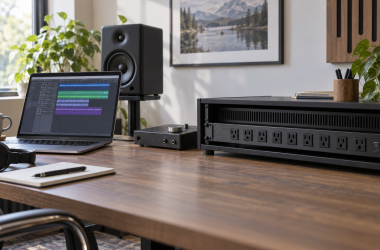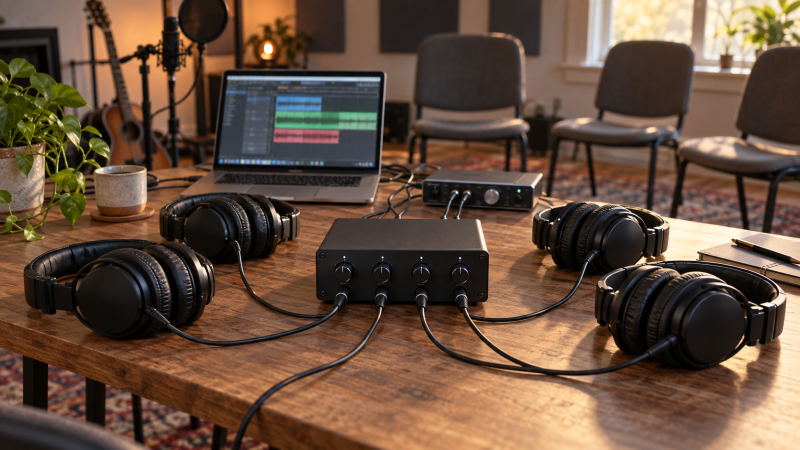
One headphone jack on an audio interface is rarely enough when several people are tracking together. A distribution amplifier is a box that receives a cue feed and sends it to several headphone outputs, each with its own listening level. The important distinction is outputs versus mixes. Four headphone sockets can carry one shared stereo program, while more elaborate rack units let each station blend another signal into that program.
These five products were selected from Amazon US listings with active New offers; availability can change. The five range from compact four-listener boxes to a rack unit with eight individually controlled channels. We did not bench-test any of the models. Check connector type, upstream cue routing and the number of distinct feeds you can actually supply before buying a larger amplifier.
Count listeners, then count distinct cue mixes. A second knob does not create an independent mix unless a second signal reaches it.Headphone Distribution Amplifiers Compared
| Image | Product | Details | Check Price |
|---|---|---|---|
 | Mackie HM-4 | Stations: 4 headphone outputs Mix control: Shared stereo feed; individual level Format: Compact desktop Buyer fit: Simple four-listener session | Check Price on Amazon |
 | Samson QH4 | Stations: 4 headphone channels Mix control: Individual level; master mono/mute Format: Desktop; aux input/output Buyer fit: Four-listener desk with mono check | Check Price on Amazon |
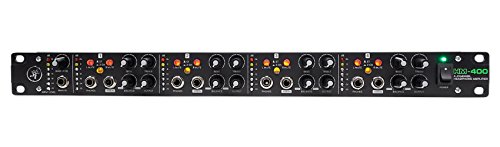 | Mackie HM-400 | Stations: 4 channels; multiple jacks each Mix control: Per-channel main/aux balance Format: Rackmount Buyer fit: Four listening stations with aux feeds | Check Price on Amazon |
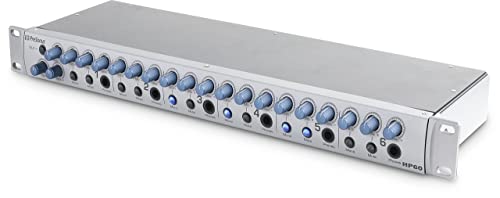 | PreSonus HP60 | Stations: 6 headphone channels Mix control: A/B blend plus external input Format: Rackmount Buyer fit: Six performer cue stations | Check Price on Amazon |
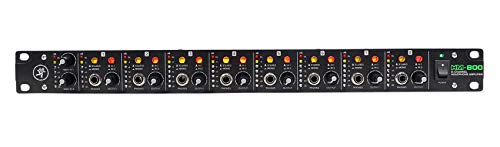 | Mackie HM-800 | Stations: 8 headphone channels Mix control: Two main feeds; per-channel aux Format: Rackmount Buyer fit: Larger group with eight stations | Check Price on Amazon |
1. Mackie HM-4 — Best Simple Four-Listener Share
Mackie describes the HM-4 as a four-output headphone amplifier with one stereo input and an individual level control for each output. It is a direct fit when a small group needs to hear the same performance or backing track at different volumes. Put the box close enough that people can reach their own knobs, and run one appropriate headphone feed from the interface or mixer to its input.
The limitation is just as important. Individual volume is not individual content. If a vocalist wants more voice while a drummer wants more click, the HM-4 cannot build those two balances by itself. The audio interface or mixer must prepare them upstream, and one shared input cannot carry both at once. For that job, a multi-output audio interface and a distribution system with per-channel aux paths may be a better route.
The small desktop format needs no rack when the session has only two to four listeners. Mackie lists quarter-inch headphone sockets, so a crew with smaller plugs needs suitable adapters. Place the amplifier where cable pulls cannot drag it off the desk, and start every channel at a low level before the performers put headphones on.
Our Take Buy the HM-4 when everybody can use the same cue mix. If different people need different balances, spend the extra effort on separate feeds rather than adding more shared sockets.
- Four individually adjustable headphone outputs.
- Compact setup for a short session.
- Simple shared-feed signal path.
- One input means one shared mix.
- Quarter-inch sockets may need adapters.
2. Samson QH4 — Best Four-Listener Desk with Mono Check
Samson’s QH4 also has four separately adjustable headphone channels, plus a master volume, master mute and global mono switch. Its listed inputs include a balanced quarter-inch left/right pair and a stereo eighth-inch aux input. The manufacturer also lists an eighth-inch aux output for chaining another unit. The master controls make it a desk-friendly choice for a small podcast or tracking setup where the operator wants a single obvious way to mute everyone.
The mono switch is useful for checking whether a stereo recording loses something when left and right combine. It does not change a four-person shared feed into four custom mixes. Samson states a headphone impedance range, but that specification alone does not prove how loud or clean a particular pair will sound. Test your actual closed-back tracking headphones at a safe level before the session.
Use the right source cable rather than assuming a headphone output and balanced line output are wired or leveled the same. The aux path is convenient for a second desk source, but the exact gain balance should be checked before anyone wears headphones. If the operator only needs four volume knobs, the Mackie HM-4 is less elaborate.
Master mute is most useful when everyone can see who controls it. Agree on a cue signal before recording starts.Our Take Pick QH4 for a four-listener desk that benefits from master mute, a mono check and an aux connector. Treat those as workflow controls, not proof of separate performer mixes.
- Four output levels plus master volume and mute.
- Global mono check for split or stereo material.
- Listed aux input and chain output.
- Still a shared-program distributor.
- Extra connectors require careful source-level setup.
3. Mackie HM-400 — Best Four Rack Channels with Aux Blending
The HM-400 is a four-channel rack headphone station, not a desktop splitter. Mackie’s documentation describes a main stereo input and an aux input for each channel, with a main/aux balance control. Multiple headphone jacks sit on each channel. Several sockets can share one channel’s controls. Not every socket has its own independent cue mix.
The rack helps when four performers need to hear the common program plus their own separate feed. For example, the singer’s aux path can carry more vocal while another station carries more of an instrument. The controller needs those feeds from your audio-interface routing or mixer. Without upstream outputs and correctly assigned sends, the rack’s extra controls go unused.
Plan the physical wiring before putting the unit in a rack. Headphone leads that reach four stations, input cables, power and performer access deserve more attention than the total socket count. Mackie describes left/right mute and mode controls on the HM-400. Check their settings during a quiet line test so one musician does not hear a half-signal by accident. A simpler Samson QH4 is easier if everyone only needs the same program.
Our Take Choose HM-400 when you have a small fixed room, can supply per-station aux signals and want rack wiring to stay in place. Do not buy it just because it has more jacks in total.
- Four channel-level main/aux balance controls.
- Multiple headphone sockets per station.
- Rack format suits a wired recording room.
- Needs separate aux feeds to use its main advantage.
- More cabling and rack space than a desk box.
4. PreSonus HP60 — Best Six-Station Cue Blending
PreSonus calls the HP60 a six-channel headphone mixing system. Its published controls let each headphone channel blend main A and B feeds and an external input. Six performers can then get more useful local control than a one-input splitter gives, provided the mixer or interface supplies meaningful signals to those paths. The useful count here is six adjustable listening stations, not simply the number of headphone sockets on the chassis.
Imagine a common backing mix on A, an alternate mix on B and a performer’s local source on an external input. The performer can adjust the blend at the rack, but the HP60 does not generate an isolated vocal, click or instrument stem on its own. Build those sources in the interface or mixer first. Keep a written input map near the rack when several cables look alike.
Six stations are useful for a small band, spoken-word group or larger overdub room. They can also be overkill for a two-person desk. Check cable runs and headphone connector fit, then set a safe starting level. A wireless microphone kit has a different job. It does not replace a wired cue distribution system for a group.
More blend knobs are valuable only when your interface can deliver the separate feeds they need.Our Take Choose HP60 if six people need separate level and blend controls during tracking. If all six listen to one identical stereo mix, its routing capacity may go unused.
- Six individually controlled headphone stations.
- A/B and external-input blend route listed.
- Useful for a fixed multi-performer room.
- Requires upstream sources to justify the controls.
- Rack wiring is more involved than a four-output box.
5. Mackie HM-800 — Best Eight-Station Rack
Mackie positions the HM-800 as an eight-channel rack headphone amplifier. Its HM-series information describes two stereo main inputs and a per-channel aux input, so each channel can work from a selected common feed and an added signal. Mackie also describes multiple physical headphone sockets. Count the eight control channels when planning mixes. Do not mistake extra jacks for extra independent channel strips.
This rack is the largest option in this shortlist. It makes sense when a band, rehearsal or production room regularly needs many wired listening positions and already has the upstream outputs to feed them. An eight-channel unit does not save labor if it sits next to a two-person desk. The rack itself, headphone extension runs and source wiring can cost more setup time than the amplifier’s front panel suggests.
Label each aux send at both ends and test every channel before performers arrive. A source mismatch can make one musician’s cue confusing, even when the main program sounds right elsewhere. Mackie’s stated features are not a measurement of noise or drive with your headphones. If the group is tracking vocals, bring suitable closed-back headphones and spend the line check on cue routing and safe levels.
Our Take Buy HM-800 for a larger wired session with enough upstream outputs and a permanent rack. For four musicians, the HM-400 is the tighter fit.
- Eight separately controlled headphone channels.
- Two main stereo feeds and per-channel aux route described.
- Rack layout keeps a larger room wired.
- Excess capacity for short two- or four-person sessions.
- Requires careful labeling and upstream routing.
Buying Guide
1. Separate headphone outputs from cue mixes
An output is a place to plug in, and a mix is the signal inside it. A four-output desk amplifier such as the Mackie HM-4 lets four people set volume independently while hearing the same stereo program. The arrangement suits a simple group listen or basic overdub where everyone wants the same balance.
For individual balances, count independent input paths. A rack channel with its own aux feed can add more of a performer’s instrument to a common cue. It works only if the recording interface or mixer sends that source. Draw the signal path on paper and mark the number of separate sends before comparing amplifiers.
2. Match the number of listening stations
Buy for the people who will record together, not every possible guest. A two- to four-person home session fits a compact unit in many rooms. Four-channel rack units make more sense when those same four positions need a permanent cable run and channel-level blending. More unused channels add controls to mis-set and cables to trace.
Eight channels are a room decision. The Mackie HM-800 can serve a larger group, but verify that your setup can physically reach each player. For musicians who move around, plan extension cable lengths and a safe route so no lead crosses a walking path.
3. Plan source level, connectors and hearing safety
Check the source output before choosing a cable. A balanced line output, unbalanced aux output and headphone output can have different wiring and level behavior. Compare the exact amplifier input with the interface manual rather than treating all quarter-inch connectors as interchangeable. Keep adapters available when performers bring headphones with smaller plugs.
Start quietly and let each person adjust upward. Set master and channel knobs low before anyone wears headphones, especially after changing an interface preset or plugging in a new source. A good closed-back tracking headphone can reduce spill without requiring an excessive cue level.
4. Rehearse a cue change before the session
Test a request a performer might make. Ask one person to request more voice or click, and trace which control changes that sound only for that station. If the answer is “change the shared main mix,” the distribution box is not supplying an individual cue, even if it has many volume knobs.
Label the routing that worked. Write the source, channel, destination and expected headphone position beside the rack or desk. After a software update or cable change, a quick line check catches swapped feeds before the artist is waiting. For a small laptop studio, a simple, repeatable map often helps more than another hardware feature.
FAQ
Does a four-channel headphone amplifier give four different mixes?
No. Four channels may only mean four independently adjustable headphone levels. A one-input distributor sends the same stereo program to every listener. One shared program is enough when everyone needs the same cue and only wants a different volume.
For different balances, the amplifier must have usable per-channel input or aux blending, and the interface or mixer must produce those separate signals. Confirm both sides of that chain before buying. The Mackie HM-400 is one example of a channel-level aux route.
Can I connect the interface headphone output to one of these units?
Sometimes, but check the exact input and output specifications first. A headphone jack is not automatically the same level or wiring as a dedicated line output. Start low and test for distortion, channel loss and unexpected noise with the headphones you actually use.
When the interface offers dedicated line or cue outputs, those often give a clearer wiring plan for a rack distribution amplifier. Document which jack feeds which amplifier input. For multi-mix sessions, one shared interface headphone jack still cannot provide independently prepared cues.
How many headphone stations does a small recording session need?
Count the people who monitor simultaneously, including the engineer if they need a separate position. Four outputs are enough for many home sessions, but a group with several performers may justify six or eight controllable stations. Do not count spare sockets on one rack channel as separate mixes.
Leave enough physical cable reach and a little room for a guest, but avoid buying a large rack solely for a hypothetical future lineup. The best count is the smallest one that covers the session’s actual routing and safe access.
Bottom Line
For one shared cue and four listeners, the Mackie HM-4 is the straightforward choice. The Samson QH4 has extra desk controls. Move to the Mackie HM-400 or PreSonus HP60 when you can supply useful additional feeds. The Mackie HM-800 suits a room that needs eight channels.