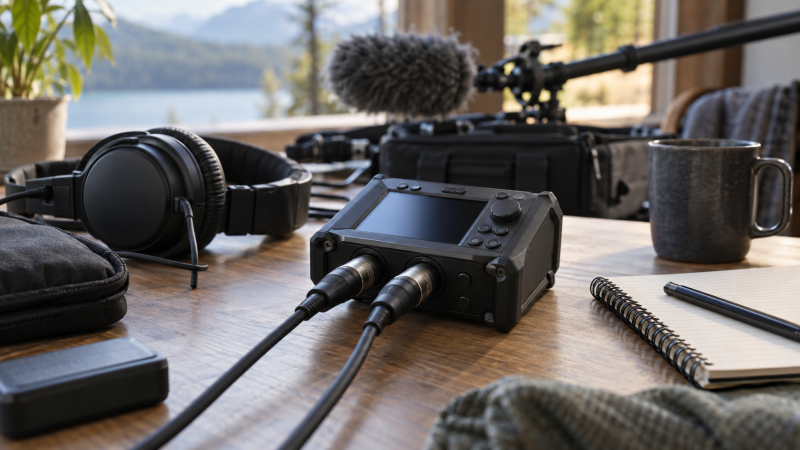
A 32-bit float file gives an editor more room to change recorded level after a sudden peak. It does not make a badly placed microphone sound close, rescue a distorted analog input or keep a missed take on the card. Start by counting the XLR microphones that must record at the same time, then decide whether the recorder needs built-in stereo mics or timecode for a camera workflow.
These six recorders were selected from Amazon US listings with active New offers; availability can change. They are for simple two-input capture, four-input productions, handheld room sound and camera-sync work. The product specifications below are listing claims, not independent tests of noise, runtime or clip recovery. Record a complete rehearsal with the intended microphones, storage and power before using any unit on a paid job.
Choose inputs and sync first. Treat 32-bit float as extra editing latitude, not a substitute for monitoring.32-Bit Float Field Recorders Compared
| Image | Product | Details | Check Price |
|---|---|---|---|
 | Zoom H4essential | XLR/TRS: 2 inputs listed Built-in mics: Stereo microphones Tracks: 4-track recorder Buyer fit: Compact guided handheld capture | Check Price on Amazon |
 | Zoom H6essential | XLR/TRS: 4 inputs listed Built-in mics: Interchangeable X/Y capsule Float mode: 32-bit float listed Buyer fit: Several external microphones | Check Price on Amazon |
 | Sound Devices MixPre-6 II | Mic preamps: 4 Kashmir preamps listed Mixer: 6 x 2 portable mixer Sync: Internal LTC timecode listed Buyer fit: Bag-based location sound | Check Price on Amazon |
 | Zoom F3 | XLR: 2 locking inputs Float mode: 32-bit float listed Built-in mics: None listed Buyer fit: Minimal two-mic rig | Check Price on Amazon |
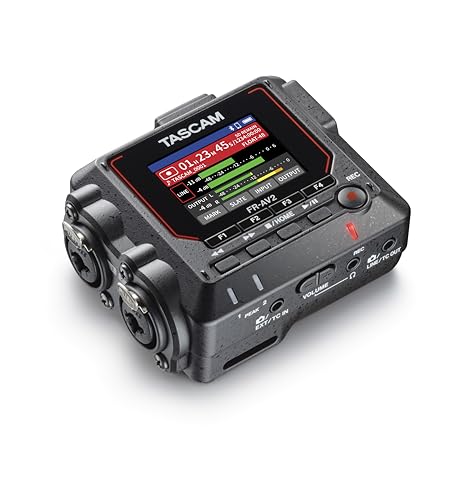 | TASCAM FR-AV2 | XLR/TRS: 2 combo inputs Float mode: 32-bit float listed Sync: Timecode generator and in/out Buyer fit: Two-mic camera-sync work | Check Price on Amazon |
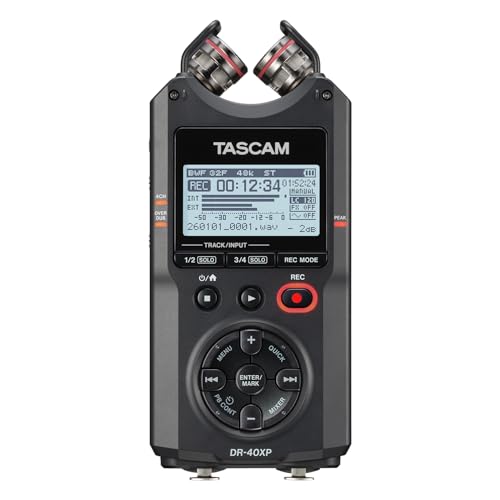 | TASCAM DR-40XP | XLR/TRS: 2 inputs listed Built-in mics: Adjustable A-B/X-Y stereo mics Tracks: 4-channel recording listed Buyer fit: Room sound plus two external mics | Check Price on Amazon |
1. Zoom H4essential — Best Guided Two-XLR Handheld
The H4essential listing names two XLR/TRS inputs, built-in stereo microphones and four-track recording. That combination can capture a pair of external mics while retaining a room or ambient perspective. The original product evidence identifies the H4essential as a 32-bit-float model. Check the exact recording mode and track assignment before assuming all sources will be saved the way a project needs.
Zoom also lists USB-C recording or streaming while saving to SD, plus spoken menu guidance. Spoken menu guidance is a useful usability feature for an operator who prefers audible navigation. It does not prove the whole recording setup is accessible without checking the controls and meters in person. For an interview using XLR microphones and a boom arm, plan cable strain and mic placement separately from the recorder choice.
Our Take H4essential fits a small interview or ambient recording kit where built-in microphones are wanted. The four-track label is not four XLR sockets. Budget for the actual external mic count.
- Two XLR/TRS inputs and stereo mics are listed.
- Four-track recording supports external and ambient sources.
- Spoken menu guidance is a distinct usability feature.
- Only two external XLR/TRS inputs.
- Built-in mics do not solve distant dialogue placement.
2. Zoom H6essential — Best Handheld Four-XLR Choice
The H6essential listing explicitly names four XLR/TRS combo inputs, six-track 32-bit-float recording and a built-in X/Y mic capsule. Four physical external inputs are useful when several speakers or instruments need their own tracks. The capsule is another recording perspective. Zoom also describes an interchangeable capsule system, with other capsule types optional.
The seller says it can act as a USB audio interface while recording to SD and offers spoken menu guidance. The interface mode can simplify a project moving between location and desk, but verify whether the exact sample rate, track count and interface mode needed are available together. A headphone distribution amp is separate if several people must monitor at once. The recorder’s own headphone output is not a full crew monitor system.
Our Take H6essential is the handheld pick when four external microphones are needed and a stereo capsule has a role. It is less compelling for a fixed two-mic rig where size comes ahead of input count.
- Four external XLR/TRS inputs are listed.
- Six-track 32-bit-float recording.
- Interchangeable stereo capsule adds flexibility.
- Optional capsules add separate purchases.
- Four external sources require active monitoring and labeling.
3. Sound Devices MixPre-6 II — Best Bag Mixer with Timecode
The MixPre-6 II listing names four Kashmir microphone preamps, a 6 x 2 portable mixer and an internal LTC timecode generator. It supports recording formats from 16-bit through 32-bit float, so select and verify the needed mode rather than assuming every session defaults to float. Its mixer orientation makes it a different job from a pocket two-XLR recorder. An operator can manage multiple sources and a live mix in a sound bag.
The same listing describes an 8-in/4-out USB-C audio interface and timecode in/out through auxiliary and stereo connections. Those details are valuable only if they match the camera or sync box being used. Check cable pinout, reference clock, frame rate and a test import into the editing software. A stereo DI box can condition a keyboard or playback signal before it reaches the recorder. It does not add more mic preamps.
This mixer is the most involved workflow on the list. A bag rig needs dependable power, storage, monitoring and readable channel labels. The product description does not establish a measured noise advantage over the other five units in this article. Choose it for the routing and sync functions a production will use.
The MixPre-6 II offers a mixer and timecode workflow. Verify 32-bit-float mode and the camera sync path before the shoot.Our Take MixPre-6 II suits a sound operator handling several mics and camera sync from a bag. A simple two-mic interview may not need its additional routing work.
- Four mic preamps and portable mixer are listed.
- Internal LTC timecode supports a camera-sync workflow.
- Several recording bit-depth modes are available.
- 32-bit float is a selectable mode, not a reason to skip setup.
- More routing and sync checks than a two-input recorder.
- Four mic preamps should not be mistaken for six.
4. Zoom F3 — Best Minimal Two-XLR Rig
The F3 listing focuses on two locking XLR inputs and 32-bit-float recording. A boom and one lav receiver, or two placed interview mics, are plausible jobs for that count. Locking plugs reduce accidental disconnection when the recorder is tucked into a rig, but cable routing needs care too. There is no built-in stereo microphone in the exact product description. Plan every intended sound source as an external mic.
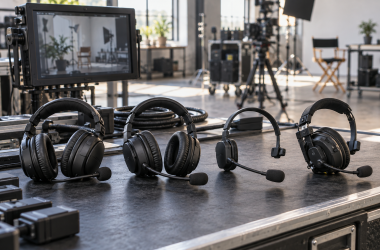
Zoom describes standalone and USB workflows plus flexible power options. Verify the SD card, power source and USB mode for the expected duration. A wireless intercom headset system is for crew communication, not audio recording. Keep those signal paths distinct when the same operator handles both.
The main appeal is narrowness, meaning two secure inputs without an unused bank of channels. Record a test of quiet speech and a loud peak, then inspect it in the actual editor. The listing’s confidence language about unpredictable levels does not mean an overloaded microphone capsule, bad preamp feed or wind-hit recording can be reconstructed later.
Our Take F3 is the lean choice for exactly two external microphones in a compact rig. Look elsewhere when built-in ambience mics, more inputs or an explicit timecode generator are essential.
- Two locking XLR sockets are listed.
- 32-bit-float recording in a compact field role.
- Standalone and USB uses are described.
- Only two XLR sources.
- No built-in stereo mic in the exact listing.
5. TASCAM FR-AV2 — Best Compact Camera-Sync Option
The FR-AV2 listing pairs two XLR/TRS combo inputs with 32-bit float and a built-in timecode generator. It also names timecode input and output. Built-in timecode is a meaningful difference from a plain two-mic recorder when the audio must align with a camera or other production gear. First confirm that the camera’s frame rate and timecode connector can meet the recorder’s sync method.
TASCAM describes a 3.5 mm input and optional wireless monitoring with the AK-BT2 adapter. The listing explicitly says the older AK-BT1 adapter is not compatible. Do not budget for wireless monitoring unless the correct accessory and its operating limits are confirmed. A compact V-mount battery may power part of a camera rig, but verify the recorder’s own allowed power path rather than assuming a direct connection.
Timecode reduces manual sync work only when every device is set correctly. Record a short sync mark, restart one device and test the import before the first take. Neither timecode nor float audio corrects a noisy or distant microphone signal.
Our Take FR-AV2 fits when a compact two-mic recorder must join a video workflow that uses timecode. If sync is irrelevant, compare it with the simpler F3 on the input and monitoring needs.
- Two XLR/TRS inputs and 32-bit float are listed.
- Built-in timecode generator and in/out.
- Compact recorder for video work.
- Only two external XLR/TRS inputs.
- Wireless monitoring needs the correct optional adapter.
- Camera timecode compatibility needs testing.
6. TASCAM DR-40XP — Best Adjustable Stereo-Mic Hybrid
The DR-40XP listing names two XLR/TRS inputs, adjustable A-B/X-Y stereo microphones and four-channel recording. A production can put close mics on two people and keep a separate room or performance perspective from the built-in pair. The seller lists 32-bit-float WAV along with 24-bit and 16-bit modes. Select the intended format before recording.
Its USB-C interface mode can serve a desk or laptop session as well as a portable one. The product listing says the microSD card and batteries are not included, so add both to the purchase and test the chosen media. If the job already has a MIDI interface, the MIDI interface is a separate control data path and does not record these microphones.
Compared with the H4essential, the adjustable stereo microphone positions are the distinct reason to consider this unit. Compared with the F3, it trades the minimal two-XLR focus for room sound options. Test handling noise and placement before trusting the on-board pair for important ambience.
Our Take DR-40XP fits a crew that wants two external mics plus adjustable built-in stereo pickup. Add a tested card and power supply before calling the kit ready.
- Adjustable A-B/X-Y microphones are listed.
- Two XLR/TRS inputs and four-channel recording.
- Multiple WAV formats and USB-C interface mode.
- Card and batteries are not included in the listing.
- Only two external XLR/TRS sources.
Buying Guide
1. Count physical mic inputs before counting tracks
Write the microphone plan, one line per source. A built-in stereo pair may create two channels, but it is not two additional XLR sockets. H4essential and DR-40XP combine their on-board mics with two external inputs. H6essential lists four XLR/TRS connections. The F3 and FR-AV2 keep the setup to two external sources.
Leave room for the actual production, not an imagined upgrade. Four inputs help when multiple people or instruments each need a clean isolated track. They also bring more cables and more to monitor. A portable recorder with two good mic placements can deliver a better interview than a larger one with four distant microphones.
2. Understand what 32-bit float protects
Float files allow wider digital level adjustment after capture. The wider adjustment is useful when a source jumps from quiet speech to a loud event. Float does not stop an overloaded microphone capsule, remove wind rumble or fix a disconnected XLR cable. The recorder must be set to a float-capable mode where the model offers a choice.
Listen while recording and inspect a rehearsal. Hiss, rubbing, loose plugs and missed lines are audible in headphones, and a waveform cannot explain them. Test the same microphones, cable lengths and file format intended for the job. A microphone isolation setup can improve placement more than a bit-depth change.
3. Add timecode only when the cameras can use it
Timecode is a sync workflow, not an audio-quality upgrade. FR-AV2 and MixPre-6 II list internal generators. A camera, receiver or post-production application must be able to read the chosen signal. Confirm frame rate, connector and whether devices need to be jam-synced after a restart.
Test even with a generator. Record a short clip, import it and verify that audio and picture align. For a simple one-camera interview, a visible clap may be enough without adding sync gear.
4. Plan cards, power and file handoff
Check what is in the box. DR-40XP’s exact listing excludes card and batteries. Other offers can vary by seller or bundle. Buy a compatible card, format it in the recorder and record longer than the expected session. Plan a safe swap or power source for uninterrupted work.
Make the file handoff a rehearsal step. Count the recorded tracks, listen to each one and check that the editor can open the selected format. Multi-track 32-bit-float files need storage and a workable naming convention. The recorder’s USB interface mode is helpful only if its behavior matches the computer and software used on the job.
FAQ
Does 32-bit float mean I can stop monitoring levels?
No. It can preserve digital headroom for an unexpected level change, but a mic capsule, analog input or cable can fail before the file is written. Float also cannot turn a distant microphone into a close one. Listening during capture is the best way to catch handling noise, wind and missing dialogue.
Set the intended file format and record a test at the recording location. Inspect a quiet passage and a peak in the editor. If the source itself distorted, lowering the float waveform later will not reconstruct clean audio.
Can a two-XLR recorder capture four microphones?
Not as four independently connected XLR sources. H4essential and DR-40XP can use built-in stereo microphones alongside two external inputs, but the built-in microphones have different positions and purposes. F3 and FR-AV2 are designed around two external inputs in these exact listings.
If the project has four wired microphones that each need an isolated track, start with H6essential’s four XLR/TRS sockets or MixPre-6 II’s four microphone preamps. Avoid treating a track count as a physical connector count.
When is timecode worth the extra setup?
It helps when a production records audio and picture on separate devices and must synchronize many clips or cameras. FR-AV2 and MixPre-6 II list internal timecode generators, but the rest of the chain needs matching settings and connectors. Timecode is a workflow decision, not a promise about sound quality.
Test a complete record, restart and import cycle before the event. If a one-camera shoot can use a simple clap and the editor has few takes, a timecode workflow may add work without solving a problem.
Bottom Line
Zoom F3 keeps two-XLR field work simple. Zoom H4essential and TASCAM DR-40XP add on-board stereo mics in different forms. Zoom H6essential and Sound Devices MixPre-6 II suit four-mic jobs, with the latter adding mixer and sync functions. TASCAM FR-AV2 is for a compact two-mic video rig. Choose the input count and handoff workflow first, and let float recording support, not replace, good sound practice.