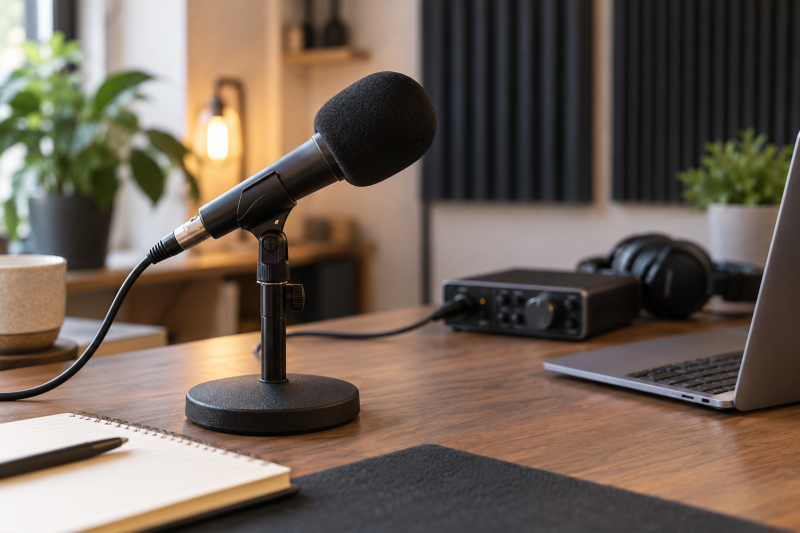
A foam windscreen is the small accessory that stays on the microphone when a separate pop filter on an arm would crowd a compact recording desk. It can cover a close-talking mic and keep shared hardware cleaner. Fit is the first decision, because a foam cover shaped for a standard handheld microphone is not the same as a replacement made to snap onto a Shure MV7 or MV7X.
The six picks here separate a fitted MV7 cover and an SM58-style cover from four packs for standard handheld microphones. Compare the opening size and the microphone family before looking at color or pack count, because a cover that slips over the wrong grille will not be useful in a recording session.
A foam windscreen is a compact close-mic accessory, but it does not replace microphone placement, input gain choices, or a separate pop filter when the setup needs one.Foam Windscreens Compared
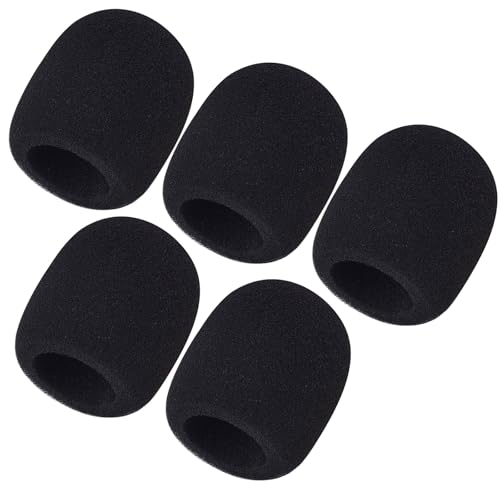
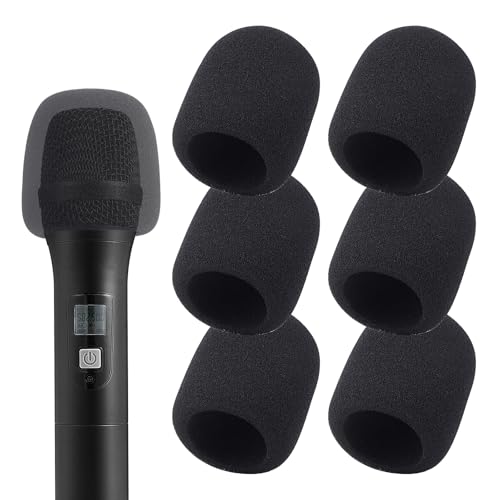
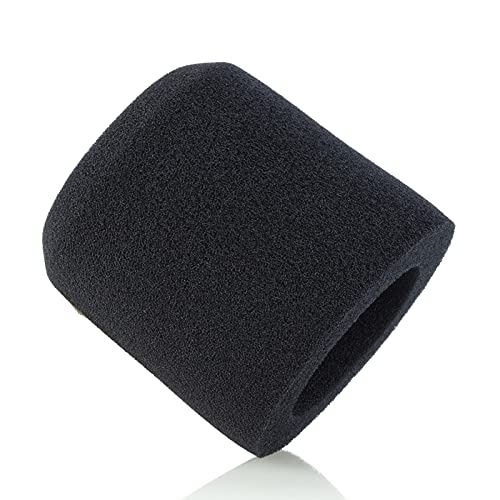
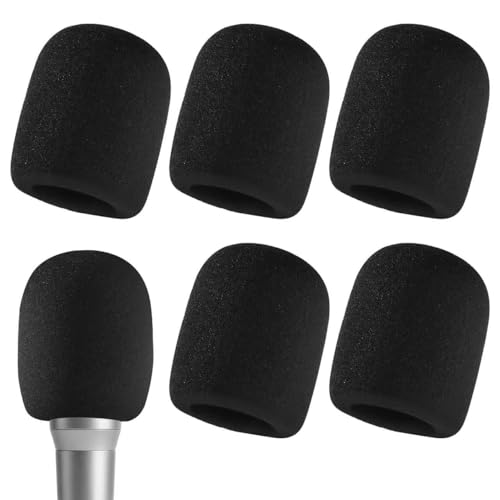

1. Mudder 5-Pack Foam Mic Covers — Best for Five Standard Handheld Microphones
Mudder suits a set of standard handheld microphones that need five matching foam covers, e.g., at a small recording setup. The listing gives each cover a 2.9 by 2.5-inch outside size and a 1.4-inch opening, the figure to hold against your microphone grille, and says it suits most standard handheld microphones rather than headset mics.
Five identical black covers in soft, thick foam suit a shared setup where several compatible handheld mics need a matching replacement. The listing also notes that the covers arrive compressed and should be left out to regain shape, so plan that small setup step before a recording rather than opening one at the last minute.
Our Take Buy Mudder when five standard handheld microphones need matching black covers with a stated opening size. Zruosiniy adds one more black cover, and ChromLives and Augshy add colors for telling microphones apart.
- Five matching black foam covers make a compatible shared handheld-microphone setup easy to stock consistently.
- The stated 2.9 by 2.5-inch size and 1.4-inch opening support a fit check before purchase.
- Soft, thick foam and elastic recovery are listed features for a cover stored between sessions.
- The standard-handheld fit is not a headset-microphone fit, so the opening must match the grille first.
- Five identical black covers do not provide the color-coding options included with ChromLives or Augshy.
2. Tomswa SM58-Style Foam Windscreen — Best SM58-Style Fit
Tomswa is for an SM58-series microphone or another standard handheld microphone with the same style of grille. Its listing calls out SM58 compatibility, says the soft sponge foam fits snugly, and names recording, live streaming, podcasting, and teaching among the intended uses.
The named microphone family is more useful than the broad use list. A buyer with an SM58-style mic can start from an explicit compatibility claim instead of choosing a generic pack by color or quantity. The listing also calls the cover compact and lightweight, which helps when the microphone gets packed with a small interface and cable kit.
Our Take Buy Tomswa when the microphone is in the SM58 series and you want the listing to name that fit directly. Mudder, Zruosiniy, ChromLives, and Augshy are broader options for standard handheld microphones, while LEFXMOPHY is specifically for the MV7 and MV7X shape.
- The listing explicitly names SM58-series compatibility, which gives a clearer starting point than a generic pack.
- Soft sponge foam is described as snug-fitting and simple to install or remove on compatible microphones.
- Recording, podcasting, and live-streaming use are all named on the product listing for the cover.
- The listing does not give the 1.4-inch opening measurement that Mudder, ChromLives, and Augshy provide.
- A named SM58-style fit does not establish compatibility with an MV7, MV7X, headset, or every handheld grille.
3. LEFXMOPHY MV7 Foam Replacement — Best for Shure MV7 and MV7X
LEFXMOPHY is the only pick here whose listing names the Shure MV7 and MV7X microphone family, so it is the place to start for that podcast microphone shape. It describes the cover as the same shape as the original windscreen and says it snaps into the microphone instead of stretching over a generic handheld grille.
The listing calls the foam washable and high-elastic, and says it can recover after being squeezed and washed. A fitted replacement gives an MV7 or MV7X owner a cover made for the microphone, not a multi-pack that may have the right diameter but the wrong form. The microphone itself is not included, so the purchase covers the foam alone.
A fitted replacement is the safer choice when the microphone has a distinctive body shape; do not assume a standard 1.4-inch handheld opening will substitute for the MV7 or MV7X snap-in design.Our Take Buy LEFXMOPHY for a Shure MV7 or MV7X because the listing names that exact family and a snap-in shape. Choose a pack for standard handheld microphones only after confirming the microphone uses that broader grille format.
- The listing names Shure MV7 and MV7X compatibility, avoiding a generic handheld-fit guess for those microphones.
- A snap-in, original-shape design targets the microphone body rather than relying on a stretch opening.
- Washable high-elastic foam is listed for a replacement cover that may be handled between sessions.
- It is a single microphone-family replacement rather than a multi-pack for several standard handheld microphones.
- The MV7 and MV7X fit does not make it a replacement for SM58-series or headset covers.
4. Zruosiniy 6-Pack Foam Covers — Best Six Black Covers
Zruosiniy suits a group of standard handheld microphones that needs one more matching cover than Mudder’s five. The listing includes six black foam windscreens, describes high-density foam, and says the covers fit most standard handheld microphones but not headset microphones.
It also describes the foam as soft, resilient, and tear resistant, with a snug fit intended to stay on during a session. The pack is a sensible middle ground when five covers are one short and an eight- or twenty-pack would add unnecessary extras. Confirm the microphone type before treating its claim of fitting standard handheld microphones as a guarantee.
Our Take Buy Zruosiniy when six matching black covers are the practical count for a shared setup of handheld mics. Mudder is the smaller five-pack, while ChromLives and Augshy make more sense if visual color coding is part of the job.
- Six black covers serve a six-microphone shared kit without moving immediately to a much larger pack.
- The listing describes high-density, resilient foam intended to slip on and stay snug during sessions.
- Standard handheld compatibility gives it a broad starting point for common vocal-microphone grilles.
- No exact opening measurement appears in the frozen evidence, so compare the microphone grille carefully first.
- All six covers are black, offering none of the visual microphone differentiation in ChromLives or Augshy packs.
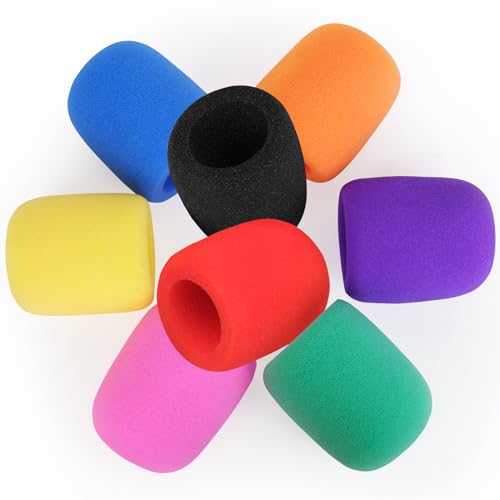
5. ChromLives 8-Pack Colorful Covers — Best Color-Coding Eight Handheld Mics
ChromLives suits a shared set of microphones that people need to tell apart, with eight different colors instead of another all-black bundle. Its listing gives each cover a 2.9 by 2.3-inch size and a 1.4-inch opening for most standard handheld microphones, plus individual packing intended to keep the colors separate.
The color set is useful when several presenters or recording positions use the same mic style and need a quick visual distinction. The listing describes thick, soft foam and says the covers can return to shape after being compressed. Treat the color coding as the reason to choose it. The fit still comes from the opening and microphone grille.
Our Take Buy ChromLives when eight microphone positions in a shared setup need easy color identification. Mudder and Zruosiniy are simpler black packs, while Augshy supplies more total covers and repeats each of ten colors twice.
- Eight different colors help identify matching handheld microphones across presenters, instruments, or recording positions.
- The stated 2.9 by 2.3-inch size and 1.4-inch opening support a fit comparison before ordering.
- Individual packing and elastic foam recovery are listed details for storing the covers between uses.
- The eight-cover pack has fewer total replacements than Augshy’s twenty covers for a busy shared-mic room.
- It is intended for standard handheld microphones rather than the fitted MV7 and MV7X replacement shape.
6. Augshy 20-Pack Foam Covers — Best Large Shared-Mic Supply
Augshy suits a room with many compatible handheld microphones or a recurring need for replacements. The listing includes 20 foam covers, with two each in ten colors, and gives the same 2.9 by 2.5-inch outside size and 1.4-inch opening that Mudder lists for standard handheld-microphone covers.
A set with repeated colors is more practical than a random large bundle when a school or an event setup needs a simple way to keep microphones distinguishable. Thick, soft foam and elastic recovery are listed features, but the deciding benefit remains the count. Buy this pack when all twenty covers have an actual use.
Our Take Buy Augshy when a shared kit of handheld mics needs a large supply and repeatable colors. ChromLives is cleaner for eight individual positions, while Mudder and Zruosiniy avoid leaving a small desk with more spares than it can use.
- Twenty covers support a large compatible handheld-microphone inventory or regular replacement across many shared positions.
- Ten colors repeated twice help distinguish pairs of microphones without labeling the foam itself.
- The 2.9 by 2.5-inch dimensions and 1.4-inch opening give a stated fit reference before purchase.
- Soft, thick foam and elastic recovery are listed details for covers stored between busy sessions.
- A twenty-pack is excessive for one close-range microphone where a fitted LEFXMOPHY replacement may suit better.
- The standard-handheld opening does not establish a fit for headset, MV7, MV7X, or every microphone grille.
Buying Guide: Choosing a Foam Windscreen for a Close Microphone
Start with the microphone shape and stated opening
The first purchase question is whether the microphone uses a standard handheld grille or a fitted cover made for one microphone body. Mudder and Augshy list a 1.4-inch opening, while LEFXMOPHY names the Shure MV7 and MV7X and describes a snap-in shape. A handheld grille and a snap-in body are different fit systems, so do not choose by pack count until the microphone itself is identified.
For a standard handheld mic, compare the grille dimensions with the cover’s stated opening and outside size. Mudder gives 2.9 by 2.5 inches, ChromLives gives 2.9 by 2.3 inches, and Augshy gives 2.9 by 2.5 inches. A named opening is a better starting point than a generic promise of universal compatibility.
Use a fitted replacement for an MV7 or MV7X
The LEFXMOPHY listing specifically names Shure MV7 and MV7X compatibility, says the cover matches the original shape, and describes snapping it into the microphone. The snap-in shape is the important distinction for a podcast desk using either of those models. The correct replacement follows the microphone family, and foam alone does not make two covers interchangeable.
Generic handheld packs can still be useful elsewhere in a studio, but they are not a shortcut to a fitted replacement. If the microphone is not named by a product listing, compare the actual grille before buying. Keep a spare fitted cover for the exact microphone rather than keeping a mixed box of foam pieces that only looks close enough.
Match pack size to the actual number of microphones
Mudder provides five covers, Zruosiniy six, ChromLives eight, and Augshy twenty. The best pack count is the count you will use, whether that means one per shared mic plus a few spares or a large supply for a busy room. A large pack does not improve the fit or make an incompatible cover more useful.
For two or three microphones, a five- or six-pack may leave reasonable replacements without creating unnecessary storage. For a class, event table, or multiple recording positions, Augshy’s twenty covers can be sensible because each of ten colors appears twice. Count the compatible microphones first, then decide whether color coding is needed.
Choose colors only when identification helps the workflow
ChromLives lists eight colors, and Augshy lists ten colors with two covers of each. Color helps when it identifies one microphone, guest, or station, not merely because a mixed pack looks more interesting. In a shared setup, it can make the correct cover easier to return after cleaning or transport.
An all-black pack keeps the visual side simple. Mudder and Zruosiniy are the better fit when every compatible microphone should use the same appearance and no one needs to distinguish one cover from another. Do not use color as evidence that two different microphone grilles take the same size.
Treat foam as one part of a close-mic setup
The listings describe foam covers in connection with breath, wind, dust, moisture, and plosive reduction, but a close voice setup still depends on microphone distance and gain. A foam cover does not make every position or spoken sound behave the same way. Use the product’s stated fit and material to choose a cover, then listen to the actual recording setup.
If the desk needs a larger physical barrier in front of the microphone, a separate pop filter is the accessory to look at. The foam approach is useful because it stays on the mic and avoids adding an arm in front of the speaker, while our guide to desktop microphone boom arms covers the mounting decision that determines where the mic can sit.
Frequently Asked Questions
Will a standard foam cover fit a Shure MV7 or MV7X?
No, do not assume it will. LEFXMOPHY is the product here that names the Shure MV7 and MV7X, says it has the original windscreen shape, and describes a snap-in attachment. The named family and snap-in attachment are stronger fit evidence for those microphones than a claim of fitting standard handheld microphones.
Mudder, Zruosiniy, ChromLives, and Augshy target most standard handheld microphones instead. Their stated openings help compare a conventional grille, but they do not establish that an MV7 or MV7X body takes the same cover. Use the microphone model as the first filter.
How many foam covers should a shared desk keep?
Count the compatible microphones and add only the replacements your workflow will use. Mudder gives five covers, Zruosiniy six, ChromLives eight, and Augshy twenty, so the choices range from a small set to a larger shared supply.
For a two-microphone desk, a five- or six-pack already leaves spares. For many microphones used by different people, the larger colored packs can make return and replacement simpler. The quantity should follow the number of matching grilles, not the largest bundle available.
Does a foam windscreen replace a separate pop filter?
No, it solves a different physical problem. The listings describe their foam in relation to breath, wind, plosives, or dust, while a separate pop filter is a larger barrier placed in front of the microphone. A foam cover is useful when the desk needs an accessory that stays on the microphone.
Choose it for the compact setup first, then listen to the microphone at the speaking distance you use. A USB-C audio interface for podcasting is another separate decision, because the interface controls the connection and gain path rather than the cover’s physical fit.
Are colored covers useful for recording?
They can be useful for organization. ChromLives gives eight different colors, while Augshy gives two covers in each of ten colors. A color can correspond to a guest microphone, a position, or a shared equipment slot without putting a label directly on the foam.
Color does not change the stated opening or make a cover fit a different microphone body. Start with the grille and the fit information, then choose a colored pack if it will make a setup with several mics easier to manage.
Can a foam cover be washed or reused?
It depends on the product, so rely only on the care details that the relevant listing actually names. LEFXMOPHY calls its MV7 replacement washable and says its high-elastic foam can return to shape after washing, while the other listings here emphasize soft foam, elasticity, or recovery after compression.
For a shared setup, keep enough covers available to rotate compatible microphones rather than relying on one generic care rule. A cover should be appropriate to the exact microphone, and the listing’s own cleaning or recovery information is the best available guide for that specific product.
Bottom Line
For a Shure MV7 or MV7X, LEFXMOPHY is the direct fit choice because its listing names that microphone family and snap-in shape. For compatible standard handheld microphones, Mudder is the practical five-pack, Tomswa is the starting point for SM58-style mics, and Augshy is the large supply when twenty covers will have an actual use.