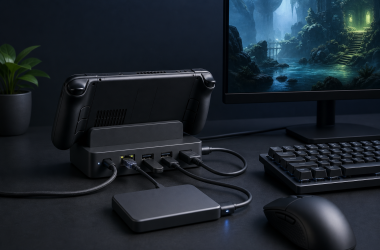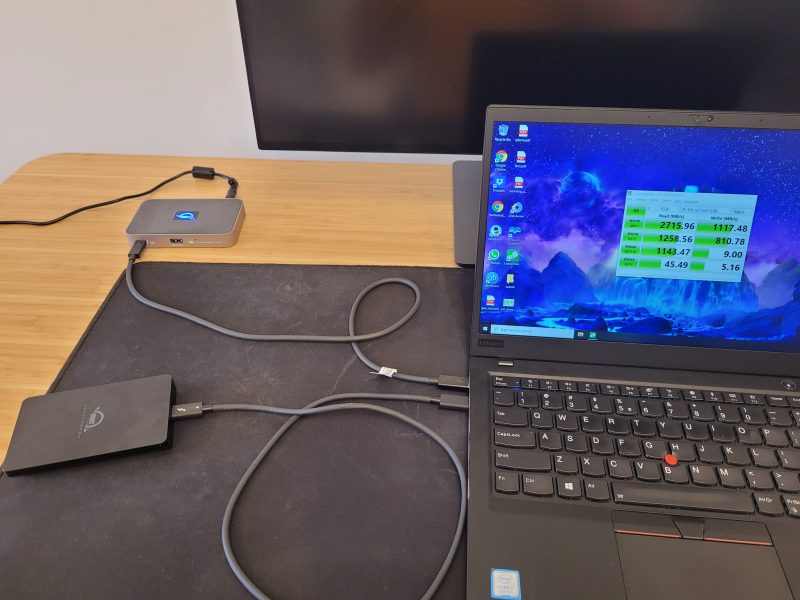
An external drive earns a fast port when it holds large photo libraries, active video projects, or a desktop archive that would be awkward inside a laptop. A portable SSD is the right shape for a working project, while a hard-drive RAID is the better answer when the job is keeping tens of terabytes close to one computer.
Start with the computer, not the USB-C plug. Thunderbolt 3, Thunderbolt 4, Thunderbolt 5, USB4, and USB 10Gbps can share a connector while offering different paths. The picks below are finished drives with a stated Thunderbolt or USB4 connection, not ordinary USB-only SSDs.
Choose a portable SSD for active files, a desktop drive for capacity, and Thunderbolt 5 only when the computer can use its faster path.Table of Contents
Best Thunderbolt External Hard Drives and SSDs Compared
| Image | Product | Details | Check Price |
|---|---|---|---|
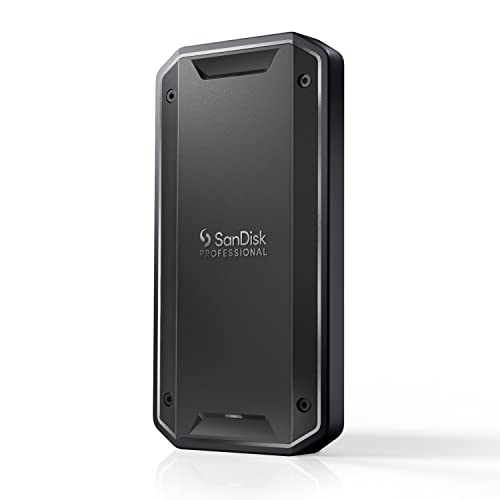 | SanDisk Professional PRO-G40 1TB | Pick: Best overall mixed-host portable SSD Interface: Thunderbolt 3 40Gbps and USB 3.2 Gen 2 Rated speed: Up to 3,000MB/s read and 2,500MB/s write Capacity: 1TB Built for: A rugged portable SSD that moves between Thunderbolt and USB computers | Check Price on Amazon |
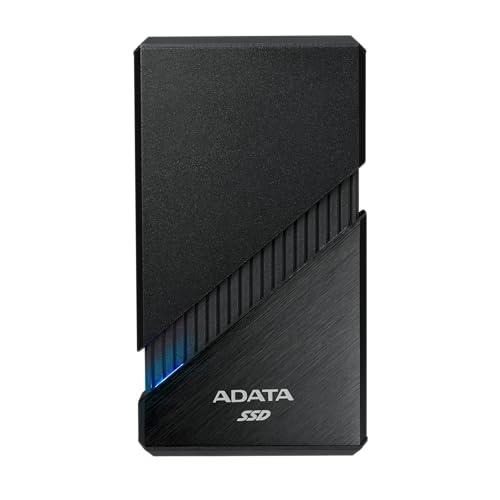 | ADATA SE920 1TB | Pick: Best USB4 portable SSD Interface: USB4 40Gbps; supports Thunderbolt 3 and 4 Rated speed: Up to 3,800MB/s read and 3,700MB/s write Capacity: 1TB Built for: USB4 or Thunderbolt users who want active cooling | Check Price on Amazon |
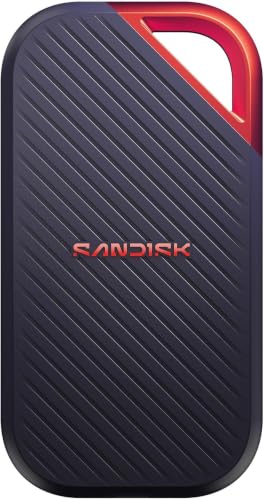 | SanDisk Extreme PRO with USB4 4TB | Pick: Best 4TB USB4 portable SSD Interface: USB4 Gen 3x2; supports Thunderbolt 4 Rated speed: Up to 3,800MB/s read and 3,700MB/s write Capacity: 4TB Built for: Large portable projects needing rugged USB4 storage | Check Price on Amazon |
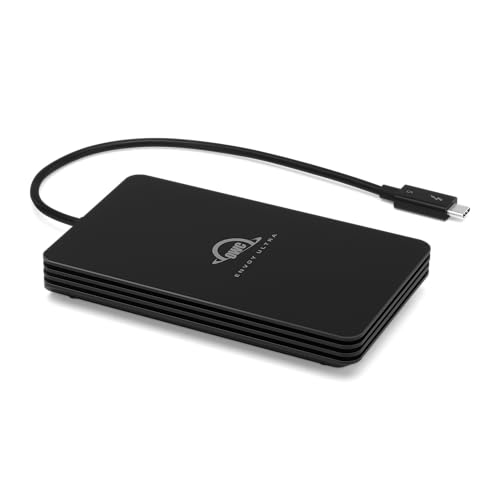 | OWC Envoy Ultra 2TB | Pick: Best rugged Thunderbolt 5 portable SSD Interface: Thunderbolt 5; compatible with Thunderbolt 4, 3, and USB4 Rated speed: Over 6,000MB/s on Thunderbolt 5 Capacity: 2TB Built for: Field work on a Thunderbolt 5 host | Check Price on Amazon |
 | LaCie 1big Dock 16TB | Pick: Best single-drive desktop dock Interface: Thunderbolt 3; USB-C compatibility Rated speed: Not stated for the exact 16TB model Capacity: 16TB Built for: Card ingest and a large desktop archive | Check Price on Amazon |
 | OWC Gemini 40TB | Pick: Best two-drive desktop RAID Interface: Thunderbolt 3 40Gbps Rated speed: Up to 562MB/s with dual HDDs Capacity: 40TB Built for: A desktop archive that also serves as a dock | Check Price on Amazon |
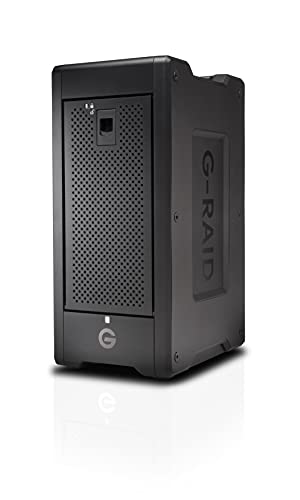 | SanDisk Professional G-RAID Shuttle 8 48TB | Pick: Best large Thunderbolt RAID Interface: Thunderbolt 3 and USB 3.2 Gen 2 Rated speed: Up to 1,900MB/s read and 2,000MB/s write Capacity: 48TB in RAID 0 Built for: Large media libraries and transportable multi-drive storage | Check Price on Amazon |
1. SanDisk Professional PRO-G40 1TB — Best Overall Portable SSD
The PRO-G40 is the easiest all-around pick for a laptop that moves between Thunderbolt 3 and USB 10Gbps connections. SanDisk specifies both paths and rates the selected 1TB model at up to 3,000MB/s read and 2,500MB/s write over Thunderbolt 3. Those speeds make it a sensible drive for a working project when a newer USB4 model is unnecessary or the same drive needs to work with several computers.
Its IP68, crush, and drop ratings make this the travel-focused portable choice. A 1TB drive will fill faster than the 4TB SanDisk Extreme PRO with USB4, but the smaller capacity is easier to treat as active work rather than the only archive. Pick the ADATA SE920 when USB4 speed is the priority, or the Envoy Ultra when the host has Thunderbolt 5.
The PRO-G40 can use USB, but its Thunderbolt 3 path is the reason to choose it over a USB-only portable SSD.Our Take Buy the PRO-G40 if you need one rugged portable SSD that has a documented Thunderbolt 3 path and a slower USB fallback. It is the practical choice for mixed computers, not the maximum-speed choice for a USB4 workstation.
- SanDisk specifies both Thunderbolt 3 and USB 10Gbps paths, so the same PRO-G40 suits a buyer whose laptops use either connection.
- The PRO-G40’s IP68, crush, and drop ratings make it the travel-focused portable choice.
- SanDisk’s rated read and write speeds make the 1TB PRO-G40 a sensible drive for a working project.
- The PRO-G40’s 1TB capacity fills faster than a larger drive, so it fits active work better than a deep archive.
- The PRO-G40 is not the maximum-speed choice for a USB4 workstation, and a Thunderbolt 5 computer is better served by the Envoy Ultra.
2. ADATA SE920 1TB — Best USB4 Portable SSD
The SE920 is for a USB4 or Thunderbolt 4 computer where a portable drive needs more headroom than a Thunderbolt 3 or USB 10Gbps model. ADATA specifies USB4 at 40Gbps, Thunderbolt 3 and 4 support, and up to 3,800MB/s read with up to 3,700MB/s write. Those figures are maker ceilings for the faster class of connection the drive is built for.
The extendable case activates a micro fan during heavy transfers. With that design you accept a moving part and a larger body in exchange for active cooling. Choose the SanDisk Extreme PRO with USB4 if 4TB capacity and a sealed rugged shell come first, or choose the PRO-G40 when a documented USB fallback is more useful than a USB4 peak.
Our Take Buy the SE920 for a USB4 portable SSD when the laptop has a matching fast port and sustained transfer heat is a concern. Its speed figure is not a promise for every file or host, so do not pay for USB4 if the computer only has USB 10Gbps.
- ADATA specifies USB4 40Gbps and Thunderbolt 3 and 4 support, so the SE920 fits a computer with a matching fast port.
- ADATA’s figures of up to 3,800MB/s read and up to 3,700MB/s write are maker ceilings that show more headroom than a Thunderbolt 3 model.
- The SE920’s extendable case activates a micro fan during heavy transfers, which suits a buyer concerned about sustained transfer heat.
- The SE920’s micro fan is a moving part, and its extendable case gives it a larger body, both of which the buyer accepts in exchange for active cooling.
- The exact SE920 is 1TB, so the 4TB SanDisk Extreme PRO with USB4 is the better fit when capacity and a sealed rugged shell come first.
- ADATA’s speed figures are maker ceilings, not a promise for every file or host, so paying for USB4 makes sense only with a matching computer.
3. SanDisk Extreme PRO with USB4 4TB — Best 4TB USB4 Portable SSD
The 4TB Extreme PRO with USB4 is for a portable project library that would outgrow a 1TB SSD before a trip or shoot ends. SanDisk specifies USB4 Gen 3×2, Thunderbolt 4 support, and up to 3,800MB/s read plus 3,700MB/s write. It is a USB4 drive, not a Thunderbolt 5 drive, so it is a sensible high-capacity portable option before paying for an 80Gbps-class model.
The rugged silicone shell and forged aluminum chassis are useful when capacity must travel. SanDisk specifies IP65 water and dust protection and up to 2m drop protection, although a sealed portable drive is not a substitute for another copy of important work. The 4TB capacity is the reason to choose it over the ADATA; choose the Envoy Ultra instead when field protection and Thunderbolt 5 support are both needed.
A USB4 drive suits a fast portable workflow, but Thunderbolt 5 is a separate class and requires a host that exposes that path.Our Take Buy this SanDisk when the job is carrying a large USB4 project drive rather than a small scratch disk. It gives more portable room than the 1TB picks, but its 4TB capacity does not replace an archive or backup plan.
- The 4TB Extreme PRO with USB4 gives more portable room than the 1TB picks, so a project library is less likely to outgrow it.
- SanDisk specifies up to 3,800MB/s read and up to 3,700MB/s write, which suit a matching USB4 computer.
- SanDisk specifies IP65 water and dust protection and up to 2m drop protection, which add protection when capacity must travel.
- The Extreme PRO with USB4 has a rugged silicone shell and forged aluminum chassis, which are useful when capacity must travel.
- SanDisk’s Extreme PRO with USB4 is a USB4 drive, not a Thunderbolt 5 drive, so the Envoy Ultra is the better fit when field protection and faster Thunderbolt support are both needed.
- A sealed portable drive is not a substitute for another copy of important work, and the drive’s capacity does not replace an archive or backup plan.
4. OWC Envoy Ultra 2TB — Best Rugged Thunderbolt 5 SSD
The Envoy Ultra is the fast portable choice for a Thunderbolt 5 computer used away from a desk. OWC specifies Thunderbolt 5, IP67 dust and water protection, a crushproof enclosure, bus power, and a 2TB finished drive. It can also connect through Thunderbolt 4, Thunderbolt 3 on Mac, and USB4, but those paths do not turn an older computer into a Thunderbolt 5 host.
OWC rates the drive over 6,000MB/s on Thunderbolt 5 and gives lower figures for older paths. It also states that longer writes can be slower than the peak and that the cable connector must be dry before connection. The Envoy Ultra is a focused purchase for a fast field workflow, not a general recommendation for every USB-C laptop.
Our Take Buy the Envoy Ultra when a rugged 2TB drive and a Thunderbolt 5 host belong to the same workflow. The PRO-G40 or either USB4 pick is the better fit when the computer does not have the faster port.
- OWC specifies Thunderbolt 5, which makes the Envoy Ultra the fast portable choice for a computer with that port.
- OWC specifies IP67 dust and water protection and a crushproof enclosure, which suit a drive used away from a desk.
- OWC says the Envoy Ultra can also connect through older Thunderbolt and USB4 paths and gives lower figures for them.
- OWC states that the cable connector must be dry before connection, so IP67 protection does not make it safe to attach a wet plug.
- OWC rates its highest speed on Thunderbolt 5 and states that longer writes can be slower than the peak.
- OWC specifies a 2TB finished drive, and the Envoy Ultra is a focused purchase for a fast field workflow, not a general pick for every USB-C laptop.
For more 80Gbps storage, see our Thunderbolt 5 external SSD guide.
5. LaCie 1big Dock 16TB — Best Single-Drive Desktop Dock
The 1big Dock is for a desk where one large hard drive should also simplify card ingest and laptop connections. Seagate identifies the exact 16TB model as a Thunderbolt 3 storage hub with CF and SD slots, dual 4K display support, and up to 80W of laptop charging. It is a large one-drive archive with dock functions, not a portable SSD.
Its swappable enterprise-class hard drive is the useful distinction from a sealed desktop drive. The maker does not state a sequential speed for the exact 16TB configuration, so capacity and dock capability are the reason to choose it. Move to the Gemini when two drives and selectable RAID modes are needed, or to the G-RAID Shuttle 8 when one desktop drive cannot hold the library.
Our Take Buy the 1big Dock if card readers, laptop charging, and a 16TB desktop archive belong at one workstation. It is simpler than a RAID, but one hard drive does not provide redundancy by itself.
- The exact 16TB model is a large one-drive archive with dock functions, which gives a desk more room than a portable SSD.
- Seagate identifies CF and SD slots on the exact model, which should simplify card ingest at the desk.
- Seagate identifies the exact model as a Thunderbolt 3 storage hub with laptop charging, which should simplify laptop connections.
- The LaCie dock holds one hard drive, and one hard drive does not provide redundancy by itself.
- Seagate does not state a sequential speed for the exact 16TB configuration, so a buyer chooses it for capacity and dock capability, not speed.
6. OWC Gemini 40TB — Best Two-Drive Desktop RAID
The 40TB Gemini is the middle ground between a single-drive dock and an eight-drive RAID. OWC specifies two SATA bays, Thunderbolt 3, and hardware RAID 0, RAID 1, Span, or independent volumes. Its exact 40TB finished item gives a desktop archive more capacity than the 1big Dock while keeping the storage system smaller than the G-RAID Shuttle 8.
Choose its RAID mode before filling it, because the mode changes usable space and protection. OWC rates dual HDDs up to 562MB/s in a named test and includes docking features such as USB, 2.5GbE, HDMI, and an SD reader. RAID 1 can keep a second copy inside the box, while RAID 0 offers capacity and speed without defined single-drive failure tolerance.
Our Take Buy the Gemini if one desktop needs 40TB, selectable two-drive RAID, and dock ports. Choose the G-RAID Shuttle 8 when the archive needs more capacity and more RAID choices.
- OWC specifies two SATA bays and a finished 40TB item, so the buyer assembles neither the RAID nor the dock.
- OWC specifies hardware RAID 0, RAID 1, Span, and independent volumes, so the buyer can choose between usable space and protection.
- OWC includes docking features such as USB, Ethernet, HDMI, and an SD reader, which add dock ports to the RAID.
- OWC rates the dual hard drives in a named test, so the buyer has a maker figure for the pair.
- RAID 1 can keep a second copy inside the 40TB box, while RAID 0 offers capacity and speed without defined single-drive failure tolerance.
- OWC’s dual-HDD rating is an up-to figure from a named test, so a buyer should not expect it on every transfer.
- The RAID mode must be chosen before the Gemini is filled, because the mode changes usable space and protection.
7. SanDisk Professional G-RAID Shuttle 8 48TB — Best Large Thunderbolt RAID
The G-RAID Shuttle 8 is for a large media library that has outgrown one or two desktop hard drives. SanDisk specifies eight removable 7,200RPM Ultrastar hard drives, Thunderbolt 3, USB 3.2 Gen 2, and an exact 48TB RAID 0 configuration. The G-RAID Shuttle 8 is a transportable storage system for a studio or production case, not an alternative to a pocket SSD.
Its hardware RAID choices let the buyer trade capacity for defined drive-failure tolerance. SanDisk lists RAID 0, 1, 5, 6, 10, 50, 60, and JBOD, and rates the exact configuration up to 1,900MB/s read and 2,000MB/s write. Both figures come from the maker and are tied to the selected setup. A redundant RAID mode can help with a specified drive failure, but it cannot substitute for a separate copy elsewhere.
The 48TB figure is RAID 0 capacity. Select a redundant RAID mode before importing the only copy of a large project.Our Take Buy the G-RAID Shuttle 8 if a large multi-drive archive needs Thunderbolt connectivity and a deliberate RAID plan. It is the capacity choice here, while the Gemini is the smaller two-drive desktop alternative.
- SanDisk specifies eight removable hard drives and an exact 48TB RAID 0 configuration, so the system starts from a large capacity.
- SanDisk lists many hardware RAID choices, so the buyer can trade capacity for defined drive-failure tolerance.
- SanDisk specifies Thunderbolt 3 and USB 3.2 Gen 2, which gives the G-RAID Shuttle 8 two host connections.
- SanDisk gives read and write ratings for the exact configuration, and they are maker figures tied to the selected setup.
- The G-RAID Shuttle 8 is a transportable storage system for a studio or production case, not an alternative to a pocket SSD.
- Choosing a redundant mode trades capacity for defined drive-failure tolerance, so usable space falls below the RAID 0 figure.
- A redundant RAID mode on the G-RAID Shuttle 8 can help with a specified drive failure, but it cannot substitute for a separate copy elsewhere.
Buying Guide
Confirm the host path before buying speed
A USB-C port is not enough to identify the storage path. Check whether the computer has Thunderbolt 3, Thunderbolt 4, Thunderbolt 5, USB4, or USB 10Gbps. The PRO-G40 is designed for Thunderbolt 3 and USB, the SE920 and Extreme PRO are USB4 drives whose makers also list Thunderbolt support, and the Envoy Ultra needs Thunderbolt 5 for its top maker-rated figure.
Pay for the faster class only when the host can expose it. A drive always falls back to the slower supported connection rather than upgrading a laptop port. Our Thunderbolt 3, 4, and 5 comparison and USB4 versus Thunderbolt 4 guide explain the connection differences.
Separate active storage from the archive
A portable SSD suits an active project, while a desktop hard-drive system suits capacity. The first four products can travel with a laptop, but even a 4TB SSD can fill quickly with a large media library. The 1big Dock, Gemini, and G-RAID Shuttle 8 stay on a desk or move in a prepared case because they are desktop hard-drive systems, and LaCie states that the 1big Dock needs external power.
Choose RAID for the job it performs. RAID 0 maximizes usable striped capacity but does not tolerate a drive failure, while RAID 1 and parity modes sacrifice space for defined failure protection. No RAID protects against every loss, so keep an independent backup of work that cannot be recreated.
FAQ
Is Thunderbolt 5 necessary for an external SSD?
Thunderbolt 5 is necessary only when the computer and workload can use its faster path. The Envoy Ultra is the focused Thunderbolt 5 choice here, while the USB4 and Thunderbolt 3 products fit older or different host connections.
A faster label cannot make a slower port transfer at the faster class. Choose capacity, ruggedness, and the documented fallback path before buying a Thunderbolt 5 drive for ordinary backup.
Is a RAID drive a backup?
A RAID drive is not a complete backup. A redundant RAID mode can help after a defined drive failure, but it cannot undo deletion, theft, fire, malware, or every enclosure failure.
Use RAID for capacity or availability, then keep a separate copy elsewhere. Select the Gemini or G-RAID Shuttle 8 RAID mode before it holds the only copy of an important library.
Bottom Line
The SanDisk Professional PRO-G40 is the best portable choice for most people because it combines a Thunderbolt 3 drive with a USB fallback and rugged protection. Choose ADATA or the 4TB SanDisk for USB4, OWC Envoy Ultra for a Thunderbolt 5 field workflow, LaCie 1big Dock for a single-drive desktop setup, OWC Gemini for a two-drive desktop RAID, or G-RAID Shuttle 8 for a large multi-drive archive.