Speakers on a desk can transmit vibration into the surface beneath them. A foam pad provides a separate contact layer and can raise or tilt a monitor, but no pad here has a verified before-and-after measurement in your room. Pick by cabinet footprint, safe weight support and listening height first. Treat promises of instantly improved sound as advertising until you test your own desk.
These six pairs are sold as studio-monitor isolation pads. Some are made for compact cabinets. One has a much larger 14-by-11-inch base. The listings are not internally consistent about the driver sizes they support, so a tape measure is more useful than a label saying “five-inch monitor.”
Measure each speaker’s actual base and weight, plus the clear desk space beneath it. A pad must support the cabinet without an unstable overhang; a useful tilt should point the tweeter toward your ears at the normal listening position.Studio Monitor Isolation Pads Compared
| Image | Product | Details | Check Price |
|---|---|---|---|
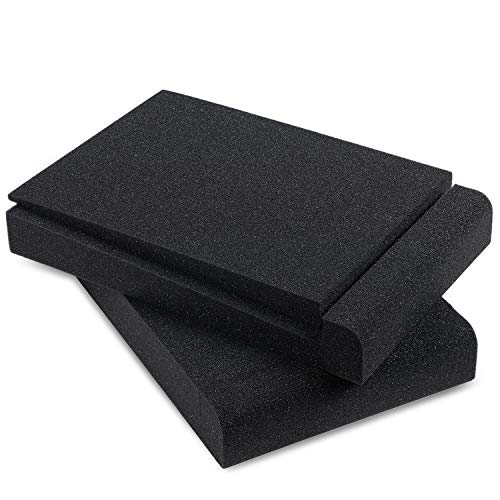 | Sound Addicted SMPad 5 | Pads: Pair Footprint: 7.5 × 11 in Foam: 50 kg/m³ Best fit: Five-inch desk monitors | Check Price on Amazon |
 | Saiqiang Two-Pack | Pads: Pair Footprint: 8 × 6.3 in Foam: High-density, unspecified Best fit: Compact desk speakers | Check Price on Amazon |
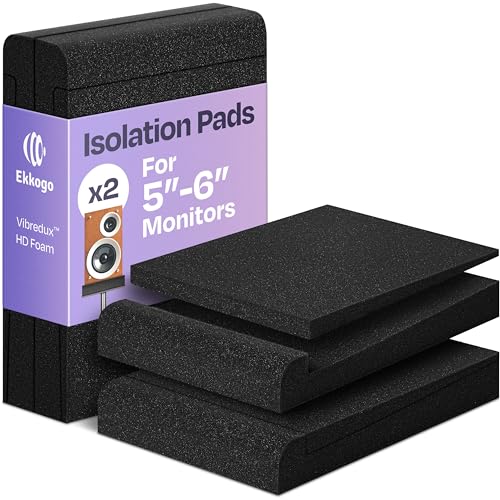 | Ekkogo Five-Inch Pads | Pads: Pair Footprint: 11 × 7.5 in Foam: Vibredux HD, seller term Best fit: Tilt options for five-inch monitors | Check Price on Amazon |
 | JBER Two-Pack | Pads: Pair Footprint: 8 × 6.3 in Foam: 50 kg/m³ Best fit: Small monitor footprint | Check Price on Amazon |
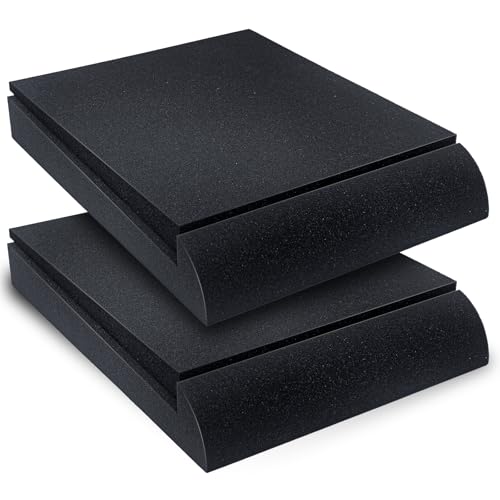 | Liquid Stands Pads | Pads: Pair Footprint: 14 × 11 in Foam: 50 kg/m³ Best fit: Larger speaker base | Check Price on Amazon |
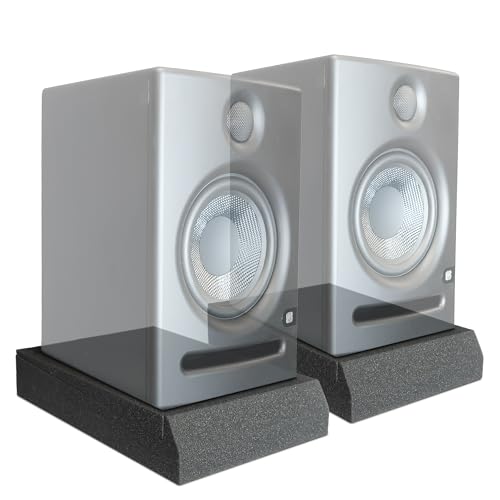 | AxcessAbles SMP5-2PK | Pads: Pair Footprint: Check exact listing Foam: 50 kg/m³ Best fit: Angle choices on a compact desk | Check Price on Amazon |
1. Sound Addicted SMPad 5 — Best Known Footprint for Five-Inch Monitors
Sound Addicted specifies the SMPad 5 as a pair of 7.5-by-11-by-1.6-inch foam pads marketed for five-inch studio monitors. Sound Addicted lists 50 kg/m³ foam density and a 24-pound capacity. The density and capacity figures are seller-stated specifications, useful for filtering out a clearly unsuitable cabinet but not a measured guarantee of isolation on a particular desk.
The pad sections can be arranged for different speaker angles. Decide whether you need a tilt before changing the stack. Lifting a speaker can alter the tweeter’s height, and pointing it above your head defeats the placement benefit. Check where the cabinet’s feet actually touch, not just its outside width. A raised lip or a shallow footprint can change how securely the monitor sits.
Our Take Choose this pair when the cabinet fits the stated 11-by-7.5-inch surface and you want a seller-stated load figure. It is a placement accessory, not proof that every desk resonance will disappear.
- Pad dimensions and density are stated.
- 24-pound seller capacity gives a weight check.
- Sections allow more than one angle.
- 11-inch depth may crowd a shallow desk.
- No comparable desk-vibration test is supplied.
2. Saiqiang Two-Pack — Best Compact Desk Footprint
Saiqiang lists a pair of 8-by-6.3-by-1.4-inch pads for speakers described as three to five inches. That smaller base can fit where a deeper monitor pad would reach into a keyboard or interface area. It is also a reason to verify that both speaker feet remain supported, because a nominal five-inch driver says nothing about the full cabinet’s base dimensions.
The listing describes adjustable angles and high-density foam but does not establish a directly comparable density or capacity figure in the evidence used here. Its claims about fast sound improvement and sound insulation are not independent tests. The pad may help separate a cabinet from the desk. It does not soundproof a room or replace speaker-placement checks.
Our Take Use the compact footprint as the reason to shortlist this pair. Confirm cabinet support and weight before treating the seller’s generic fit range as approval for your exact monitor.
- Compact 8-by-6.3-inch base.
- Pair covers two desk speakers.
- Angle adjustment is listed.
- Smaller surface may not fully support wide cabinets.
- No comparable load or isolation test in the available evidence.
3. Ekkogo Five-Inch Pads — Best Tilt Choices for a Medium Base
Ekkogo’s listing describes an 11-by-7.5-by-1.6-inch pair for five-inch studio monitors, with a seller-stated 24-pound capacity. The pads have a two-component construction with five angle configurations. Those details make it comparable in footprint to the Sound Addicted pair, although the seller’s foam name, “Vibredux HD,” is branding rather than an independently comparable performance grade.
Five possible arrangements help only if one puts the tweeter at the correct height and angle for your chair. If the speaker already points toward you on the bare desk, a level pad may be the simpler choice. Check the cabinet’s feet and base dimensions against the pad surface before choosing a steeper configuration. No published test in this evidence ranks the pair by vibration reduction.
Our Take Pick Ekkogo when its stated footprint and tilt arrangements match your desk geometry. Do not pay for a foam label as though it were a measured isolation specification.
- 11-by-7.5-inch footprint stated.
- Five listed angle setups.
- 24-pound seller capacity is stated.
- Foam branding is not an isolation test.
- Depth can consume desk space.
4. JBER Two-Pack — Best Small-Monitor Setup
JBER specifies 8 by 6.3 by 1.4 inches per pad. The seller lists 50 kg/m³ foam density, a 22-pound capacity and five configurations. Its product description names three- to four-and-a-half-inch monitors, a narrower range than some other compact pads in this list. Compare the actual cabinet base and weight instead of assuming all small monitors share a standard enclosure.
That footprint helps keep a crowded desk workable. The same small surface means a wide speaker foot or angled cabinet needs extra attention for stability, especially when tilted. The listing uses “fireproof” language, but the evidence here does not verify a safety certification. Do not rely on that word where a building rule or heat source is involved.
Our Take Choose JBER for a measured compact cabinet that fits securely. Its stated weight and angle options are practical screening details. The seller’s acoustic and fire claims are not independently established.
- Compact listed base and height.
- 22-pound seller capacity.
- Five listed configurations.
- Small base limits cabinet footprint.
- Fireproof wording lacks verification here.
5. Liquid Stands Pads — Best Larger Base
At 14 by 11 by 2 inches, this pair has the largest stated footprint in this comparison. The seller names 50 kg/m³ foam and five angle settings: level, plus or minus five degrees, and plus or minus ten degrees. A larger pad may give a broad cabinet enough contact area, provided there is also enough clear desk space for both pads and safe distance from the desk edge.
The exact listing is internally inconsistent about speaker size. Its title says six- to eight-inch speakers, while one feature says three to four-and-a-half inches. That contradiction makes driver size a poor buying rule here. Measure the cabinet base, check its weight against the current listing and confirm the return terms. A pad that fits the speaker may still push a display, lamp or interface out of place.
Our Take Shortlist Liquid Stands for a larger cabinet base, but resolve the listing’s conflicting size claims by measurement before purchase. Do not infer a supported speaker range from either line alone.
- Large 14-by-11-inch base.
- Five angle settings are stated.
- 2-inch listed pad height.
- Listing conflicts on recommended speaker size.
- Wide base needs more clear desk area.
6. AxcessAbles SMP5-2PK — Best Angle Choices on a Compact Desk
AxcessAbles lists this pair for small studio monitors and names 50 kg/m³ foam density. Its five positions are level, plus or minus five degrees, and plus or minus ten degrees. That specific tilt range can help if a monitor sits below your ears, but the right setting depends on speaker height and how far away you sit. A fixed, level setup remains valid when the tweeter already aims at the listening position.
Its title advertises three- to five-inch speakers, while a feature bullet says three to four-and-a-half inches and also names five-inch monitor examples. Those statements are not a reliable substitute for a cabinet-base measurement. Check the current listing’s pad dimensions and capacity before ordering. This evidence does not establish a comparable load figure for this exact offer.
Our Take Consider this pair for its stated angle choices, not a blanket five-inch fit claim. Verify surface contact and load for your specific cabinet first.
- Five explicit tilt positions.
- Density figure is stated.
- Pair serves both speakers.
- Seller’s driver-size guidance conflicts.
- Comparable load figure is not established here.
Buying Guide: Fit the Cabinet Before Chasing Isolation Claims
Measure the speaker and the desk
The number in a speaker’s name usually refers to a driver size, not its cabinet’s base. Measure the width and depth of the surface that will actually touch the pad, including feet and any backward lean. Then compare those dimensions with the pad’s usable top surface. The 8-by-6.3-inch products take less space, while the 14-by-11-inch Liquid Stands pair needs considerably more room. A slight overhang may still leave the feet supported. An unsupported foot or rocking cabinet is a reason to choose another pad.
Measure the clear desk area too. A pad can fit a speaker yet block a display stand, monitor arm clamp or laptop lid. If the speakers are already chosen, our balanced TRS cable guide covers their connection to an interface, a separate decision. This guide is for supporting speakers you already own. Leave cables, ports and ventilation accessible after the pads go in.
Use tilt for ear height, not as a feature contest
The useful angle is the one that points each tweeter toward your listening position. Several products list five configurations, but that count does not make them automatically better. If your speakers are already at ear height, use a level arrangement. If they sit low, try an upward tilt while keeping the cabinet stable. If they sit above you, a downward arrangement may be useful. Recheck left-right symmetry after changing any section.
Speaker placement can count for more than pad branding. Keep the listening triangle sensible and avoid moving one speaker much closer to a wall or screen than the other just to fit a pad. The bass-trap guide covers room-corner treatment, which is a different problem from desk contact. Neither product type can guarantee a flat response at your chair without listening or measurement in the actual room.
Treat capacity and acoustic claims carefully
Seller-stated weight capacity is a screening check. A 22- or 24-pound claim does not describe how a specific foam pad behaves after years under a warm, heavy cabinet. Check the offer and leave margin rather than matching a claimed limit exactly. If no capacity is supplied, ask the seller or choose a pad with a documented load rating that exceeds the cabinet weight. Density in kg/m³ describes the foam, not the complete isolation outcome.
Try a simple before-and-after test at the same volume and listening position. A vibration felt in the desktop may change after installing pads, while a room resonance may not. Claims of soundproofing or instant clarity are not measurements of this desk. If the desk still rattles, look for loose objects, unstable speaker feet or the desk structure itself before buying another foam pair. Keep the package and return terms until you know the setup is stable.
Frequently Asked Questions
Do foam pads soundproof the room?
No. A desk isolation pad sits between a speaker and a surface. It may change the mechanical vibration transmitted into that surface, but it does not seal doors or walls, absorb every reflected sound, or stop a neighbor from hearing the speakers. The word “isolation” in a product title does not mean measured building soundproofing.
If room sound is the problem, inspect speaker and listener placement before buying another pad. If the desk itself buzzes, remove loose items and try a secure pad setup at the same speaker level. Judge the change at the normal listening position, not just by touching the desk once.
Can I choose a pad from the speaker’s driver size alone?
No. A five-inch driver can live in cabinets with different widths, depths, feet and weights. Two products in this list contain contradictory driver-size guidance within their own Amazon listings. Measure the actual speaker base and check that the speaker’s weight stays within the pad’s documented allowance, if one is given.
Confirm there is room for the pad on the desk and that its angle will not tip the speaker or block a vent. The speaker’s nominal driver size can narrow your search, but it cannot replace those physical checks. If the fit remains uncertain, compare the seller dimensions and return terms before ordering.
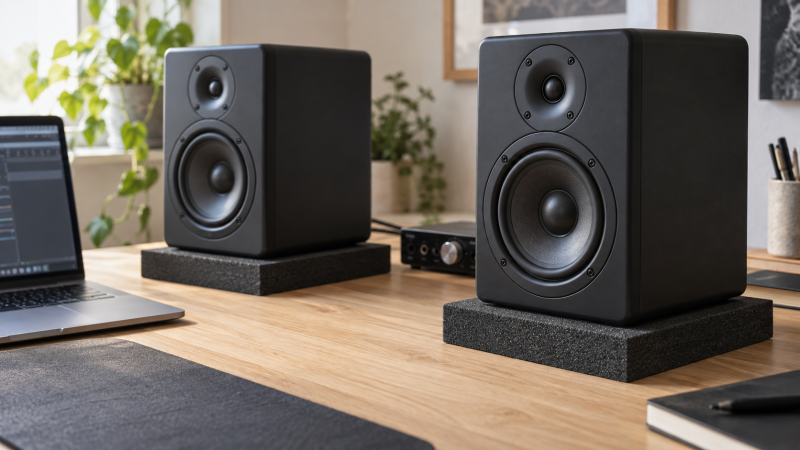
Source boundary: Product identities, dimensions, densities, angle options and stated capacities come from six exact Amazon US listings checked for active offers. They are seller specifications, not independent vibration or audio tests. The featured image illustrates a desk setup rather than a listed product. Verify fit, weight and offer details before purchase.