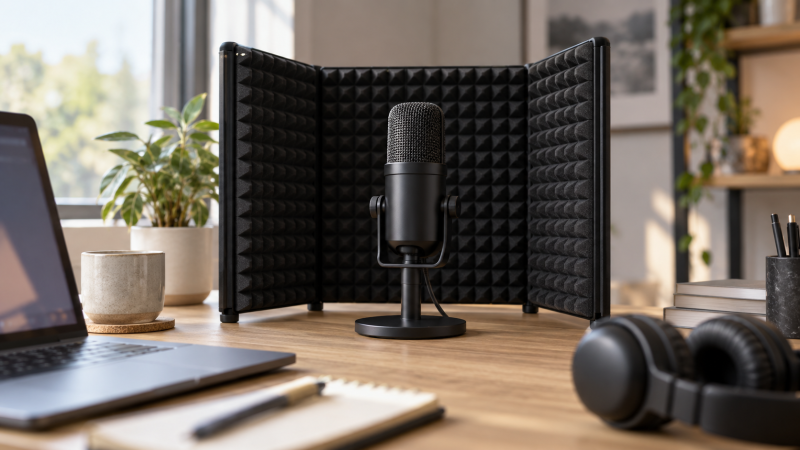
A reflection shield is a set of foam-backed panels behind and around a microphone. On a narration desk, it may reduce some nearby reflections reaching the back and sides of the mic, especially when hard surfaces surround the setup. It does not soundproof the room, stop traffic outside a window or replace a microphone placed close to the narrator. Treat the shield as one small part of a quieter recording chain.
These six New-offer shields differ in panel width, folding geometry, mounting hardware and stand contents. Some sit on a desk, while others include or accept a full-height stand. Check the space around the microphone before buying. A deep shield can block the laptop screen, force the mic too far from the mouth, or make a heavy stand unstable. Seller claims about perfect isolation are not measured acoustic results.
Record the same short passage with the shield installed and removed, keeping mic position and gain unchanged. Listen for a useful reduction in nearby reflections, not total silence. If the difference is small, fix placement or the room before adding more foam around the mic.Microphone Reflection Shields Compared
| Image | Product | Details | Check Price |
|---|---|---|---|
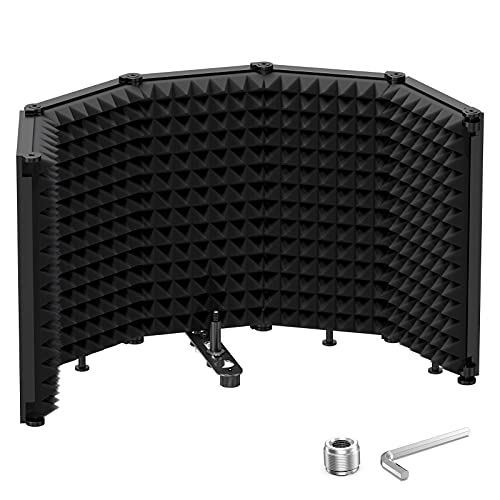 | Moukey Five-Panel | Panels: 5 folding Mount: Desk / stand Included: Thread adapters Best fit: Flexible desk arc | Check Price on Amazon |
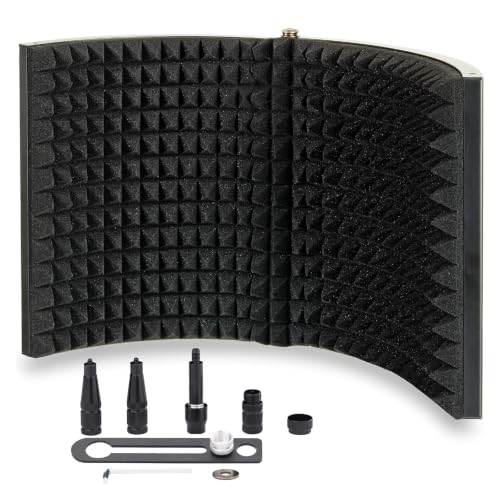 | HUPPER Two-Panel | Panels: 2 folding Mount: Freestanding / stand Included: Vented metal back Best fit: Narrow desk | Check Price on Amazon |
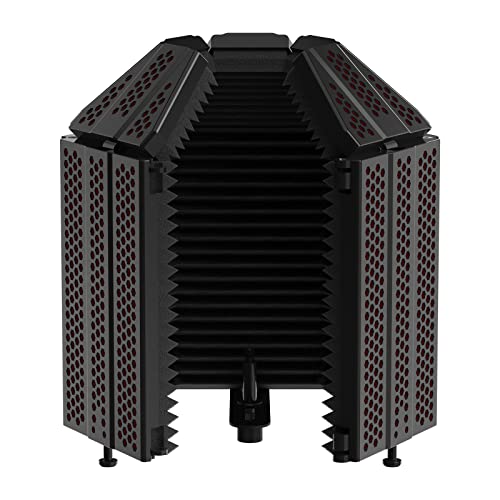 | XTUGA MIS02 | Panels: 3 or 5 layout Mount: Desk / stand Included: Foldable top Best fit: Configurable arc | Check Price on Amazon |
 | Aokeo AO-504 | Panels: Shield Mount: 182 cm stand Included: 2 thread adapters Best fit: Tall stand setup | Check Price on Amazon |
 | Dmsky Tripod Kit | Panels: 5 folding Mount: Tripod / desk Included: Pop filter + tray Best fit: Complete stand kit | Check Price on Amazon |
 | LZSIG XL | Panels: 5 folding Mount: Desk / stand Included: Thread adapters Best fit: 30 in wide desk | Check Price on Amazon |
1. Moukey Five-Panel — Best Foldable Desk Fit
Moukey’s listing describes a five-panel folding shield with a high-density acoustic-foam inner layer and a rigid ABS back. The panels can be angled to surround the sides and rear of a microphone, then folded for storage. The returned bullets say it can stand on a desktop or attach to a mic stand and include 3/8-inch-to-5/8-inch thread adapters. Non-slip support points are listed for tabletop use, though a crowded desk still needs enough flat area for the shield’s weight and footprint.
Its flexible geometry is useful when the narrator alternates between a laptop-facing position and a more open recording position. Do not assume the five panels give full isolation: sound can still reach the front of the microphone and reflect off walls and ceiling. Check whether the shield’s folded sides leave enough space for the microphone, shock mount and cable. A short test recording is more informative than the listing’s broad noise-elimination language.
Our Take Moukey fits a desk that can accommodate a folding shield and may occasionally need stand mounting. Choose it for adjustable physical coverage, not a promise of soundproofing.
- Five folding panels.
- Desk or stand use listed.
- 3/8-to-5/8-inch adapters included.
- Five panels need a large desk footprint.
- Does not block sound entering from the open front.
2. HUPPER Two-Panel — Best Compact Folding Shield
The HUPPER listing centers on two folding panels with acoustic foam and a vented metal back plate. That simpler layout may suit a narrow desk where a five-panel arch would interfere with the laptop or notes. It is described as freestanding and compatible with most microphone stands when more height is needed. The fold-flat claim is useful for a narrator who stores the mic after each session rather than leaving a permanent recording corner assembled.
Two panels offer less side wrap than a wider five-panel design. Less side wrap can be a good trade if the shield otherwise forces the capsule farther from the speaker. The seller’s wording calls it a portable vocal booth, but a freestanding open-front panel is not an enclosed booth. Confirm the actual base clearance, stand attachment and mic position before deciding its compactness outweighs the smaller reflection area.
Our Take HUPPER is the space-saving option when a fold-flat two-panel shape is more useful than maximum wraparound coverage. Its open geometry still leaves room sound to manage elsewhere.
- Two-panel layout suits a smaller desk.
- Folds flat for storage.
- Freestanding and stand use described.
- Less side coverage than wider shields.
- Portable-booth wording overstates an open panel.
3. XTUGA MIS02 — Best Configurable Panel Layout
XTUGA describes its MIS02 as a five-panel shield that can also be arranged as a three-panel setup by changing the foldable side sections. It adds a foldable top according to the returned bullets. The layout options help when one recording session uses a desk and another uses a stand: you can test a tighter or more open arc without buying a second panel set. The listing describes desktop and stand mounting, though the exact stand in the box should be confirmed from the offer.
The seller makes strong claims about noise cancellation and perfect recording conditions. Those statements are not measurements. A top panel can change reflections around the capsule, but it can also crowd a large shock mount or block easy access to the mic. Check the mic’s dimensions, stand strength and cable exit before treating the adjustable layout as automatically useful. Try the three-panel arrangement first if the desk is shallow.
Our Take MIS02 is the flexible choice for someone who wants to compare a three- versus five-panel arc. Keep the microphone near the narrator and judge the change by a controlled recording.
- Three- or five-panel arrangement described.
- Foldable top listed.
- Desk or stand setup described.
- Folded top may crowd a large mic assembly.
- Stand contents require offer verification.
- Noise-cancellation claims are unmeasured.
4. Aokeo AO-504 — Best Listed Tall Stand
The AO-504 offer explicitly lists one reflection shield, two metal thread adapters, an adjustable stand and instructions. The returned bullets say the stand is 182 cm tall and that the shield can be mounted at a chosen height. That complete hardware list distinguishes this option from a shield-only offer when a narrator wants to move between seated and standing positions. The description also says the microphone itself is not included.
This shield is not the smallest fit for a tight laptop desk. A tall stand needs a stable floor or desk position and enough clearance behind the microphone. The seller mentions foam on the inside and a vented metal back, but does not establish an acoustic reduction figure for your room. Set the mic at the correct speaking height first, then position the shield so it does not force you away from the capsule or obstruct the screen.
Our Take AO-504 makes sense when you need a listed full-height stand with the shield rather than a tabletop-only panel. Confirm the stand footprint and remember the mic is separate.
- Adjustable 182 cm stand listed.
- Two metal thread adapters included.
- Shield height can change with the narrator.
- Stand needs floor or desk clearance.
- Microphone is not included.
5. Dmsky Tripod Kit — Best Stand-and-Pop-Filter Package
Dmsky combines a five-panel folding shield, tripod stand and pop filter in the exact listed package. The returned bullets also mention a storage tray and 3/8-to-5/8-inch adapter. Its stand is described as adjustable for sitting or standing, but the listing gives several height numbers in different contexts. Check the exact assembled range rather than relying on one figure without the configuration. The seller notes the stand tube in a shipped package may differ from the photo.
The pop filter and shield solve different small problems. A filter between mouth and capsule can soften plosive bursts, while panels behind the mic may change nearby reflections. Neither guarantees that a loud computer fan or street noise disappears. The extra tripod hardware makes this a larger kit than a fold-flat desk shield, so verify where its legs, cable and tray will sit during a laptop narration session. Weight distribution counts for more than a promise that it cannot tip.
Our Take Choose the Dmsky kit if a stand and pop filter are missing from your setup. Check actual dimensions and the supplied stand before relying on its package claims.
- Shield, tripod and pop filter listed together.
- Five adjustable panels.
- Thread adapter and tray described.
- Larger footprint than a desk-only panel.
- Stand height claims need configuration checks.
- Shipped stand tube may differ from image.
6. LZSIG XL — Best Wide Desk Coverage
The LZSIG XL listing names a 30-by-12.9-inch shield with five adjustable panels. That width can surround more of a desktop microphone than a compact two-panel design, provided the desk has room behind the laptop and the shield does not block the narrator’s sightline. The returned bullets describe an ABS construction, anti-slip supports and 3/8-to-5/8-inch adapters for compatible mic stands and mounts. It can be folded for storage.
The seller supplies a foam-density number and makes broad sound-isolation promises, but neither proves what a narrator will hear in a particular room. A large shield may be useful if nearby hard desk and monitor surfaces reflect strongly toward the capsule. It can also crowd a narrow workstation and push the mic farther from the mouth. Measure the available width and depth, then compare a recorded passage with the panel at a comfortable speaking distance.
Our Take LZSIG XL is a wide physical screen for a desk with space to spare. Its listed dimensions are the reason to consider it. Do not expect those dimensions to act as a room treatment rating.
- 30-by-12.9-inch listed size.
- Five folding panels.
- Thread adapters and anti-slip supports described.
- Wide panel needs a deep, clear desk.
- Foam-density figure does not prove room isolation.
Buying Guide: Fix the Recording Geometry First
Put the microphone close before adding panels
The mouth-to-mic distance changes the balance between voice and room more directly than a shield chosen by panel count. If the mic is far away, a reflection filter behind it cannot restore a strong voice signal. Place the capsule in a comfortable speaking position, keep gain below clipping, and make a short baseline recording. Then add the shield without moving the mic or changing gain so the comparison is meaningful.
An open-front shield usually sits behind and to the sides of the capsule. It does not close the front path or treat the whole ceiling, floor and walls. If the laptop fan is next to the mic, moving the computer or using a different mic position may help more. For a more portable close-mic option, a wired USB lavalier clips near the narrator and solves a different placement problem.
Measure the desk and mounting path
Check the shield’s width, depth and stand clearance against your desk. A five-panel arch can be folded more tightly, but that does not guarantee it clears a large microphone, shock mount or monitor. The HUPPER two-panel is a smaller shape. The LZSIG XL lists a 30-inch width. The right shield leaves the microphone close to the mouth rather than forcing an awkward reach around foam.
For stand-mounted use, verify the thread size and load path. Several listings include 3/8-to-5/8-inch adapters, but the actual mic mount, shield and stand must fit together securely. The Aokeo AO-504 includes a listed tall stand, while the Dmsky kit includes a tripod and pop filter. Check the exact package contents and set the legs where they cannot be knocked by a chair or cable.
Know what absorption claims do and do not mean
Foam around the rear of a microphone can affect some nearby reflected sound, but a product page’s noise-elimination language does not prove broadband soundproofing. Traffic, voices through walls and low-frequency equipment noise can still be audible. Even a deeper five-panel shield leaves an open front and gaps around the stand. Do not use a seller’s foam density or layer count as a substitute for listening to a controlled before-and-after recording.
If the room itself is lively, first try soft furnishings, a quieter location and better mic orientation. A cardioid mic aimed away from noise may help, but only within its actual pickup limits. Headphones are useful for finding a fan or cable knock before a long take. Our closed-back tracking headphone guide covers that adjacent monitoring choice. A reflection shield is a targeted accessory, not a silent-room guarantee.
Frequently Asked Questions
Will a reflection shield soundproof my room?
No. These shields are open panels near a microphone, not sealed walls or a treated room. They may alter some reflections around the mic, but they do not prevent outdoor noise, voices next door or laptop fans from entering a recording. Product titles often use “soundproof” loosely. Do not read the word as a measured isolation rating.
Set the mic close to the narrator and record the same sentence with and without the shield. If background noise remains, change the room or the noise source rather than adding more panels around an already distant mic. The useful question is whether the shield improves your actual recording, not whether it promises total isolation.
Can I use one on a small laptop desk?
Possibly, but desk depth counts as much as panel width. The mic needs to stay at a comfortable distance from the mouth, and the shield needs a stable base behind it. A narrow folding panel may fit where a five-panel arch or floor tripod would block the screen. Measure both the open working shape and where the shield will fold when stored.
Keep cable routing and stand stability in view. A panel that tips when you touch a keyboard is not a good fit, even if its foam looks thick. Use a short test recording with the laptop and monitor in their normal positions before committing to a permanent layout.
Is a pop filter the same thing as a reflection shield?
No. A pop filter sits between the mouth and mic capsule to reduce plosive air bursts from sounds such as “p” and “b.” A reflection shield is usually positioned behind and to the sides of the mic to address some local reflected sound. Dmsky lists both pieces in one package, but one does not replace the other.
If plosives are the problem, change mic angle or add a suitable filter. If short echoes from hard nearby surfaces are the problem, a shield might help, but placement and room furnishings still affect the result. Identify the specific defect by listening to a saved clip before buying either accessory.
Source boundary: Product identity, panel counts, dimensions, mounting hardware and included accessories come from the six exact Amazon US listings. We did not measure reflection reduction, isolation, stability or sound quality. The featured image is illustrative, not a listed model. Confirm current package contents and dimensions before buying.