USB-C thumb drives are useful when a laptop, tablet, or phone needs simple removable storage without a cable. The right pick depends less on the connector alone than on whether you also need USB-A, how often you copy large files, and whether the maker states a write-speed figure as well as a read ceiling.
For most people, a dual-connector drive avoids an adapter when files move between a newer USB-C device and an older USB-A computer. A single-connector model makes more sense when the drive will live in one USB-C laptop or tablet.
Choose the connector arrangement first, then use stated write speed to judge frequent large-file copies.Table of Contents
Best USB-C Thumb Drives Compared
| Image | Product | Details | Check Price |
|---|---|---|---|
 | SANDISK Extreme PRO Dual Drive | Best fit: Fast large-file transfers across USB-C and USB-A Connectors: USB-C and USB-A Interface: USB 3.2 Gen 2 Stated read speed: Up to 1,000MB/s Stated write speed: Up to 900MB/s | Check Price on Amazon |
 | Samsung Type-C USB Flash Drive | Best fit: A waterproof USB-C drive for laptops and phones Connectors: USB-C only Interface: USB 3.2 Gen 1 Stated read speed: Up to 400MB/s Stated write speed: Lower than read speed | Check Price on Amazon |
 | SanDisk Ultra Luxe USB-C | Best fit: A USB-C-only keyring drive Connectors: USB-C only Interface: USB 3.2 Gen 1 Stated read speed: Up to 400MB/s Stated write speed: Not stated | Check Price on Amazon |
 | PNY Elite Type-C USB 3.2 Flash Drive | Best fit: A cap-free sliding-collar USB-C drive for phones and computers Connectors: USB-C only Interface: USB 3.2 Gen 1 Stated read speed: Up to 120MB/s Stated write speed: Up to 10x faster than USB 2.0 | Check Price on Amazon |
 | SANDISK Phone Drive for iPhone | Best fit: iPhones with either USB-C or Lightning Connectors: USB-C and Lightning Interface: Not stated Stated read speed: Not stated Stated write speed: Not stated | Check Price on Amazon |
 | Kingston DataTraveler microDuo 3C | Best fit: A small USB-C and USB-A drive Connectors: USB-C and USB-A Interface: USB 3.2 Gen 1 Stated read speed: Up to 200MB/s Stated write speed: Not stated | Check Price on Amazon |
1. SANDISK Extreme PRO Dual Drive — Best for Fast Large-File Transfers
The SANDISK Extreme PRO Dual Drive is the clear fit when a thumb drive has to move large project folders rather than occasional documents. SanDisk lists up to 1,000MB/s read and up to 900MB/s write over USB 3.2 Gen 2 for the Extreme PRO line, and the Amazon listing is the 512GB size. SanDisk says speeds vary with the host device, usage conditions and drive capacity. No other drive here comes with a numeric write figure from its maker.
It has USB-C and USB-A connectors, so the same drive can connect to a newer laptop, an Android phone or tablet with a USB-C port and OTG support, and a desktop that only has USB-A. SanDisk gives dimensions of 90mm by 20mm by 13mm and a 23g weight in a metal body, larger than the Ultra Luxe in every stated dimension.
Our Take Buy the SANDISK Extreme PRO Dual Drive if frequent large copies are the reason for buying a thumb drive. Its stated 900MB/s write ceiling is the useful distinction from the other picks, while the two connectors keep it practical for mixed-age computers.
- SANDISK lists the Extreme PRO line at up to 1,000MB/s read.
- SANDISK lists up to 900MB/s write.
- The SANDISK Extreme PRO Dual Drive has USB-C and USB-A connectors, so one drive connects to a newer laptop and to a USB-A-only desktop.
- SANDISK builds the Extreme PRO Dual Drive with a metal body.
- The SANDISK Extreme PRO Dual Drive is larger than the Ultra Luxe, at 90mm by 20mm by 13mm and 23g as SanDisk lists it.
- SANDISK says its transfer figures vary with the host device, usage conditions and drive capacity.
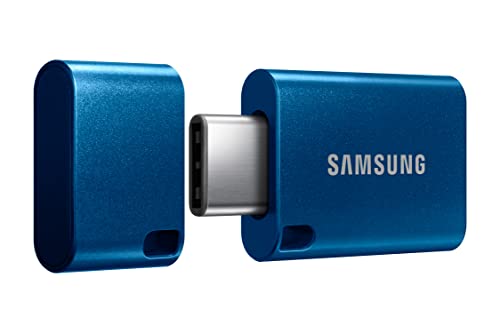
2. Samsung Type-C USB Flash Drive — Best Waterproof USB-C Drive for Laptops and Phones
The Samsung Type-C is for a buyer who wants one reversible USB-C connector on a body Samsung states is waterproof, shock-proof, magnet-proof, temperature-proof and X-ray-proof. No other drive here has a waterproof body stated by its maker. Samsung specifies USB 3.2 Gen 1 and up to 400MB/s read, and the Amazon listing is the 256GB size. Samsung also states a 5-year limited warranty.
Samsung lists laptops, tablets, smartphones and cameras with USB-C ports as compatible. It has no USB-A connector. Samsung’s US page shows the write speed as lower than the read figure and names no write number, so choose the Extreme PRO when copying large files onto the drive is routine, or the Kingston microDuo 3C when a USB-A connector is needed.
The Samsung Type-C has one USB-C connector, so it does not plug into a computer that has only USB-A ports.Our Take Buy the Samsung Type-C when a USB-C laptop, tablet or phone needs a drive whose maker states a waterproof, shock-proof body. It cannot plug into a desktop that only has USB-A.
- Samsung states the Type-C reads at up to 400MB/s.
- Samsung states the Type-C body is waterproof, shock-proof, magnet-proof, temperature-proof and X-ray-proof.
- Samsung backs the Type-C with a 5-year limited warranty.
- Samsung gives the Type-C a reversible USB-C connector.
- Samsung shows the Type-C write speed as lower than its read speed and gives no write number.
- The Samsung Type-C has no USB-A connector, so it does not plug into a computer that has only USB-A ports.
3. SanDisk Ultra Luxe USB-C — Best USB-C-Only Keyring Drive
The SanDisk Ultra Luxe USB-C is a better match for a person who wants a conventional keyring drive without the second connector. SanDisk specifies a USB-C connector, USB 3.2 Gen 1 interface, a retractable connector, and a keyring hole, and lists USB Type-C 3.2 Gen 1 laptops and phones as compatible. Its 256GB Amazon model sits inside the maker’s 128GB through 1TB range that carries an up to 400MB/s read figure.
SanDisk lists its size as 45.8mm by 16mm by 11.8mm and its weight as 10.5g. SanDisk lists a metal enclosure and a retractable connector, where the PNY Elite Type-C uses a plastic sliding collar and the dual-connector drives carry both USB-C and USB-A ends. SanDisk does not publish a write-speed figure for the Ultra Luxe, so use the stated read number for access expectations, not for predicting a large backup copy.
The Ultra Luxe uses one USB-C connector and a retractable metal body with a keyring hole.Our Take Buy the SanDisk Ultra Luxe USB-C if you carry one USB-C laptop or tablet and want a metal keyring drive with a retractable connector. Skip it when an older USB-A computer belongs in the same workflow.
- SanDisk gives the Ultra Luxe a retractable USB-C connector.
- SanDisk lists a metal enclosure and an integrated keyring hole.
- SanDisk states up to 400MB/s read for 128GB through 1TB, including the 256GB Amazon model.
- SanDisk lists USB Type-C 3.2 Gen 1 laptops and phones as compatible hosts.
- SanDisk lists the Ultra Luxe at a 10.5g product weight.
- SanDisk does not state a write-speed figure for the Ultra Luxe.
- The SanDisk Ultra Luxe cannot plug into a USB-A-only computer.
4. PNY Elite Type-C USB 3.2 Flash Drive — Best Sliding-Collar USB-C Drive for Phones and Computers
The PNY Elite Type-C is the everyday choice for moving photos and files from a USB-C phone or tablet to a computer without carrying a cap. PNY specifies a Type-C connector, USB 3.2 Gen 1, up to 120MB/s read and a sliding collar design, and the Amazon listing is the 256GB size.
PNY names iPhone 15 and newer, 3rd generation iPad and newer, and Android phones and tablets as sources for transfers to a laptop or desktop, and says a mobile device needs OTG support. PNY also says the host device’s case must allow unobstructed access to the Type-C port, and it lists Windows and macOS operating system support.
Our Take Buy the PNY Elite Type-C when a USB-C laptop, tablet or phone needs simple storage on a cap-free sliding collar body. Skip it for large copies or a USB-A computer, because PNY gives no write figure in MB/s and the drive has no USB-A connector.
- PNY gives the Elite Type-C a sliding collar design, so there is no cap to carry.
- PNY states up to 120MB/s read over USB 3.2 Gen 1.
- PNY names iPhone 15 and newer, 3rd generation iPad and newer, and Android devices for transfers to computers.
- PNY lists Windows and macOS operating system support.
- PNY states write speed only as up to 10 times faster than USB 2.0 and says it may be lower.
- The PNY Elite Type-C has no USB-A connector, so it is not the pick for a USB-A computer.
- PNY says a mobile device needs OTG support.
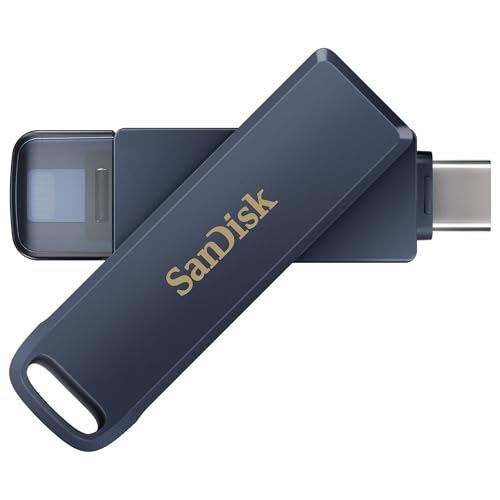
5. SANDISK Phone Drive for iPhone — Best for iPhone With USB-C or Lightning
The SANDISK Phone Drive is the specialist pick for a household or work bag that includes both a USB-C iPhone and an older Lightning iPhone. Its 256GB listing names USB-C and Lightning connectors, and the product bullets say it supports iPhone 15 or newer through USB-C and iPhone 14 or older through Lightning. It is a narrower job than the USB-C/USB-A drives, but it removes the need to choose one iPhone connector generation.
The listing also says the USB-C connection works with the SANDISK Memory Zone app or Apple iOS Files app, and that the Lightning connection requires the SANDISK app for copy and backup. The listing states no interface generation, read speed, or write speed, so the Phone Drive is a connector-compatibility choice, while the Extreme PRO is the better documented choice when stated transfer figures drive the purchase.
The Phone Drive joins USB-C and Lightning in one iPhone-focused flash drive, not USB-C and USB-A.Our Take Buy the SANDISK Phone Drive for iPhone when USB-C and Lightning iPhones need one shared removable drive. It is not the right pick for a USB-A desktop because its second connector is Lightning rather than USB-A.
- SANDISK gives the Phone Drive USB-C and Lightning connectors.
- SANDISK names support for iPhone 15 or newer models through the USB-C connector.
- SANDISK also names iPhone 14 or older models through the Lightning connector.
- The SANDISK USB-C connection works with the SANDISK Memory Zone app or the Apple iOS Files app.
- The SANDISK Phone Drive has no USB-A connector, so it is not the right pick for a USB-A desktop.
- The Amazon listing for the Phone Drive states no interface generation, read speed or write speed.
- SANDISK says the Lightning connection requires its app for copy and backup.
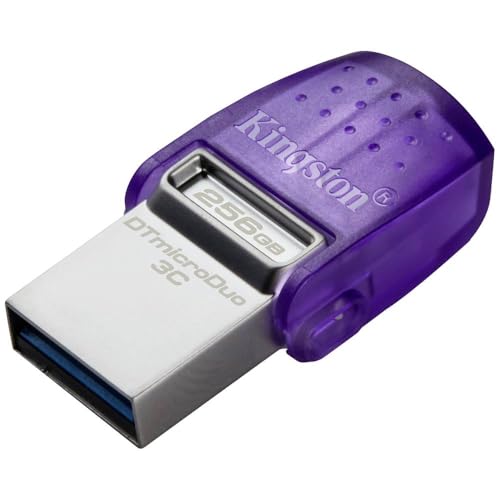
6. Kingston DataTraveler microDuo 3C — Best Compact USB-C and USB-A Drive
Kingston DataTraveler microDuo 3C is the compact alternative for a buyer who needs both USB-C and USB-A but does not need the Extreme PRO’s stated Gen 2 speed figures. Kingston specifies USB 3.2 Gen 1, up to 200MB/s read, and 64GB, 128GB and 256GB capacities, and the Amazon listing is the 256GB size.
Kingston gives dimensions of 29.94mm by 16.60mm by 8.44mm, smaller in each stated dimension than the 90mm by 20mm by 13mm SanDisk lists for the Extreme PRO Dual Drive. Its dual interface is for USB-C and traditional USB-A ports, and Kingston says USB-C use on phones and tablets needs On-The-Go support. Kingston does not state a write-speed figure, so a buyer who copies large files onto the drive should favor the Extreme PRO’s published write ceiling.
Our Take Buy the Kingston DataTraveler microDuo 3C when a small dual-connector drive is more useful than the highest stated throughput. It covers USB-C and USB-A hosts while taking less space than the high-speed SANDISK dual drive.
- Kingston gives the microDuo 3C USB-C and USB-A connectors, so it covers both kinds of host.
- Kingston states up to 200MB/s read through USB 3.2 Gen 1.
- Kingston lists the microDuo 3C at 29.94mm by 16.60mm by 8.44mm.
- Kingston does not state a write-speed figure for the microDuo 3C, which leaves large copies without a maker-stated ceiling.
- The Kingston 200MB/s read figure is lower than the 400MB/s Samsung and SANDISK figures and the SANDISK 1,000MB/s ceiling.
Buying Guide
1. Decide whether one USB-C connector is enough
Choose a USB-C-only drive when it stays with one compatible laptop, tablet, or phone. The Samsung Type-C, PNY Elite Type-C and SanDisk Ultra Luxe each have a single USB-C connector, which suits a newer computer where USB-A is not needed. The Ultra Luxe adds a retractable connector and keyring hole.
Choose a dual drive when files cross between newer and older devices. The SANDISK Extreme PRO Dual Drive and Kingston DataTraveler microDuo 3C each provide USB-C plus USB-A, so they can reach a USB-A desktop without an adapter. The SANDISK Phone Drive is a separate case because its second connector is Lightning, which fits iPhone generations rather than USB-A computers.
2. Read a stated speed as a read or write figure
Read speed describes access from the drive, while write speed concerns copying files onto it. The SANDISK Extreme PRO Dual Drive is the only product here with numeric figures for both directions, up to 1,000MB/s read and 900MB/s write. SanDisk says those figures vary with the host device, usage conditions and drive capacity.
Several products state a read ceiling but not a matching write number. Samsung gives the Type-C an up to 400MB/s read ceiling and says write speed is lower, PNY gives write speed only as up to 10 times faster than USB 2.0, and the Ultra Luxe and Kingston microDuo 3C omit a numeric write figure. Missing write figures do not make them unsuitable for documents or phone photos, but they remove a published basis for ranking their large-copy performance against the Extreme PRO.
3. Treat large-file writing as its own purchase decision
If you regularly put large folders on a drive, e.g., video projects, write speed is the figure to prioritize. The Extreme PRO Dual Drive gives a stated 900MB/s write ceiling, so it is the only drive in this group with a numeric write figure for that job.
For occasional transfers, the smaller or simpler drives can be easier to carry. The Samsung Type-C, PNY Elite Type-C, Ultra Luxe and microDuo 3C have no write speed stated in MB/s, so the choice between them rests on connector access, size and construction, not on a stated long-copy speed. If your storage needs move beyond a thumb drive, our guide to portable SSDs covers larger external storage options.
4. Check phone and tablet compatibility before moving files
USB-C on a phone or tablet does not automatically make every transfer path identical. The Kingston microDuo 3C and PNY Elite Type-C each need a mobile device with OTG support, and Samsung lists the single-USB-C Type-C for laptops, tablets, smartphones and cameras.
For iPhones, connector generation can be the first filter. The SANDISK Phone Drive supports USB-C iPhone 15 or newer models and Lightning iPhone 14 or older models according to its product bullets, with USB-C use through Memory Zone or Apple Files. A drive can help move local files, but it does not add ports to a laptop, so use a USB-C hub when the actual need is more USB-A, display, or card-reader connections.
5. Match the body shape to how you carry the drive
A small drive is useful when it stays attached to a laptop or tablet. The Kingston microDuo 3C measures 29.94mm by 16.60mm by 8.44mm, the smallest of the three drives with stated dimensions, while Samsung and PNY list none. PNY says the device case must allow unobstructed access to the Type-C port.
For keyring use, look for a body you can grip and a connector you can protect. The Ultra Luxe has a retractable connector and keyring hole, while the PNY Elite Type-C has a sliding collar with no cap. If a cable between host and storage is part of the setup, use a cable with the necessary data capability rather than assuming every USB-C cable is equivalent. The USB-C cable speed guide explains the labels to check.
FAQ
Is USB-C faster than USB-A for a flash drive?
No, the connector alone does not establish transfer speed. The SANDISK Extreme PRO Dual Drive uses both USB-C and USB-A while SanDisk states USB 3.2 Gen 2 and up to 1,000MB/s read, whereas the USB-C-only Samsung Type-C uses USB 3.2 Gen 1 with an up to 400MB/s read figure.
Check the drive’s stated USB interface and read or write figures, then check the host port that the drive will use.
Do I need a dual USB-C and USB-A thumb drive?
You need a dual drive when you move files between a USB-C device and a USB-A computer without carrying an adapter. The SANDISK Extreme PRO Dual Drive and Kingston DataTraveler microDuo 3C both have those two connector types.
A USB-C-only drive is simpler when every device you use has USB-C. The SANDISK Phone Drive is also dual connector, but its USB-C and Lightning combination serves iPhone compatibility instead of USB-A computers.
Why is a stated write speed more useful for large files?
A stated write speed is more useful because copying a large folder onto the drive is a write operation. SanDisk states up to 900MB/s write for the Extreme PRO Dual Drive, so it is the one drive here with a maker-stated large-copy ceiling.
The other drives in this guide either say write speed is lower than read speed or give no numeric write figure. The stated read ceilings for the other drives can describe access to stored files, but they do not establish the speed of a long write.
Can I use a USB-C thumb drive with a phone or tablet?
Yes, if the phone or tablet supports the drive’s USB-C connection and the required host function. PNY says the Elite Type-C needs a mobile device with OTG support, while Kingston says the microDuo 3C works with mobile devices that support USB-C and On-The-Go.
For Apple devices, the SANDISK Phone Drive has USB-C and Lightning connectors and names iPhone generations for both.
When should I buy a portable SSD instead?
Buy a portable SSD when capacity, regular large-file transfers, or a cable-connected desk workflow count for more than a tiny integrated plug.
The SANDISK Extreme PRO Dual Drive is the closest fit here for a thumb drive chosen for speed because SanDisk states both read and write figures. For more capacity or a larger external enclosure, see our external SSD guide for Mac when your setup centers on Apple hardware.
Bottom Line
The SANDISK Extreme PRO Dual Drive is the best USB-C thumb drive here for buyers who need a maker-stated write figure for large copies and USB-A access on the same device. The Samsung Type-C is the better fit when a USB-C laptop or phone needs a body its maker states is waterproof, the PNY Elite Type-C is a cap-free everyday option, and the Kingston microDuo 3C covers everyday USB-C and USB-A transfers. Choose the Phone Drive only when USB-C and Lightning iPhones are the actual connector problem.