An OLED laptop no longer has to begin with a premium gaming machine or a creator workstation. The five laptops below are the lowest-priced qualifying Amazon choices in order, and each pairs an OLED screen with a recent Intel Core Ultra processor and a documented USB-C, USB4, or Thunderbolt connection.
Start with the Acer Swift Go 16 if a large, high-resolution screen is the priority. The ASUS Vivobook 14 Flip is the more flexible choice for notes and touch work, while the Lenovo and the ASUS Vivobook S 14 make more sense beside a dock. A lower purchase cost does not make every OLED laptop identical, because screen size, hinge style, and fast-port support decide how well it fits the desk or bag.
The lower-priced OLED route is strongest when you choose the screen size and port layout first, then accept the trade-offs that come with that budget.Cheapest OLED Laptops Compared
| Image | Product | Details | Check Price |
|---|---|---|---|
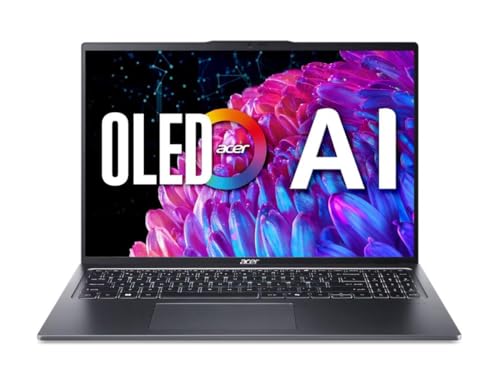 | Acer Swift Go 16 (SFG16-72-5844) | Best fit: Lowest-priced verified large OLED screen Display: 16-inch 3200 x 2000 OLED, 120Hz Processor: Intel Core Ultra 5 125H Fast ports: 2 x Thunderbolt 4 / USB4 Form factor: 16-inch clamshell | Check Price on Amazon |
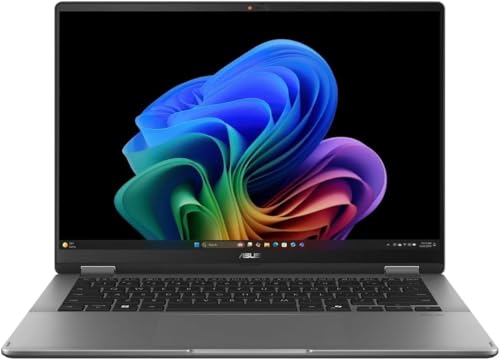 | ASUS Vivobook 14 Flip (TP3407SA) | Best fit: Lower-priced 2-in-1 with a stylus-ready screen Display: 14-inch 1920 x 1200 OLED touch, 60Hz Processor: Intel Core Ultra 7 256V Fast ports: 1 x Thunderbolt 4, 1 x USB-C Form factor: 360-degree convertible | Check Price on Amazon |
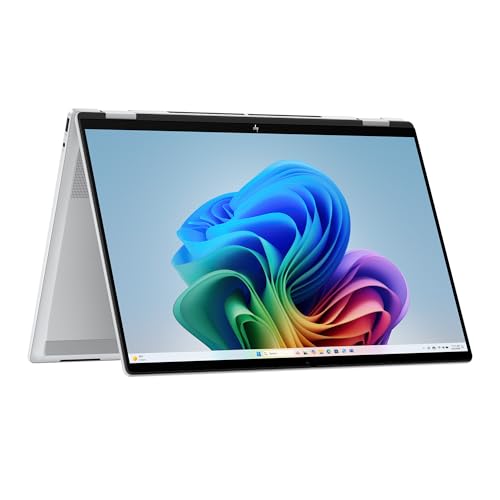 | HP OmniBook 7 Flip 16 | Best fit: Large OLED convertible with a bundled pen Display: 16-inch 3K OLED touch, 120Hz Processor: Intel Core Ultra 7 258V Fast ports: Thunderbolt 4 and USB-C Form factor: 16-inch 2-in-1 | Check Price on Amazon |
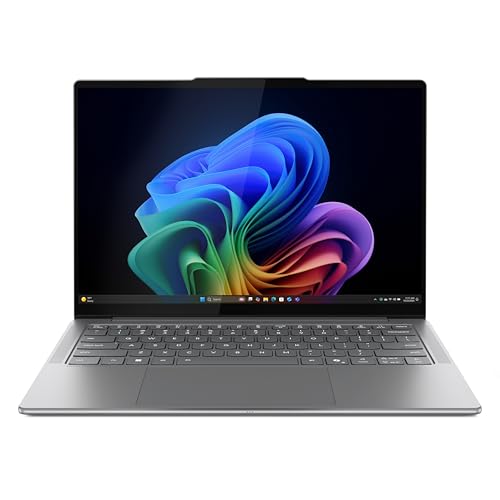 | Lenovo Yoga Slim 7i Aura Edition (14ILL10) | Best fit: Light 14-inch laptop with dock-friendly ports Display: 14-inch 1920 x 1200 OLED, 60Hz Processor: Intel Core Ultra 7 256V Fast ports: 2 x Thunderbolt 4 Form factor: 14-inch clamshell | Check Price on Amazon |
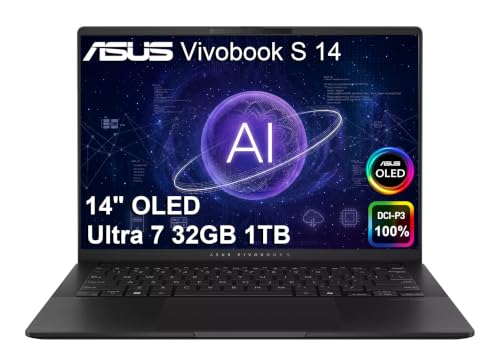 | ASUS Vivobook S 14 OLED (S5406) | Best fit: Port-rich 14-inch work setup Display: 14-inch 1920 x 1200 OLED Processor: Intel Core Ultra 7 258V Fast ports: 2 x Thunderbolt 4 Form factor: 14-inch clamshell | Check Price on Amazon |
1. Acer Swift Go 16 (SFG16-72-5844) — Best Lowest-Priced Large OLED
The Swift Go 16 is for someone who wants a large OLED canvas without moving straight to a gaming laptop. Acer specifies a 16-inch 3200 x 2000 OLED panel at 120Hz, so documents, timelines, and photo grids have more room than they do on the 14-inch machines below. Amazon lists this configuration with an Intel Core Ultra 5 125H processor.
Connectivity gives this pick an advantage at a desk. Acer lists two USB-C ports with Thunderbolt 4 and USB4 support, which means either side can handle a compatible dock, display, storage device, or charger. This pair of ports is a more useful starting point than a lower-cost laptop with USB-C only, and it makes the Swift a natural companion to a Thunderbolt 4 dock.
Our Take
Buy the Swift Go 16 when a big OLED workspace and dock-ready ports are more useful than a folding hinge. Its screen is larger and sharper than the 14-inch choices here, while the two high-speed USB-C ports make an external display or drive less of a compromise. Skip it if you need pen input or tablet posture, because the Vivobook 14 Flip suits that job better.
- A 16-inch 3200 x 2000 OLED panel gives spreadsheets and side-by-side windows more working room.
- A 120Hz panel can make scrolling and pointer movement look smoother than the 60Hz panels on the Vivobook 14 Flip and Lenovo.
- Two Thunderbolt 4 / USB4 ports support a desk dock without giving up every USB-C connection.
- The 16-inch chassis takes more bag space than the Lenovo or ASUS 14-inch clamshells below.
- It does not fold into tablet mode, so handwritten notes call for a separate device.
2. ASUS Vivobook 14 Flip (TP3407SA) — Best Lower-Priced OLED Convertible
The Vivobook 14 Flip makes sense when the OLED laptop has to become a writing, reading, or presentation surface as well as a keyboard computer. ASUS identifies the TP3407SA configuration with an Intel Core Ultra 7 256V, a 14-inch 1920 x 1200 OLED touch screen, and a 360-degree hinge. That screen is smaller and less sharp than the Acer’s panel, but touch and convertible use give it a different purpose.
ASUS documents one Thunderbolt 4 port and one USB 3.2 Gen 2 Type-C port, both with display and power-delivery support. This port pair is enough for a compact desk, but it is not the pair of Thunderbolt ports on the ASUS Vivobook S 14. Buyers planning multiple fast peripherals should choose the port layout before falling for the hinge.
The flip hinge is useful only when touch, viewing, or pen-friendly positioning is part of the week, not merely a feature to admire on a specification sheet.Our Take
Buy the Vivobook 14 Flip when you want an OLED touch screen and a fast Thunderbolt connection in a convertible. It is better suited to a student, meeting room, or sofa than the Acer, and its 14-inch size travels more easily. Choose the Lenovo instead when a conventional laptop with two Thunderbolt 4 ports will spend more time attached to a dock.
- A 360-degree convertible hinge changes the OLED touch panel from laptop screen to viewing surface.
- The 1920 x 1200 OLED touch display uses a practical 16:10 shape for documents and browser work.
- Thunderbolt 4 supports a compatible dock or display cable at up to 40Gbps.
- Amazon lists this configuration with a Core Ultra 7 256V, 16GB of memory, and a 1TB SSD.
- Its 60Hz, 1920 x 1200 panel has less room than the Acer’s 16-inch 3.2K screen.
- One Thunderbolt 4 port leaves less room for a second high-speed accessory while docked.
- A convertible mechanism adds complexity for buyers who will use the laptop only on a desk.
3. HP OmniBook 7 Flip 16 — Best Large OLED Convertible
The OmniBook 7 Flip 16 combines a larger touch canvas with a 2-in-1 hinge, which is the combination to choose when the 14-inch ASUS feels cramped. Amazon lists this configuration with an Intel Core Ultra 7 258V, a 16-inch 3K OLED touch display running at 120Hz, 32GB of memory, and a 1TB SSD. HP identifies Thunderbolt 4 with USB-C and a second USB-C port on this Flip family.
That screen and pen-ready format are appealing for markup, sketching, and viewing, but the bigger convertible is not the light travel answer. A buyer whose aim is a stable external-screen setup gets more focused connectivity from the Lenovo or Vivobook S 14. This model is the pick for flexibility on a broad screen rather than for the smallest bag or the cheapest route into OLED.
A large folding OLED is attractive for touch tasks, but it is a larger object to hold and carry than a 14-inch clamshell.Our Take
Buy the OmniBook 7 Flip 16 when you need both a large 3K OLED and the option to fold it for touch or pen work. The 120Hz panel and 32GB configuration set it apart from the 14-inch convertible, but its size is the trade. Skip it when most work happens at a dock, where the Lenovo’s simpler clamshell approach is easier to live with.
- A 16-inch 3K OLED touch panel gives pen, markup, and media work far more room.
- The 120Hz screen offers smoother motion than the 60Hz panels on the Vivobook 14 Flip and Lenovo.
- Thunderbolt 4 plus USB-C keeps a fast dock or display option available.
- The listed 32GB memory and 1TB SSD suit larger local projects without immediate upgrades.
- An HP USB-C rechargeable pen is included with this configuration for buyers who will use touch input.
- The large convertible body is less convenient for daily carry than the two 14-inch clamshell choices.
- Its place later in the price order makes it a poor fit for buyers seeking only an OLED screen.
4. Lenovo Yoga Slim 7i Aura Edition (14ILL10) — Best Light 14-Inch Dock Companion
Lenovo’s Yoga Slim 7i Aura Edition is the better direction for a buyer who carries the machine often but returns to a desk with a monitor and drive. The listing identifies the Ultra 7 256V and 14-inch WUXGA OLED configuration, while Lenovo’s documentation identifies the Yoga Slim 7i Aura Edition family and its Thunderbolt 4-equipped Intel layout. Its 1920 x 1200 OLED panel is a conventional 60Hz laptop screen rather than a touch convertible display.
The key advantage is the port plan. Lenovo documents two Thunderbolt 4 ports alongside HDMI and a card reader on the Gen 10 Intel design, so a dock can stay connected without making every other accessory a swap. The port layout makes it a sound partner for a Thunderbolt laptop dock or fast external storage.
Our Take
Buy the Yoga Slim 7i Aura Edition when an OLED laptop needs to travel easily and then connect cleanly to a workstation. Its two Thunderbolt 4 ports are more accommodating than the Vivobook Flip’s single Thunderbolt port, while the clamshell avoids a hinge you may not use. Pick the Acer when the priority is a larger, higher-resolution screen rather than a smaller laptop to carry.
- Two Thunderbolt 4 ports leave a second fast connection available beside a dock.
- The 14-inch 1920 x 1200 OLED display keeps the chassis easier to carry than either 16-inch pick.
- HDMI and a card reader reduce dependence on adapters for a monitor or camera card.
- The WUXGA 60Hz panel has less visual workspace and motion smoothness than the Acer or HP 16-inch screens.
- It is a clamshell, so buyers who annotate by hand should choose a Flip model instead.
- The OLED configuration appears later in the verified price order than the Acer and ASUS Flip.
5. ASUS Vivobook S 14 OLED (S5406) — Best Port-Rich 14-Inch Work Setup
The Vivobook S 14 is for a compact work setup that needs connections without a collection of dongles. Its listed Core Ultra 7 258V configuration has a 14-inch 1920 x 1200 OLED display, and the listing identifies two Thunderbolt 4 ports, two USB-A ports, HDMI 2.1, microSD, and audio. ASUS’s S5406 specifications establish the OLED panel and Ultra 7 258V family. The port list makes this a stronger connectivity fit than a design that exposes only USB-C.
It is not the largest or most flexible display in the group. The screen suits a light 14-inch work machine, and it has no touch or flip function. Choose it when the laptop will connect directly to storage, a monitor, and everyday USB gear, and choose the Lenovo if the docking plan is more important than the extra built-in ports.
Two Thunderbolt 4 ports plus HDMI, USB-A, and microSD can reduce adapter changes when the laptop moves between a desk and a camera bag.Our Take
Buy the Vivobook S 14 when a compact OLED laptop needs the most varied built-in port selection in this five-machine comparison. It is a practical choice for a desk with accessories and a bag with a card reader, while its twin Thunderbolt ports preserve a high-speed path. Skip it if a touch screen or tablet posture is central to the job, because the two Flip models address that need directly.
- Two Thunderbolt 4 ports give a dock and a fast drive separate connections.
- HDMI 2.1, two USB-A ports, and microSD cover common desk and camera accessories directly.
- The 14-inch 1920 x 1200 OLED screen keeps the system compact for commuting.
- The Core Ultra 7 258V configuration pairs a modern processor with 32GB memory and a 1TB SSD.
- The 14-inch WUXGA display gives up the Acer’s 16-inch 3.2K workspace.
- No touch or folding hinge means it cannot replace a tablet for handwriting or viewing.
Buying Guide
1. Pick screen size before chasing the lowest entry
The Acer’s 16-inch 3200 x 2000 OLED is the strongest choice when the laptop screen will be the main place for a wide spreadsheet, a timeline, or two documents. Its 120Hz panel adds smoother motion, but the larger chassis occupies more table and bag space. The HP OmniBook 7 Flip offers another 16-inch route when touch and a folding screen are more useful than the lowest entry.
The Lenovo Yoga Slim 7i and ASUS Vivobook S 14 put 14-inch 1920 x 1200 OLED panels in more portable bodies. That resolution is sufficient for writing, browser work, and a monitor at home, although it does not duplicate the Acer’s larger canvas. Choose a 14-inch model for frequent carrying. A lower price rank does not automatically make a screen easier to use.
2. Choose a hinge only when it changes the job
The ASUS Vivobook 14 Flip and HP OmniBook 7 Flip have touch OLED panels and convertible hinges, which make sense for reading, presenting, and pen input. A 360-degree hinge lets the screen stand independently or lie flatter for annotations, but it also adds a feature that a fixed desk user may never touch.
For a keyboard-first routine, the Acer, Lenovo, and Vivobook S 14 are simpler clamshell choices. Their conventional laptop shapes do not offer tablet posture, but they provide a stable keyboard-and-trackpad setup with no need to decide whether a flip design justifies its size or cost. A touch screen is an input choice, not a general upgrade.
3. Treat Thunderbolt as a desk-setup decision
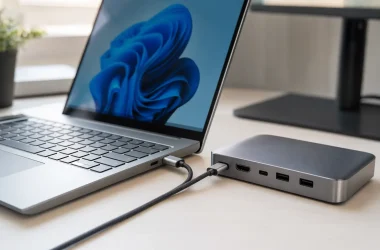
A compatible Thunderbolt dock can carry charging, displays, Ethernet, storage, and peripherals through one cable. The Acer has two Thunderbolt 4 / USB4 ports, while the Lenovo and Vivobook S 14 each offer two Thunderbolt 4 connections. That extra port is useful when a dock occupies one and a fast SSD or display needs another.
The Vivobook 14 Flip has one Thunderbolt 4 port plus one USB-C port, which is enough for a compact dock but gives less flexibility around it. HP documents Thunderbolt 4 and USB-C on the OmniBook 7 Flip family. If you plan two external displays, read our guide to laptops with Thunderbolt 4 before assuming every USB-C socket performs the same job.
4. Budget for the OLED trade-offs, not just the panel
OLED pixels can show deep blacks and high contrast, but static interface elements need sensible care. Do not leave the same bright spreadsheet on screen for long stretches at high brightness when you are away. Use sleep settings, a moving screen saver, or a dark interface when it suits your work, and treat the panel as a display to manage rather than a reason to worry during ordinary use.
Battery expectations also depend on brightness, refresh rate, and workload. A 120Hz 16-inch OLED has more pixels and a larger surface to light than a 14-inch 60Hz panel, so compare your use case rather than expecting the same battery life from every pick. A bright room can also expose the usual OLED compromise. Glossy or high-contrast panels can look excellent indoors, while a matte LCD may be easier to see under harsh direct light.
5. Buy the memory and storage configuration you will use
The listed HP OmniBook 7 Flip and ASUS Vivobook S 14 configurations include 32GB memory and a 1TB SSD, which are useful when several large applications, photo libraries, or virtual machines stay open. That capacity may be unnecessary for web work, so check whether a laptop’s memory can be upgraded before you choose a smaller configuration.
The Acer’s listed 8GB memory and 512GB SSD are a more modest starting point, which helps explain its placement but makes the buyer’s workload important. If the laptop will edit large files or remain docked beside fast storage, decide whether less internal memory is acceptable before assuming external ports solve every capacity issue.
FAQ
Is an OLED laptop a good budget purchase?
An OLED laptop can be a good budget purchase when the display is the reason you are shopping. The Acer Swift Go 16 puts a 3.2K OLED panel at the front of this verified order, while the ASUS Flip adds touch use without pushing into a gaming category.
Do not treat OLED as a substitute for the rest of the computer. Ports, memory, screen size, and hinge style decide whether the low entry serves your daily work, which is why the five picks have distinct roles.
Do these laptops have Thunderbolt ports?
All five picks have documented Thunderbolt 4 support. The Acer, Lenovo, and ASUS Vivobook S 14 each have two Thunderbolt 4-capable connections, while the ASUS Vivobook 14 Flip has one Thunderbolt 4 port and one USB-C port with display and power-delivery support.
HP documents Thunderbolt 4 with USB-C on the OmniBook 7 Flip 16 family. A port’s shape alone does not prove its speed or display capability, so check the maker’s configuration page before buying a cable, dock, or external display around it.
Will an OLED screen burn in on a laptop?
Burn-in is a reason for sensible habits, not a reason to avoid every OLED laptop. Long periods with unchanged bright elements can put more stress on the same pixels, so use display sleep, avoid leaving a static screen on all day, and keep brightness appropriate for the room.
The useful rule is to vary what stays on screen during long workdays. That approach preserves the benefit of OLED contrast for movies, photos, and dark interfaces.
Are 14-inch OLED laptops too small for work?
No, a 14-inch OLED laptop can work well for writing, calls, and portable tasks. The Lenovo Yoga Slim 7i and ASUS Vivobook S 14 both use a 1920 x 1200, 16:10 workspace that gives more vertical room than a 16:9 display of similar width.
For heavy multitasking, connect a monitor through Thunderbolt 4 or HDMI at a desk. Choose the Acer Swift Go 16 or HP OmniBook 7 Flip 16 when the built-in screen must be the primary workspace without an external display.
Which pick is best for a dock?
The Lenovo Yoga Slim 7i Aura Edition and ASUS Vivobook S 14 are the clearest dock choices because each has two Thunderbolt 4 ports. One can connect the dock while another remains free for fast storage or another compatible accessory.
The Acer Swift Go 16 is also a strong dock choice with two Thunderbolt 4 / USB4 ports and a larger screen. The right answer depends on whether your desk benefits more from the Acer’s 16-inch 3.2K panel or the smaller 14-inch machines.
Bottom Line
The Acer Swift Go 16 is the first place to look when the goal is the lowest verified price with a large OLED and a serious desk connection. The ASUS Vivobook 14 Flip is the better lower-priced touch option, the HP is the large convertible step-up, and the Lenovo and ASUS clamshells are for buyers who want a 14-inch laptop that works neatly with a dock.